

Table of Contents
Aluminum sheet minimum bend radius is the smallest inside radius that can be formed for a defined alloy, temper, thickness, grain direction, surface condition, and process without unacceptable cracking or damage. It is not one universal multiple that applies to every aluminum sheet.
Designers and buyers should treat aluminum sheet minimum bend radius as a material-and-process requirement. The drawing, purchase order, tooling plan, and inspection method must use the same definition so that a supplier does not approve material against a different bend condition.
Define the Radius Correctly
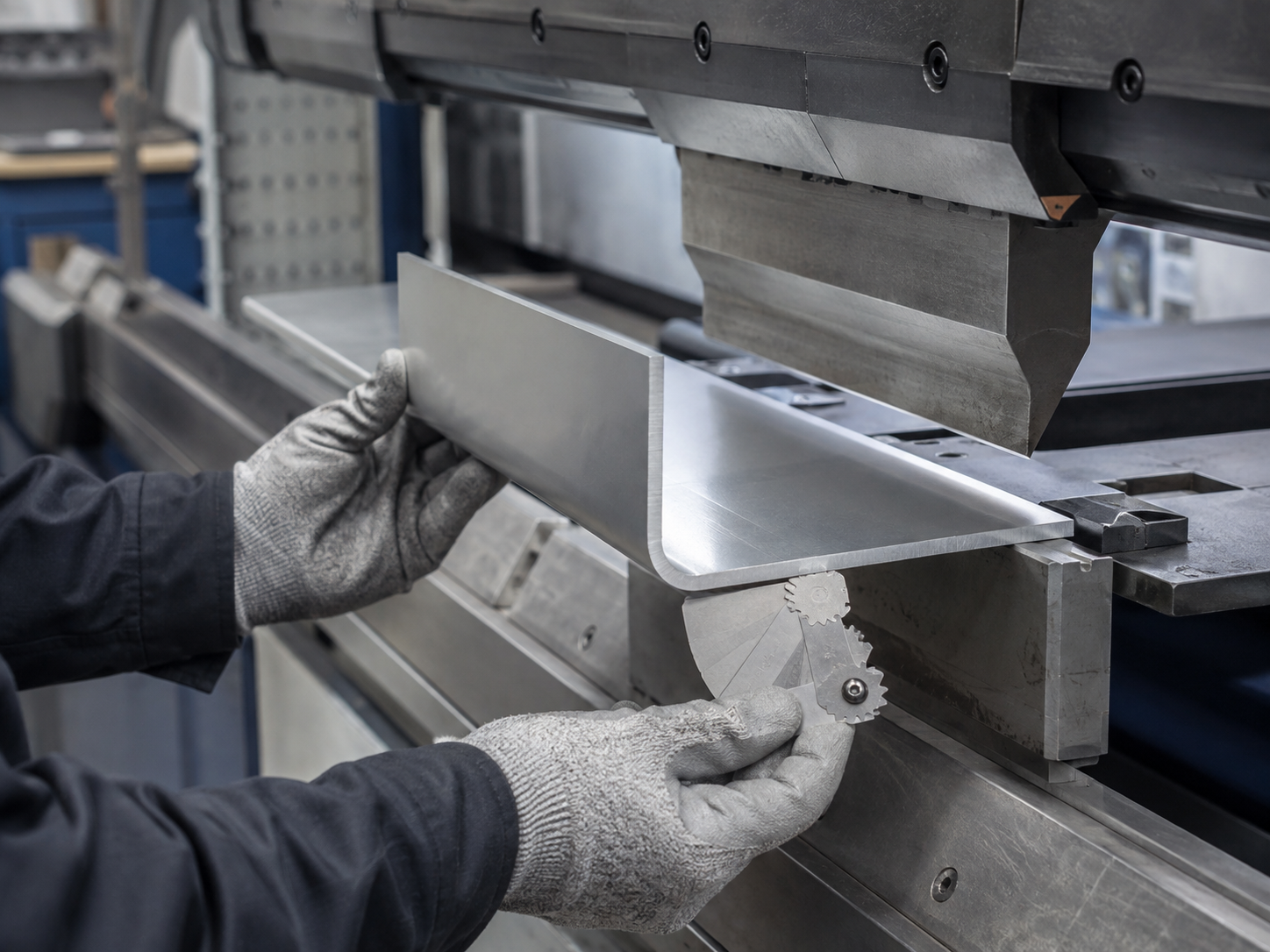
The radius on a sheet-metal drawing normally refers to the inside radius of the finished bend. State the bend angle, included angle convention, material thickness, and where the radius is measured. Aluminum sheet minimum bend radius should be connected to the finished geometry rather than inferred from a generic note.
Distinguish the required aluminum sheet minimum bend radius from the smallest radius the material might survive. A larger inside radius can reduce strain and improve repeatability, while a very tight radius may increase cracking, surface marking, thinning, and variability.
Compare Alloy and Temper
Alloy composition and temper change ductility, strength, hardness, and forming response. Annealed or softer conditions generally permit more severe forming than hard strain-hardened or heat-treated conditions, but the permitted value must come from the applicable material data and qualified process.
An aluminum sheet minimum bend radius selected for one alloy-temper combination cannot be transferred automatically to another. Verify the exact designation, thickness range, product form, and property requirements before approving a substitution.
Account for Thickness
Bend recommendations are often expressed as a multiple of sheet thickness because outer-fiber strain rises as the radius becomes tighter relative to thickness. As thickness changes, the absolute radius and tooling requirements change. Aluminum sheet minimum bend radius therefore belongs with the specified thickness, not only the alloy name.
Thickness tolerance also affects aluminum sheet minimum bend radius qualification. Material at the upper end of the allowed range experiences a different tool fit and bend development than thinner stock. Tool clearance and bend calculations should cover the full accepted range.
Control Grain Direction
Rolled sheet has a rolling direction that influences bend performance. For critical bends, the drawing should identify grain direction and part orientation. The FAA sheet-metal guidance explains that minimum radius depends on composition, temper, and thickness and recommends orienting bend lines at an angle to the grain where practical.
A bend line across the grain is commonly preferred for difficult bends because bending parallel to the rolling direction can raise cracking risk in some alloy-temper conditions. Aluminum sheet minimum bend radius must still be qualified for the actual material and application; grain orientation is not a substitute for testing.
Match Tooling and Method
Air bending, bottoming, wiping, roll forming, hemming, and draw forming impose different strain paths. Punch radius, die opening, tool condition, lubrication, edge quality, alignment, and press control all influence the achieved inside radius.
Do not assume the punch nose alone equals the finished aluminum sheet minimum bend radius. In air bending, material properties and die opening influence the formed radius. Measure released parts after springback using the agreed inspection method.
Manage Cracking and Springback
Cracks may initiate at burrs, scratches, cut edges, inclusions, or highly strained outer fibers. Deburr and orient cut edges appropriately, protect visible surfaces, and inspect the full bend length. Springback changes the released angle and radius after load removal.
The aluminum sheet minimum bend radius control table summarizes the qualification variables. ASTM B209/B209M includes cold-bend capability provisions for covered sheet and plate products, but part design and fabrication acceptance remain the buyer and fabricator responsibility.
| Variable | Effect on bend decision | Control |
|---|---|---|
| Alloy and temper | Changes ductility and strength | Name the exact designation |
| Thickness | Changes strain and tool fit | Qualify the ordered range |
| Grain direction | Can change cracking tendency | Show rolling direction on the drawing |
| Tooling method | Changes achieved radius and springback | Record punch, die, and process |
| Edge and surface | Defects can initiate cracks | Deburr, protect, and inspect |
Qualify the Bend
For a demanding bend, run representative trials using production alloy, temper, thickness, rolling direction, edge preparation, tooling, and surface condition. Check cracking under adequate lighting and any specified magnification, then measure angle, radius, flange length, and surface damage after release.
A successful coupon does not automatically qualify a complex part with holes, notches, welds, short flanges, multiple bends, or severe cosmetic zones. The aluminum sheet minimum bend radius trial should reproduce the highest-strain feature and the intended sequence.
- Define inside radius, bend angle, and thickness.
- Name alloy, temper, product standard, and rolling direction.
- Select tooling for the full thickness tolerance.
- Remove burrs and protect critical surfaces.
- Trial the most severe production feature.
- Measure the part after springback.
- Record aluminum sheet minimum bend radius acceptance and sample approval.
Specify Bent Parts
The RFQ should state standard, alloy, temper, thickness, dimensions, rolling direction, inside radius, bend angle, tolerance, tooling restrictions, surface finish, protective film, edge preparation, inspection, and sample approval. Identify cosmetic faces and downstream coating or joining.
Review the aluminum sheet and plate supply range and the 5052 aluminum sheet temper guide before material approval. A complete aluminum sheet minimum bend radius request gives the mill and fabricator enough information to assess both supply and forming risk.
Frequently Asked Questions
What determines aluminum sheet minimum bend radius?
Aluminum sheet minimum bend radius depends on alloy, temper, thickness, grain direction, edge condition, surface, bend angle, tooling, forming method, and the allowable cracking or cosmetic criteria.
Is minimum bend radius based on sheet thickness?
It is often expressed as a thickness multiple, but the correct multiple changes with alloy, temper, direction, and process. Use approved data for the exact material condition.
Should aluminum sheet be bent with or across the grain?
Across-grain orientation is commonly preferred for severe bends. The drawing should identify rolling direction, and the bend should be qualified for the actual alloy, temper, and thickness.
Why does aluminum crack on the outside of a bend?
The radius may be too tight, the temper too hard, or the edge damaged. Grain direction, tooling, burrs, scratches, and material condition can also initiate cracks.
Does springback change the finished bend radius?
Yes. Elastic recovery changes the released angle and can affect the measured radius. Tool compensation must be validated without forcing the material below its acceptable radius.
Request a Forming Review
Send Huanhai Zhongke the drawing, alloy, temper, thickness, rolling direction, bend angle, inside radius, tooling method, surface, inspection criteria, and sample requirement for an aluminum sheet minimum bend radius review.
 English
  Korean
  Arabic
  Vietnamese