

Table of Contents
Choosing 5052 aluminum sheet is rarely difficult because of the alloy name. The difficult part is translating a drawing and service environment into the correct temper, thickness, dimensional tolerance, surface condition, and inspection plan. A purchase order that says only ??052??leaves too much room for interpretation and can create bending cracks, cosmetic rejects, or fit-up problems later.
This guide is for procurement teams, engineers, and sheet-metal fabricators evaluating 5052 aluminum sheet for enclosures, panels, tanks, covers, cabinets, transport components, and general formed parts. It explains the decisions that should be settled before a quotation is compared or material is released for production.
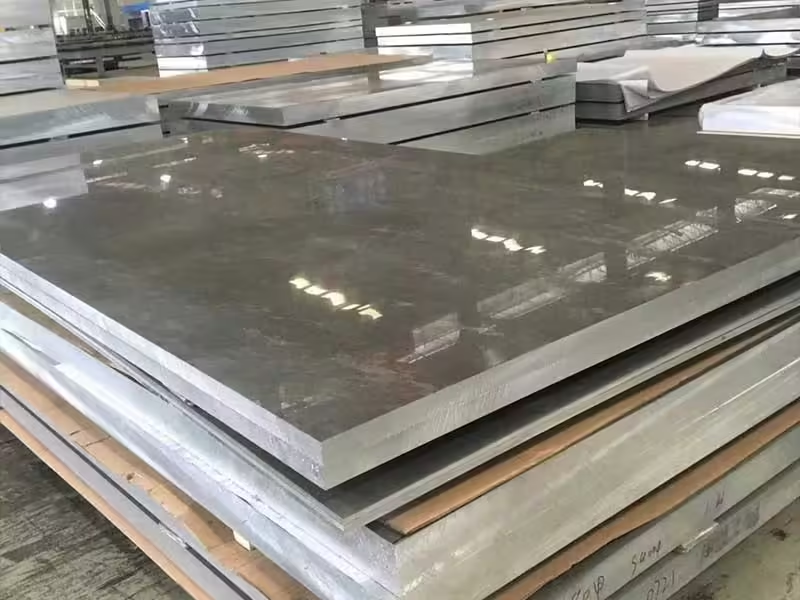
What 5052 Aluminum Sheet Is
5052 is a non-heat-treatable aluminum-magnesium alloy. Its practical appeal is the balance of corrosion resistance, formability, weldability, and moderate strength. Unlike heat-treatable alloys whose final properties depend on solution heat treatment and aging, 5052 aluminum sheet is commonly supplied in annealed or strain-hardened tempers.
That distinction matters at the press brake. A harder temper can provide more strength and stiffness, but it normally accepts less severe forming than a softer condition. The correct choice therefore starts with the part geometry and forming route, not with a habit carried over from another project. The site?? aluminum alloy selection guide provides broader context when 5052 is being compared with other alloy families.
The applicable material specification should be named in the inquiry. ASTM B209/B209M covers aluminum and aluminum-alloy sheet and plate, including dimensional and material requirements within its scope. Buyers should use the project-required edition and avoid copying limits from an unrelated alloy, thickness, or product form.
5052-H32 vs 5052-H34 Temper
For 5052 aluminum sheet, H32 and H34 are both strain-hardened and stabilized conditions. H34 represents a higher degree of strain hardening than H32. In purchasing terms, 5052-H34 is generally selected when additional strength and stiffness are useful, while 5052-H32 is often preferred when the part needs more demanding bends or forming.
Neither temper is automatically correct for every component. A shallow cover with generous radii may run well in H34, while an enclosure with tight return flanges may need the forming margin of H32. Tooling, grain direction, sheet thickness, bend angle, inside radius, edge quality, and hole location all affect the result. Prototype validation is appropriate when a bend is close to the process limit.
| Temper choice | Typical purchasing priority | Fabrication question |
|---|---|---|
| 5052-O | Maximum forming capability | Can the lower strength meet service needs? |
| 5052-H32 | Balance of strength and formability | Are bend radius and grain direction defined? |
| 5052-H34 | Higher strength than H32 | Can the tooling accept reduced ductility? |
| Harder H tempers | Greater strain hardening | Will bending or deep forming be limited? |
The table is a selection framework, not a substitute for a drawing review or the mechanical-property limits in the governing standard. For 5052 aluminum sheet, the temper should appear everywhere material identity is controlled: quotation, purchase order, certificate, label, and receiving record.
Bending and Forming Considerations
A successful bend depends on more than alloy and temper. The drawing should identify material thickness, inside bend radius, bend angle, flange length, critical dimensions, and any restrictions on bend direction. If the grain direction is important, it should be marked on the drawing rather than communicated informally after cutting.
Before releasing a large batch of 5052 aluminum sheet, confirm that the fabricator?? bend allowance and springback assumptions match the actual temper and thickness. Laser-cut edges in 5052 aluminum sheet, punched features, scratches, or burrs near the bend line can become crack-initiation points. Deburring and sensible feature spacing deserve attention when parts contain narrow flanges or holes close to a bend.
Do not specify a universal minimum bend radius without checking the governing design data and the fabricator?? process. Published guidance can vary with thickness, orientation, tooling, and acceptance criteria. The Aluminum Association temper data is a useful official reference, but production trials remain valuable for demanding geometry.
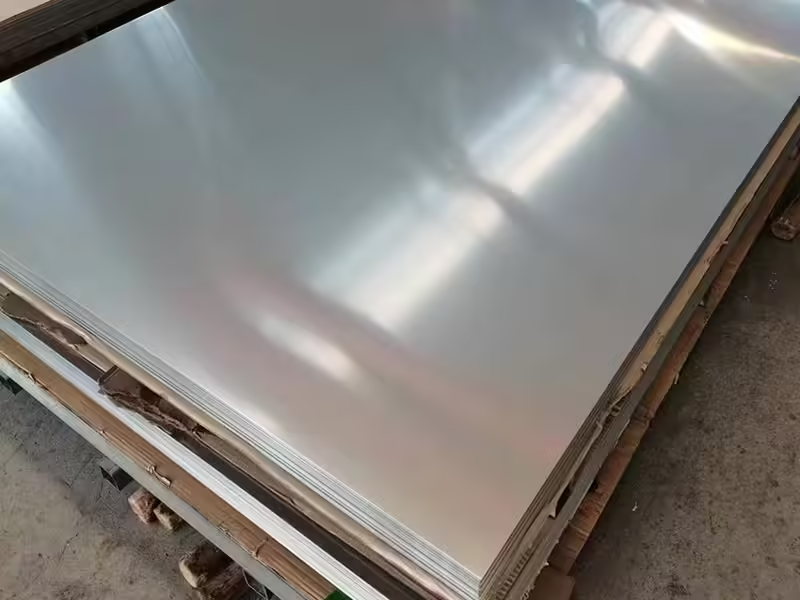
Welding and Joining Considerations
5052 aluminum sheet is commonly considered for welded fabrications, but material selection is only one part of joint performance. The welding process, filler selection, joint design, cleanliness, heat input, restraint, and service environment must be reviewed together. The heat-affected zone can behave differently from the unaffected base material, so design calculations should not assume that the strain-hardened temper remains unchanged beside the weld.
Surface contamination on 5052 aluminum sheet is a practical concern. Oil, oxide, adhesive residue, and shop dirt can interfere with a consistent weld. If 5052 aluminum sheet arrives with protective film, the fabrication plan should define when that film is removed and how residue is controlled. Mechanical fasteners or adhesives may be suitable for some assemblies, but galvanic compatibility, sealing, hole tolerance, and access for inspection still need to be specified.
Corrosion and Surface Finish
Corrosion resistance is an important reason buyers consider 5052 aluminum sheet, especially for humid, coastal, transport, and wash-down environments. It should not be treated as a promise that every assembly will be maintenance-free. Crevices, trapped moisture, contact with dissimilar metals, aggressive cleaners, and poor drainage can change field performance.
The purchase order for 5052 aluminum sheet should distinguish mill finish from cosmetic finish. If a panel remains visible, define the permitted scratches, handling marks, staining, color variation, and protective film. If the part will be painted, bonded, anodized, or otherwise finished, confirm surface preparation with the processor. A generic note such as ??ood surface??is difficult to inspect objectively.
For contact with another metal, the assembly designer should evaluate galvanic conditions and isolate materials where the application requires it. Packaging also matters: moisture trapped between stacked sheets can stain surfaces before fabrication begins. Keep 5052 aluminum sheet dry, supported, and protected from abrasive movement during storage and handling.
Dimensions, Tolerances, and Flatness
Nominal thickness alone does not define an acceptable sheet. Thickness tolerance influences formed dimensions, weight, stiffness, and tooling setup. Width and length tolerances affect blank nesting and edge trimming. Flatness becomes critical when 5052 aluminum sheet is used for broad covers, doors, machine panels, or assemblies with continuous seals.
State whether the order is for full sheets, cut-to-size blanks, or coil-derived sheets. Cutting can introduce burrs, edge deformation, or thermal effects depending on the process. If edge quality affects welding or bending, describe the accepted condition and inspection method. Buyers should also state whether thickness is measured before or after any coating or applied film.
Avoid requesting tighter tolerances than the component needs. Tighter limits can reduce sourcing flexibility and increase processing without improving the finished part. The useful question is whether variation in 5052 aluminum sheet will affect fit, forming, sealing, appearance, or load performance. Put measurable limits against those risks.
Receiving Inspection
Receiving inspection should connect the purchase order to the physical shipment. Check alloy and temper on the material certificate, then match heat or lot references to bundle labels where applicable. Confirm sheet count, thickness, width, length, surface condition, edge condition, flatness requirements, and protective packaging before material enters production.
Use calibrated equipment and a documented sampling plan when checking 5052 aluminum sheet. If a nonconformance appears, quarantine the affected 5052 aluminum sheet and preserve labels, certificates, packaging photos, measurement locations, and instrument details. A clear record helps the buyer and supplier distinguish material variation from handling damage or a fabrication issue.
A bend coupon can provide useful process evidence when formability is critical, but it should reflect production thickness, direction, tooling, and radius. Receiving teams should not improvise a pass/fail test that was never included in the purchase requirement.
RFQ Checklist
A complete request for quotation gives each supplier the same technical basis. For 5052 aluminum sheet, include the following details and attach the drawing when fabrication features or cosmetic zones matter.
- Alloy designation and required temper.
- Applicable material standard and required edition.
- Nominal thickness, width, length, and dimensional tolerances.
- Flatness, edge condition, and any grain-direction requirement.
- Mill finish, protective film, cosmetic zones, or downstream finishing.
- Bending, welding, cutting, machining, or joining operations.
- Quantity, sheet or blank format, bundle limits, and packaging needs.
- Certificate, traceability, inspection, and document requirements.
This level of detail makes quotation comparison more meaningful. It also prevents a supplier from choosing a technically valid but operationally unsuitable condition. Buyers comparing 5052 aluminum sheet with a heat-treatable option can review the site?? 6061 aluminum plate properties and tempers article for the different trade-offs in machining, strength, and forming.
Frequently Asked Questions
Is 5052-H32 or 5052-H34 better for bending?
H32 generally offers more forming margin, while H34 provides higher strain hardening. The final choice depends on thickness, bend radius, direction, tooling, and required strength.
Can 5052 aluminum sheet be welded?
Yes, 5052 aluminum sheet is commonly used in welded sheet-metal work. Joint design, filler choice, cleanliness, heat input, and the properties of the heat-affected zone still require engineering review.
Is 5052 aluminum sheet suitable for outdoor use?
It is often considered where corrosion resistance is important, but drainage, cleaners, dissimilar-metal contact, crevices, coatings, and the actual exposure must be evaluated.
Does mill finish mean a cosmetic surface?
No. Mill finish describes an as-produced surface and does not automatically establish cosmetic acceptance. Visible parts need measurable limits for scratches, stains, handling marks, and protective film.
What should the material certificate confirm?
The certificate should match the purchase requirement and identify alloy, temper, applicable specification, chemical composition, mechanical-property results where required, and traceability information.
Request a Material Review
Send Huanhai Zhongke your drawing, temper, thickness, tolerance, surface, fabrication route, and service environment for a 5052 aluminum sheet specification review before requesting a quotation.
 English
  Korean
  Arabic
  Vietnamese