

Table of Contents
A carbon steel pipe inquiry is not complete until wall thickness, schedule, end finish, testing, and service conditions are clear. Two pipes can share the same outside diameter but behave very differently because the wall thickness and production route are different.
This carbon steel pipe guide helps industrial buyers write practical specifications for pressure lines, mechanical structures, fabrication, and general plant projects. It explains schedule selection, seamless versus welded supply, document control, and packaging without turning the article into a price list.
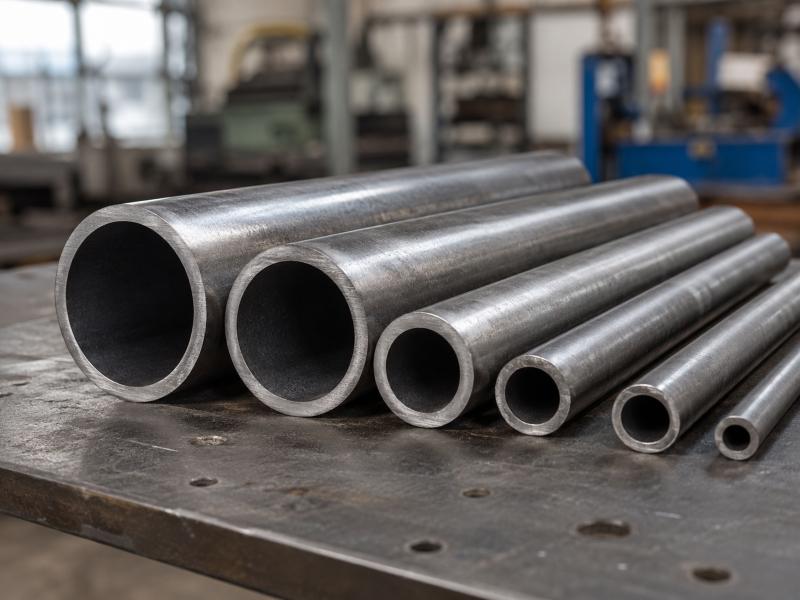
What Pipe Schedule Means
Pipe schedule is a wall-thickness designation. For a given nominal pipe size, a higher schedule generally means a thicker wall. That does not automatically mean the buyer should choose the heaviest carbon steel pipe available. Excess wall thickness can increase weight, welding time, handling difficulty, and machining work.
A buyer should start with the project design requirement. Pressure, temperature, corrosion allowance, fluid type, support spacing, and fabrication method all affect the correct carbon steel pipe choice. If the pipe is structural rather than pressure-bearing, the specification may focus more on straightness, length, end condition, and weldability.
Carbon steel pipe should also be reviewed against available installation space and support design. A heavy-wall carbon steel pipe may satisfy a conservative request, but it can create avoidable lifting, cutting, beveling, and welding work if the project does not actually require that wall thickness.
Connect Schedule to Service
Service conditions should guide schedule selection. A low-pressure utility line does not need the same wall thickness as a high-temperature process line or a pipe exposed to mechanical damage. If corrosion allowance is part of the design, it should be stated clearly rather than left as an assumption.
Buyers comparing seamless carbon steel pipe applications should separate process service from structural use. The same material family can serve both, but the inspection and acceptance criteria may be different.
| Project condition | Specification priority | Buyer note |
|---|---|---|
| Pressure service | Wall thickness, grade, testing | Follow design code and certificate needs |
| Mechanical fabrication | Straightness, weldability, cut length | Confirm machining and welding plans |
| Outdoor storage | Coating, end caps, packing | Control rust before installation |
Seamless Versus Welded
Seamless and welded carbon steel pipe both have legitimate uses. Seamless pipe is often selected for demanding pressure, temperature, or mechanical applications. Welded pipe can be efficient for many structural and fluid-transfer uses when the standard and inspection requirements match the project.
The right choice depends on the code, service condition, diameter, wall thickness, availability, and inspection plan. Buyers should not use seamless as a universal synonym for better. Instead, specify the production route required by the design or the end user.
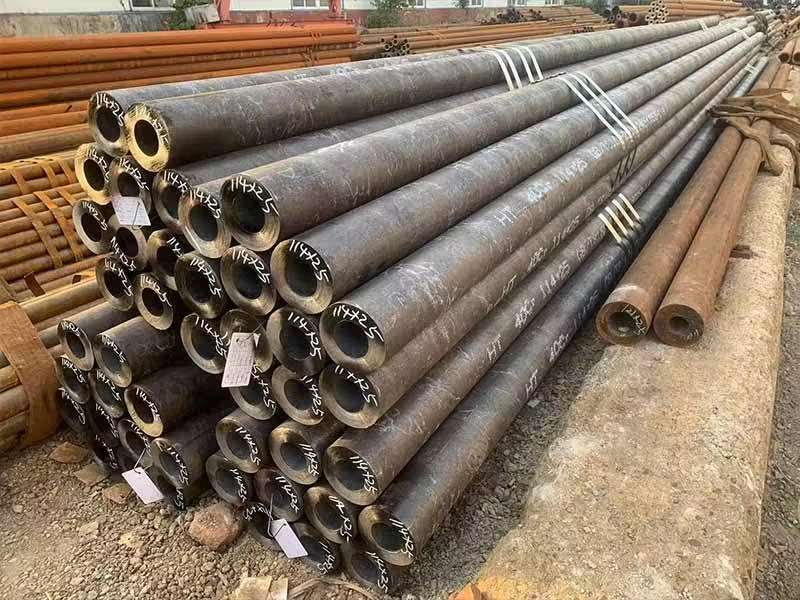
End Finish and Joining
End finish should match the joining method. Plain ends may be used for cutting, machining, or some welding operations. Beveled ends support welding preparation. Threaded or grooved ends may be needed for specific mechanical joining systems. If the carbon steel pipe will be welded in the field, bevel angle and root face may need confirmation.
The inquiry should also state whether end caps are required. End protection reduces contamination and transit damage, especially when pipes are shipped long distances or stored before installation.
Testing and Certificates
Industrial buyers should request certificates that identify grade, standard, heat number, dimensions, mechanical properties, and chemical composition when applicable. Depending on the application, testing may include hydrostatic testing, ultrasonic testing, dimensional inspection, or visual inspection.
For general reference, pipe schedule terminology is widely used in piping work, and nominal pipe size provides useful background. The controlling project specification and purchase order should always define final acceptance.
Handling and Packaging
Packaging is not decorative. Bundling, strapping, end protection, coating protection, and lifting points affect how safely carbon steel pipe arrives and how quickly it can be received. Heavy-wall pipe needs careful planning because bundle weight can exceed the buyer?? unloading capacity.
If the material will be stored outdoors, discuss temporary rust protection and drainage. Bare steel can develop surface rust during storage, so buyers should define whether black, oiled, painted, or coated condition is expected.
Buyer Comparison Table
The best carbon steel pipe specification balances design requirements with fabrication practicality. The table below shows how different buyer priorities change the inquiry.
| Buyer priority | What to specify | Why it matters |
|---|---|---|
| Pressure line | Grade, schedule, testing, certificate | Controls safety and compliance |
| Structural frame | Straightness, length, weldability | Improves fit-up and fabrication |
| Machined parts | OD, ID, wall, surface | Reduces machining waste |
| Export shipment | Packing, coating, labels | Protects material in transit |
Ordering Checklist
A complete inquiry should include standard, grade, nominal size, schedule or wall thickness, length, production route, end finish, coating or surface condition, quantity, packing, destination, and required documents. If buyers need broader supplier evaluation, this seamless steel pipe supplier guide gives useful procurement context.
The most useful carbon steel pipe order is easy to inspect. If the receiving team can match the certificate, label, dimensions, and physical pipe without guessing, the buyer has already reduced a large share of project risk.
- Define service condition and design standard.
- Specify nominal size, schedule, grade, and length.
- Confirm seamless or welded production route.
- State end finish, coating, and packing.
- Request certificates and testing records before shipment.
FAQ
What does carbon steel pipe schedule mean?
Schedule is a wall-thickness designation. For the same nominal size, a higher schedule generally means a thicker wall.
Is seamless carbon steel pipe always better?
No. Seamless pipe is useful for demanding service, but welded pipe can be suitable when the standard, inspection, and application allow it.
Which end finish should buyers specify?
The end finish should match the joining method, such as plain end, beveled end, threaded end, or grooved end.
What documents are normally requested?
Buyers usually request a mill certificate with grade, heat number, dimensions, mechanical properties, chemistry, and applicable testing results.
Why is packaging important for carbon steel pipe?
Good packaging protects pipe ends, coatings, labels, and surface condition while also making unloading safer and faster.
Request a Technical Review
Share your pipe size, schedule, grade, service condition, and inspection requirements with Huanhai Zhongke to review a suitable carbon steel pipe specification before ordering.
 English
  Korean
  Arabic
  Vietnamese