

Galvanized steel coils are one of the most versatile and durable materials in industrial and construction applications. Their corrosion resistance, mechanical strength, and cost-effectiveness make them indispensable across multiple sectors. Understanding galvanized steel coil applications by industry helps manufacturers, contractors, and procurement teams make informed decisions and select the right specifications for their projects.
Table of Contents
What Is Galvanized Steel Coil
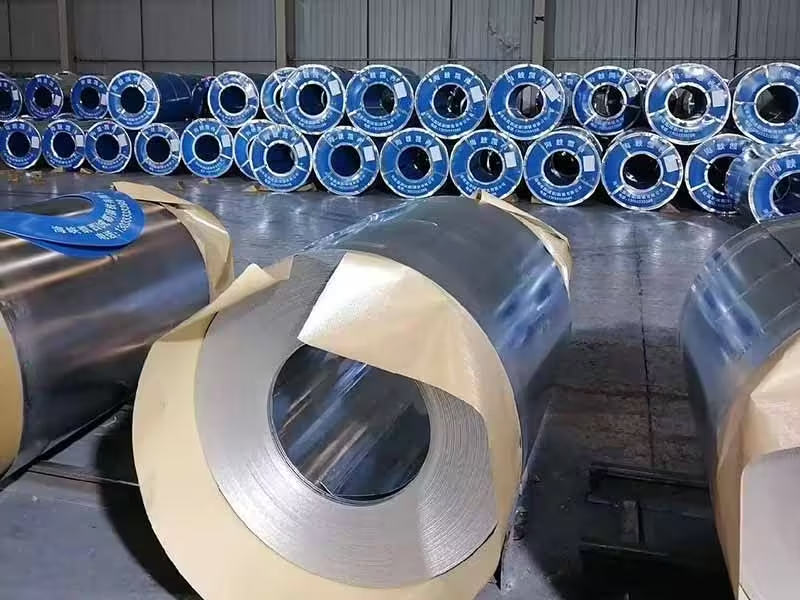
A galvanized steel coil is a rolled sheet of steel coated with a layer of zinc, which prevents rust and corrosion. The thickness of the zinc coating, alloy grade, and surface finish determine the coil’s suitability for different industrial uses. High-quality galvanized steel coil applications include construction roofing and wall panels, automotive body parts, industrial storage and packaging solutions, energy and utility infrastructure, and HVAC systems. The zinc coating type and thickness directly affect corrosion resistance and forming performance in different industries.

Technical Specifications Overview
| Parameter | Standard Range |
|---|---|
| Steel Grade | SGCC / DX51D / DX52D |
| Zinc Coating | 40–275 g/m² |
| Thickness | 0.3–2.0 mm |
| Width | 600–1500 mm |
| Coil Weight | 3–10 tons |
| Surface Finish | Spangle / Matte |
| Applications | Construction, automotive, packaging, energy |
Industry Applications
Construction Industry
Use Cases: Roofing sheets, wall cladding, structural frames, and gutter systems.
Galvanized steel coils provide long-term corrosion resistance in outdoor environments, strength for supporting structural loads, and easy fabrication into panels and beams. Roofing panels with a 120 g/m² zinc coating can last over 20 years without maintenance.
Automotive Industry
Use Cases: Car body panels, chassis components, underbody protection, and engine covers.
Benefits include high corrosion resistance against moisture, salt, and chemicals, lightweight compared to stainless steel, excellent surface finish for painting and coating, and compatibility with stamping and forming processes. Body panels made from galvanized steel coils extend vehicle lifespan and reduce rust-related recalls.
Industrial Packaging
Use Cases: Protective casings, drums, storage tanks, and heavy-duty containers.
Advantages include resistance to chemical and environmental corrosion, high mechanical strength for long-distance transportation, and cost-effectiveness for large-scale packaging. Industrial drums using 180 g/m² zinc coating are an example of maximum corrosion protection.
Energy and Utility Sector
Use Cases: Transmission towers, solar panel frames, wind turbine components, and piping systems.
Features include corrosion resistance for long-term structural integrity, lightweight strength for energy infrastructure, and easy integration with welding and bolting systems. Solar mounting frames made from galvanized steel coils can last decades without degradation.
HVAC Systems
Use Cases: Ductwork, piping protection, and air handling components.
Galvanized steel prevents corrosion from humidity and condensation, provides a smooth surface to reduce airflow resistance, and is easy to fabricate and install. Galvanized steel ducts in office buildings maintain airflow efficiency while resisting moisture-induced corrosion.
Quality Control Standards
Suppliers of galvanized steel coil applications implement strict quality control, including zinc coating thickness verification, surface finish inspection, tensile and mechanical strength testing, coil flatness and dimensional checks, and compliance with ISO and ASTM standards. Reliable quality control ensures consistent performance across all industries.
Supply Chain and Bulk Availability
Industries rely on uninterrupted material supply. Reputable suppliers provide large-volume coil inventory for factories and construction sites, custom widths, thicknesses, and coating options, fast shipping, and technical support for forming, cutting, and coating. Ready stock ensures projects remain on schedule and manufacturers avoid downtime.
Sustainability Considerations
Galvanized steel is fully recyclable. Its long lifespan reduces the need for frequent replacements, lowers environmental footprint, and supports circular economy practices in industrial production. Using galvanized steel in construction, automotive, and industrial applications contributes to sustainable manufacturing.
Market Trends
Demand for galvanized steel coil applications is growing due to expanding construction and infrastructure projects worldwide, rising EV and automotive production, increasing need for durable industrial packaging, and growing adoption of maintenance-free building materials. High-quality galvanized steel suppliers help manufacturers and contractors meet rising market demand with reliable materials.
Conclusion
Galvanized steel coil applications span multiple industries, from construction and automotive to industrial packaging and energy. Its corrosion resistance, mechanical strength, and versatility make it a preferred material for long-term, durable solutions. Selecting high-quality galvanized steel coils with ready stock ensures operational continuity, consistent performance, and long-term value for industrial and commercial applications.
FAQ
Q1: What are common galvanized steel coil applications by industry?
A1: Construction, automotive, industrial packaging, energy infrastructure, and HVAC systems.
Q2: What zinc coating thickness is recommended for outdoor use?
A2: Typically 120–275 g/m² for corrosion protection in exposed environments.
Q3: Can galvanized steel coils be customized for specific industry needs?
A3: Yes, width, thickness, and coating type can be tailored for each application.
Q4: Is bulk supply available for large-scale industrial projects?
A4: Yes, suppliers maintain ready stock for fast delivery of high-volume orders.
Q5: Why is galvanized steel preferred over bare steel in industrial applications?
A5: Because it provides superior corrosion resistance, durability, and reduces maintenance costs across multiple industries.
 English
  Korean
  Arabic
  Vietnamese