
Table of Contents
Introduction
What Are Thick-Walled Coiled Pipes?
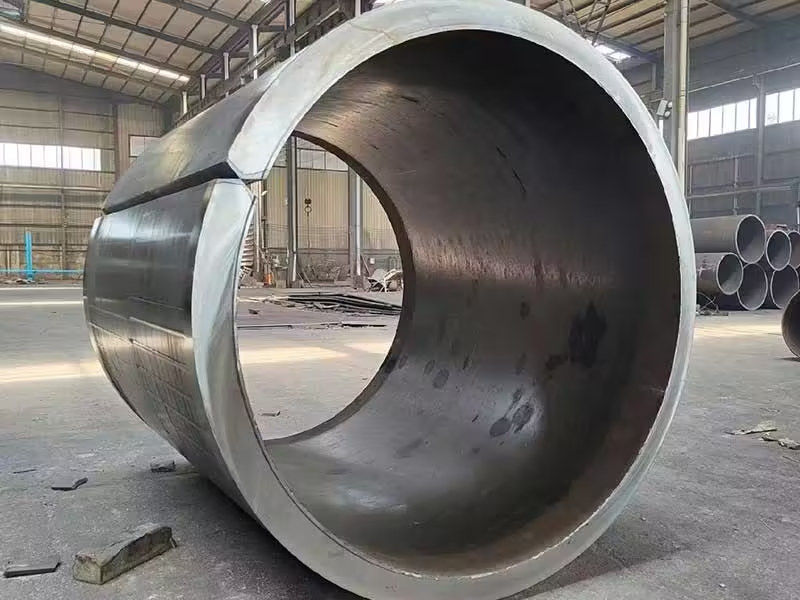
Thick-walled coiled pipes are continuous lengths of steel tubing with a higher wall thickness compared to standard coiled tubing. The term “thick-walled” generally refers to pipes where the wall thickness is selected to withstand higher internal pressures, external loads, and mechanical stresses typical in demanding industrial environments. Unlike straight pipe sections, coiled pipes are wound onto reels, enabling easier transportation and deployment over long distances without multiple field welds. Thick-walled coiled pipes are commonly manufactured using continuously milled welded steel processes, and they comply with standards such as API 5LCP (Specification for Coiled Line Pipe), ASTM A53, and API 5L for oil and gas applications. Typical outside diameter (OD) ranges for thick-walled coiled pipes include 1 1/4″ to 6″ (32 mm to 168 mm), with wall thicknesses often between 0.140″ and 0.337″ (3.6 mm to 8.6 mm) depending on the pressure class and application requirements.
Key Features and Advantages
- High Pressure Capability: The increased wall thickness significantly raises the allowable working pressure. For example, Grade X52C coiled line pipe can operate at pressures well above 5,000 psi in many configurations, making it suitable for high-pressure gathering and injection lines.
- Enhanced Structural Integrity: Thick walls improve collapse resistance and external load handling, which is critical for deepwater applications, river crossings, and directional bore deployments where external pressure or soil loading is a concern.
- Reduced Field Welds: As coiled lengths can reach 8,500 feet (2,590 meters) per reel, the number of field welds is minimized compared to 40-foot (12-meter) stick pipe. This reduces installation time, labor costs, and potential leak points.
- Versatile Coating Options: Advanced coatings such as 3-layer polyethylene (3LPE), 3-layer polypropylene (3LPP), fusion-bonded epoxy (FBE), and abrasion-resistant overlay (ARO) can be applied in-line before spooling, providing superior corrosion protection in harsh environments.
- Compatibility and Flexibility: Thick-walled coiled pipes are fully compatible with standard steel pipe systems and can be deployed using reel-laying equipment, horizontal directional drilling (HDD), or conventional open-trench methods.
- Cost-Effective Installation: By reducing field welding, inspection, and joint coating tasks, overall installation costs can be lowered by up to 20% compared to traditional stick pipe systems.
Why Manufacturers Recommend Them for Industrial Applications
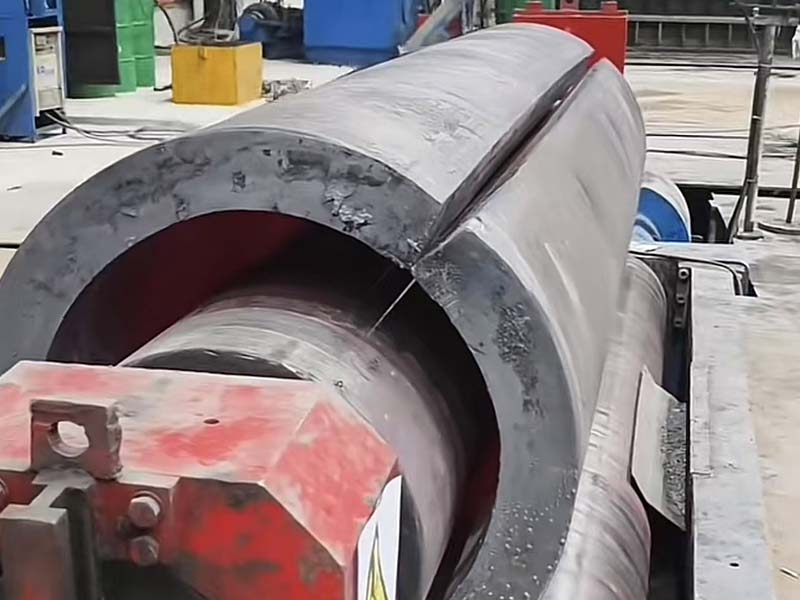
Manufacturers and engineers increasingly prefer thick-walled coiled pipes for industrial applications due to their balance of strength, durability, and installation efficiency. In oil and gas gathering systems, water and gas injection lines, chemical transfer networks, and industrial plant piping, thick-walled coiled pipes deliver reliable performance under high pressure and temperature conditions while simplifying logistics. The ability to ship long, continuous pipe lengths on reels reduces transportation costs and site handling complexity. Furthermore, adherence to stringent standards like API 5LCP, API 5L (PSL1/PSL2), and ASTM specifications ensures consistent quality and traceability, which is essential for safety-critical projects in energy and heavy industry.
Materials Used in Thick-Walled Coiled Pipes
Common Steel Grades and Alloys
- API 5L Grades: X52C, X56C, X60C, X65C, X70C, X80C (the “C” suffix denotes coiled line pipe). These grades provide a range of yield strengths (e.g., X52C: ~52,000 psi minimum yield) and are selected based on required pressure capacity and operating conditions.
- Carbon Steel Alloys: ASTM A53 Grade B and A106 Grade B are common for general industrial and high-temperature applications. Their balance of strength and weldability makes them suitable for water, steam, and hydrocarbon services.
- Stainless Steel Options: 304/304L and 316/316L stainless steels are used where corrosion resistance is critical, such as in chemical processing, marine environments, and potable water systems.
- Duplex and High-Alloy Steels: For sour service (H₂S-containing environments) or extremely corrosive conditions, duplex stainless steels (e.g., 2205) or nickel alloys can be specified to resist stress corrosion cracking and pitting.
Corrosion-Resistant Options
- Coatings: 3LPE and 3LPP coatings provide a multi-layer barrier against corrosion and mechanical damage during installation. FBE offers excellent adhesion to steel and is commonly used for buried and submerged pipelines. ARO coatings add abrasion resistance for rocky terrain and HDD pulls.
- Internal Linings: In chemically aggressive services, internal epoxy or fluoropolymer linings can be applied to protect against internal corrosion.
- Cathodic Protection: For buried or submerged pipelines, thick-walled coiled pipes can be integrated with cathodic protection systems to extend service life.
Selecting the Right Material for Specific Projects
The choice of material should align with the fluid type, operating temperature, pressure, environmental conditions, and regulatory requirements. For high-pressure oil and gas gathering lines, API 5LCP X65C or X70C thick-walled coiled pipe with 3LPP coating offers a robust solution. For industrial water and steam lines, ASTM A106 Grade B with FBE coating is suitable. For chemical processing involving chlorides or acids, 316L stainless steel or duplex materials with appropriate linings should be considered. When sour service is anticipated, materials meeting NACE MR0175 standards and compatible with H₂S environments must be selected.
Manufacturing Process of Thick-Walled Coiled Pipes
Pipe Forming Techniques
Thick-walled coiled pipes are typically produced using a continuously milled process. Master coils of flat steel (e.g., API 5L X-grade coils) are slit into strips of the required width. These strips are then joined using bias welds (skelp end welds) to form a continuous strip, which is fed into a pipe mill. The strip is rolled into a tubular shape and welded longitudinally using high-frequency electric resistance welding (HF-ERW) or submerged arc welding (SAW), depending on wall thickness and specification requirements. The welding process is closely monitored using non-destructive testing (NDT) such as eddy current (EC/ET) and ultrasonic testing (UT) to ensure weld integrity and homogeneity.
Coiling Process and Thickness Control
After welding, the pipe is sized to achieve precise OD and wall thickness tolerances. The continuous pipe is then wound onto shipping spools in predetermined lengths. Thickness control is maintained through rigorous dimensional inspections using laser micrometers, mechanical calipers, and inline ultrasonic wall thickness gauges. The process ensures uniform wall thickness along the entire length, which is critical for pressure containment and structural performance.
Quality Control Standards in Manufacturing
Manufacturers implement comprehensive quality assurance programs to meet industry standards such as API 5LCP, API 5L (PSL1/PSL2), and ASTM specifications. Key quality control measures include:
- Mechanical Testing: Tensile, yield, and elongation tests; hardness testing; flattening and flaring tests.
- Hydrostatic Testing: Each length is hydrostatically tested to a pressure above its maximum allowable operating pressure (MAOP) to confirm integrity.
- Non-Destructive Examination (NDE): Ultrasonic and eddy current testing of welds; magnetic particle or liquid penetrant inspection for surface defects.
- Dimensional Verification: OD, wall thickness, ovality, and straightness measurements against specified tolerances.
- Coating Inspection: Holiday detection (spark testing) for coated pipes; adhesion and thickness checks.
- Traceability: Each coil or spool is marked with a heat number, size, grade, and coating code for full traceability from raw material to final product.
Applications and Industry Uses
Oil and Gas Pipelines
Thick-walled coiled pipes are widely used in upstream and midstream oil and gas applications, including production well flowlines, crude oil and natural gas transfer lines, water and gas injection lines, and temporary or permanent fuel lines. Their high-pressure capability, reduced field welds, and compatibility with advanced coatings make them ideal for onshore gathering systems and offshore flowlines and tiebacks. Coiled line pipe also excels in river crossings, HDD installations, and directional bore pulls, where continuous lengths minimize the risk of leaks and reduce installation time.
Chemical and Petrochemical Industry
In chemical plants and refineries, thick-walled coiled pipes transport aggressive chemicals, hydrocarbons, and steam under high pressure and temperature. Stainless steel or duplex variants with corrosion-resistant linings are used for services involving acids, caustics, and sour fluids. The continuous length design reduces the number of joints, lowering the potential for leaks in hazardous environments. Coiled pipes are also employed in chemical injection lines (e.g., methanol, MEG) and process piping loops.
Construction and Structural Applications
Thick-walled coiled pipes serve in structural roles such as piling, casing, and support columns for bridges, buildings, and marine structures. Their high strength-to-weight ratio and ability to be coiled for transport simplify logistics for remote or large-scale construction sites. In geothermal and district heating systems, coiled pipes provide efficient heat transfer and durability under thermal cycling.
Water and Sewage Systems
Municipal and industrial water supply networks, irrigation systems, and sewage treatment plants utilize thick-walled coiled pipes for pressure mains, distribution lines, and force mains. HDPE-lined coiled pipes or coated steel variants offer corrosion resistance and long service life. The coiled format reduces installation joints, which is beneficial for underground and underwater pipelines where maintenance access is limited.
Comparing Thick-Walled Coiled Pipes with Other Pipes
Thick-Walled vs Thin-Walled Pipes
| Feature | Thick-Walled Coiled Pipes | Thin-Walled Coiled Pipes |
|---|---|---|
| Wall Thickness | 0.140″ – 0.337″ (3.6 – 8.6 mm) | <0.140″ (e.g., 0.065″ – 0.125″) |
| Pressure Capacity | High (often >5,000 psi) | Moderate (typically <3,000 psi) |
| Collapse Resistance | Superior, suitable for deepwater/HDD | Limited, may require external protection |
| Applications | High-pressure gathering, injection, flowlines | Low-pressure fluid transport, instrument air |
| Field Welds Reduced | More significant due to longer coiled lengths | Still fewer than stick pipe but less reduction than thick-walled |
- Pressure and Load Handling: Thick-walled pipes can withstand higher internal pressures and external loads, making them suitable for deepwater, HDD, and high-pressure gathering lines.
- Durability in Harsh Environments: Thicker walls provide a larger corrosion allowance and better resistance to mechanical damage during installation.
- Cost Considerations: While thick-walled pipes may have higher material costs per unit length, the reduced installation expenses (fewer welds, faster deployment) often offset the initial cost difference.
Coiled Pipes vs Straight Pipes
- Installation Efficiency: Coiled pipes eliminate most pipe-to-pipe field welds, reducing installation time by up to three times compared to 40-foot stick pipe sections.
- Logistics and Transportation: Coiled reels are compact and easier to transport and store than bundles of straight pipes, especially in remote or constrained sites.
- Leak Risk Reduction: Fewer joints mean fewer potential leak points, enhancing system integrity and safety.
- Flexibility in Deployment: Coiled pipes can be laid directly from reels, used in HDD pulls, or deployed as velocity strings in gas wells, offering versatility that straight pipes lack.
Advantages in High-Pressure and High-Temperature Environments
Thick-walled coiled pipes are designed to operate safely in high-pressure (e.g., >5,000 psi) and high-temperature (e.g., up to 284°F / 140°C with 3LPP coating) conditions. Their material grades (e.g., X65C, X70C) provide the required yield and tensile strength, while advanced coatings and optional internal linings protect against corrosion and thermal degradation. The continuous length design minimizes thermal expansion and contraction issues, and the reduced number of joints lowers the risk of gasket or weld failures under thermal cycling.
Choosing the Right Thick-Walled Coiled Pipe
Factors to Consider (Pressure, Diameter, Material)
- Pressure Rating: Determine the maximum allowable operating pressure (MAOP) and required safety factor. Select a pipe grade (e.g., X60C, X70C) and wall thickness that meet or exceed the pressure requirements per ASME B31.4/B31.8 or applicable codes.
- Diameter and Flow Requirements: Choose an OD that meets flow rate and pressure drop criteria. Larger diameters reduce pressure loss but may require higher material costs and handling equipment.
- Material Compatibility: Consider fluid composition, temperature, and corrosivity. For sour service, select materials meeting NACE MR0175. For seawater or chemical exposure, use corrosion-resistant alloys or appropriate coatings.
- Environmental Conditions: For buried pipelines, select coatings such as 3LPE or ARO. For underwater service, ensure compatibility with cathodic protection systems.
- Installation Method: HDD, river crossings, or directional bore pulls may require specific wall thicknesses and coatings to withstand bending stresses and abrasion.
Customization Options for Industrial Projects
Manufacturers can customize thick-walled coiled pipes in several ways:
- Length and Reel Configuration: Reels up to 8,500 feet (2,590 meters) are available; custom lengths can be spooled to match project needs.
- Coating Selection: Choose from 3LPE, 3LPP, FBE, ARO, or customer-specified coating systems.
- End Connections: Beveled ends, flanges, or threaded ends can be prepared for field connections.
- Special Alloys: Duplex, super duplex, or nickel alloys can be supplied for highly corrosive services.
- Testing and Certification: Additional hydrostatic testing, NDE, or third-party inspections can be arranged.
Tips from Manufacturers for Optimal Selection
- Engage Early: Consult with manufacturers during the design phase to optimize material selection, sizing, and coating choices for cost and performance.
- Specify Standards Clearly: Clearly reference applicable standards (API 5LCP, API 5L, ASTM, NACE) in procurement documents to ensure compliance.
- Consider Life Cycle Costs: Evaluate not only initial material costs but also installation, maintenance, and expected service life.
- Plan for Installation Constraints: Confirm reel size, handling equipment, and site access before ordering to avoid deployment delays.
- Request Traceability and Test Reports: Obtain mill test reports (MTR), NDE records, and coating certificates for quality assurance.
Installation and Maintenance Guidelines
Proper Handling and Storage
- Reel Handling: Use proper lifting equipment to avoid damaging the pipe or the reel. Avoid dropping or impacting the reel during transport.
- Storage: Store reels in a dry, level area away from direct sunlight and corrosive substances. For coated pipes, protect from abrasion and puncture.
- Uncoiling: Use a spooling unit or straightener to feed the pipe smoothly without kinking or excessive bending.
Welding and Joining Techniques
- Field Welding: When welding coiled pipe to other pipe sections, follow AWS D1.1 or API 1104 standards. Use qualified welders and approved welding procedures.
- Mechanical Connections: Flanges, threaded connections, or couplings can be used for non-welded applications, especially in temporary or modular setups.
- Heat Treatment: For certain materials (e.g., high-strength alloys), preheating and post-weld heat treatment may be required to maintain mechanical properties.
Routine Inspection and Maintenance Practices
- Periodic Inspection: Implement scheduled inspections using visual methods, ultrasonic thickness gauges, and inline inspection tools (e.g., pigging) to monitor wall loss and coating condition.
- Corrosion Monitoring: Install corrosion coupons or probes in critical sections to track internal and external corrosion rates.
- Coating Repair: Promptly repair any coating defects identified during inspections using compatible repair materials.
- Leak Detection: Employ leak detection systems or periodic pressure tests to identify and address leaks early.
- Record Keeping: Maintain detailed records of installation, inspections, repairs, and testing for regulatory compliance and life cycle management.
Cost and Availability
Price Factors (Material, Thickness, Length)
Several factors influence the cost of thick-walled coiled pipes:
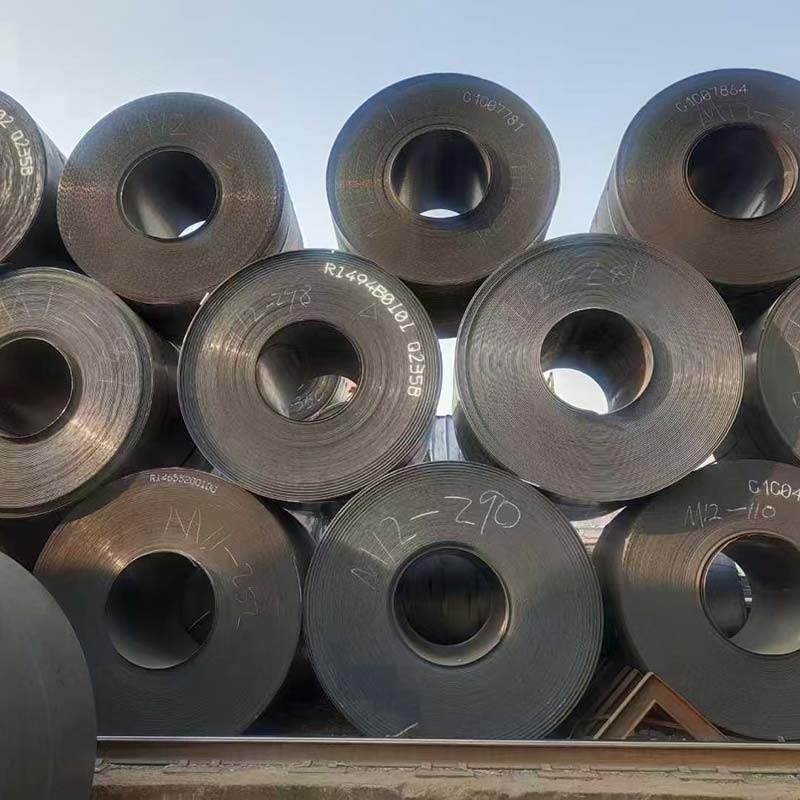
- Material Grade: Higher strength grades (e.g., X70C, X80C) and corrosion-resistant alloys cost more than standard carbon steel grades.
- Wall Thickness: Thicker walls increase material usage and manufacturing complexity, raising the price.
- Coating Type: Advanced coatings like 3LPP or ARO are more expensive than basic FBE.
- Length and Reel Configuration: Longer reels reduce per-foot installation costs but may require specialized handling equipment.
- Market Conditions: Steel prices, availability of raw materials, and logistics costs fluctuate with market demand.
Bulk Orders and Wholesale Options
For large projects, manufacturers offer volume discounts and flexible ordering options. Bulk purchases can be scheduled to match project timelines, reducing storage costs and ensuring material availability. Some suppliers provide inventory management and just-in-time delivery services to optimize supply chain efficiency.
Supplier Considerations and Lead Times
When selecting a supplier, consider:
- Technical Support: Availability of engineering support, material selection assistance, and customization services.
- Quality Certifications: API 5LCP monogram (e.g., License #0006), ISO 9001, and NACE certifications indicate commitment to quality.
- Production Capacity: Ability to meet project deadlines, especially for large or urgent orders.
- Geographic Reach: Local or regional presence to reduce shipping times and costs.
- After-Sales Service: Support with field issues, warranty claims, and spare parts.
Lead times vary based on material availability, coating specifications, and order size. Standard orders may ship within 4–8 weeks, while custom alloys or coatings can extend lead times to 12–16 weeks.
Common Challenges and Solutions
Deformation During Transport
- Challenge: Coiled pipes may experience ovality or flattening if reels are mishandled or overloaded.
- Solution: Use properly rated reels, secure loads during transport, and avoid stacking reels excessively. Implement visual and dimensional inspections upon receipt.
Corrosion and Rust Prevention
- Challenge: External corrosion can occur if coatings are damaged or if the pipe is stored in humid conditions.
- Solution: Apply protective coatings (3LPE, 3LPP, FBE) and conduct regular inspections. Store reels in dry environments and use desiccants if necessary. For buried pipelines, integrate cathodic protection.
Ensuring Longevity in Industrial Applications
- Challenge: Aggressive fluids, high temperatures, and mechanical stresses can shorten service life.
- Solution: Select appropriate materials and coatings, implement a robust inspection and maintenance program, and replace sections showing significant wall loss or coating degradation. Use corrosion inhibitors in the fluid stream where feasible.
Conclusion
Thick-walled coiled pipes offer a robust, efficient, and cost-effective solution for high-pressure, high-demand industrial applications across oil and gas, chemical processing, water infrastructure, and construction sectors. Their enhanced wall thickness provides superior pressure containment, collapse resistance, and durability, while the coiled format reduces field welds, accelerates installation, and lowers life cycle costs. Backed by stringent standards such as API 5LCP, API 5L, and ASTM specifications, thick-walled coiled pipes deliver consistent quality and performance in challenging environments.
As a direct manufacturer, we combine advanced production capabilities with deep technical expertise to supply thick-walled coiled pipes tailored to your project needs. From material selection and coating options to logistics and field support, we are committed to delivering reliable solutions that meet your schedule and budget. Contact us today for competitive quotes, custom orders, or expert consultation to find the optimal thick-walled coiled pipe solution for your next project.
FAQ
1. What is a Thick-walled coiled pipe?
A Thick-walled coiled pipe is a durable, high-strength pipe with thick walls that is coiled for easier handling and installation in high-pressure systems.
2. Where is Thick-walled coiled pipe commonly used?
It is widely used in oil and gas pipelines, chemical processing, and high-pressure fluid transport due to its strength and flexibility.
3. How is Thick-walled coiled pipe manufactured?
It is produced by coiling thick-walled steel or alloy pipes, ensuring precise dimensions and structural integrity for industrial applications.
4. What are the benefits of using Thick-walled coiled pipe?
Thick-walled coiled pipes provide excellent durability, resistance to corrosion, and the ability to handle high pressure in confined spaces.
5. How do you maintain a Thick-walled coiled pipe?
Regular inspections for corrosion, monitoring operating pressure, and following manufacturer guidelines help maintain performance and longevity.
 English
  Korean
  Arabic
  Vietnamese