

Stainless steel coil for industrial water treatment equipment is a critical material used in manufacturing corrosion-resistant tanks, pressure vessels, filtration systems, piping networks, and heat exchange units. Industrial water treatment systems operate under constant exposure to moisture, chemicals, dissolved salts, and fluctuating temperatures. Under these conditions, material durability directly determines system lifespan and operational safety.
As environmental regulations tighten and global demand for clean water increases, stainless steel coil for industrial water treatment equipment has become the preferred solution for municipal plants, wastewater facilities, desalination systems, and industrial purification units.
Table of Contents
Why Material Selection Matters in Water Treatment Systems
Water treatment facilities operate in aggressive environments that may include:
- Chloride-rich water
- Acidic or alkaline chemical dosing
- Continuous wet exposure
- High-pressure flow systems
- Elevated operating temperatures
Materials such as carbon steel require coatings and frequent maintenance to prevent corrosion. Over time, coating failure can lead to leakage, contamination, and costly downtime.
Stainless steel coil provides inherent corrosion resistance through its chromium-based passive oxide layer. This self-healing protective film significantly reduces rust formation and chemical degradation, making it ideal for long-term infrastructure projects.
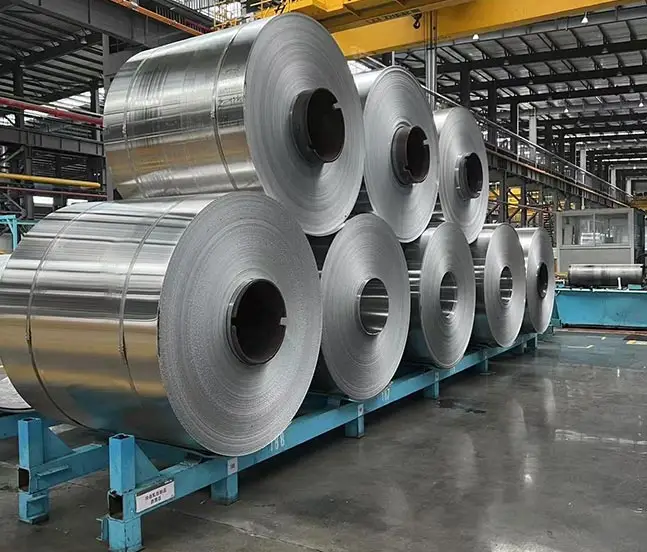
Common Stainless Steel Grades Used
304 Stainless Steel Coil
304 stainless steel coil is widely used in general water treatment systems. It offers excellent corrosion resistance in standard freshwater environments and provides strong mechanical properties for tank and piping fabrication.
Typical applications include:
- Freshwater storage tanks
- Filtration housings
- Structural panels
- General industrial piping
316 Stainless Steel Coil
316 stainless steel coil contains molybdenum, enhancing resistance to chloride-induced corrosion and pitting. It is recommended for:
- Seawater desalination systems
- Wastewater treatment plants
- Chemical dosing systems
- High-salinity environments
For long-term exposure to aggressive chemicals or saline water, 316 grade significantly extends equipment lifespan.
Technical Specifications Overview
| Parameter | Typical Range | Description |
|---|---|---|
| Grade | 304 / 316 | Corrosion-resistant material |
| Thickness | 0.4–5.0 mm | Suitable for tanks and pressure vessels |
| Width | 600–1500 mm | Custom slitting supported |
| Surface Finish | 2B / BA / No.4 | Smooth anti-scaling surface |
| Tensile Strength | ≥520 MPa | Structural durability |
| Standard | ASTM A240 / EN 10088 | International compliance |
Proper thickness selection depends on tank capacity, pressure rating, and environmental exposure.
Key Advantages of Stainless Steel Coil in Water Treatment
1. Resistance to Pitting and Crevice Corrosion
Chlorides in water can cause localized corrosion in ordinary metals. Stainless steel coil, particularly 316 grade, significantly reduces pitting risk and enhances structural reliability.
2. Anti-Scaling Surface Performance
Smooth 2B or BA finishes reduce mineral buildup inside tanks and pipelines. This improves system efficiency and reduces cleaning frequency.
3. High Structural Strength
Water treatment tanks and pressure vessels require mechanical stability. Stainless steel coil maintains strength under continuous load, vibration, and fluid pressure.
4. Thermal Stability
Industrial water systems may involve heating processes or heat exchangers. Stainless steel maintains mechanical integrity across a wide temperature range.
5. Reduced Maintenance Costs
Compared to coated carbon steel, stainless steel eliminates the need for repainting or re-coating, lowering long-term operational costs.
Applications in Industrial and Municipal Systems
Stainless steel coil for industrial water treatment equipment is widely used in:
Municipal drinking water plants
Industrial wastewater treatment systems
Reverse osmosis desalination plants
Cooling water circulation systems
Chemical treatment tanks
Heat exchangers
Sludge processing units
High-purity water production facilities
Its versatility makes it suitable for both small modular systems and large-scale infrastructure projects.
Fabrication Advantages for Equipment Manufacturers
The coil format allows efficient manufacturing processes such as:
- Roll forming for cylindrical tanks
- Laser cutting for precision components
- Automatic welding for sealed pressure systems
- Deep drawing for vessel heads
- Custom slitting for optimized material usage
This improves production efficiency and reduces material waste for OEM manufacturers.
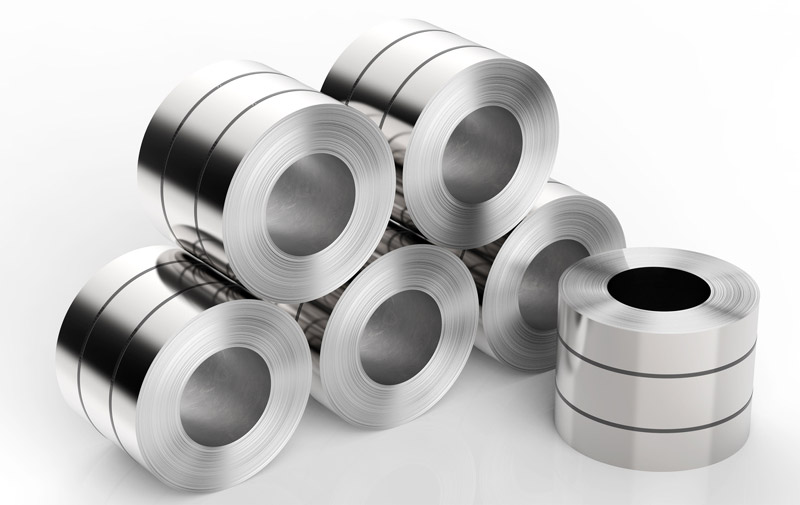
Surface Finish Considerations
Surface finish impacts corrosion resistance and operational efficiency.
2B finish provides a smooth industrial-grade surface suitable for tanks and pipelines.
BA finish offers improved brightness and easier cleaning.
No.4 finish provides a brushed surface with strong corrosion performance and durability.
For potable water and high-purity systems, smoother finishes are typically recommended.
Comparison: Stainless Steel vs Carbon Steel in Water Treatment
Carbon steel requires protective coatings and regular inspection.
Stainless steel provides inherent corrosion resistance.
Carbon steel has lower initial cost but higher maintenance expense.
Stainless steel offers longer lifecycle value and higher reliability.
For long-term municipal and industrial investment, stainless steel coil offers superior economic performance over time.
Quality Control and International Standards
Reliable suppliers provide comprehensive inspection and certification:
- Chemical composition verification
- Mechanical property testing
- Thickness tolerance control
- Surface quality inspection
- PMI (Positive Material Identification)
- Mill Test Certificates
Compliance with ASTM A240 and EN 10088 ensures global market acceptance.
Bulk Supply for OEM and EPC Projects
Industrial water treatment projects often involve large-scale procurement. Professional stainless steel coil suppliers support:
Stable inventory of 304 and 316 grades
High monthly production capacity
Custom coil weight options
Protective export packaging
Flexible delivery schedules
Technical support for material selection
Stable supply ensures project timelines and cost control for EPC contractors and equipment manufacturers.
Market Growth and Industry Outlook
Global demand for industrial water treatment equipment continues to rise due to:
Urbanization and infrastructure expansion
Environmental protection regulations
Industrial wastewater discharge control
Growth of desalination technology
Investment in sustainable water management
As durability and reliability become priorities, stainless steel coil for industrial water treatment equipment remains the preferred material choice worldwide.
Conclusion
Stainless steel coil for industrial water treatment equipment provides outstanding corrosion resistance, structural strength, thermal stability, and long-term cost efficiency. It supports municipal, industrial, and chemical water systems with durable and low-maintenance performance.
For equipment manufacturers, EPC contractors, and infrastructure developers, sourcing certified stainless steel coil ensures project reliability, compliance, and long service life.
FAQ
Q1: Is 304 stainless steel suitable for water treatment systems?
Yes, 304 is suitable for general freshwater applications and standard industrial systems.
Q2: When should 316 stainless steel be selected?
316 is recommended for saline, chloride-rich, or chemically aggressive environments.
Q3: What surface finish is ideal for anti-scaling performance?
2B and BA finishes provide smooth surfaces that reduce mineral buildup.
Q4: Can stainless steel coil thickness be customized?
Yes, thickness and width can be adjusted according to tank design and pressure requirements.
Q5: Is bulk export supply available for EPC projects?
Yes, professional suppliers support large-scale industrial and municipal projects.
 English
  Korean
  Arabic
  Vietnamese