

Stainless steel coil for food processing equipment is the preferred material for manufacturing hygienic, corrosion-resistant, and durable industrial components used in the food and beverage industry. From storage tanks and conveyor systems to mixing vessels and commercial kitchen machinery, stainless steel ensures compliance with strict food safety standards while maintaining structural strength.
As global food production expands and regulatory requirements tighten, manufacturers increasingly rely on food grade stainless steel coil to guarantee sanitation, reliability, and long-term operational efficiency.
Table of Contents
Why Food Grade Stainless Steel Is Essential
Food processing environments expose materials to water, steam, organic acids from fruits and dairy products, cleaning chemicals, and high-temperature sterilization cycles. Ordinary carbon steel corrodes quickly under these conditions. Stainless steel coil for food processing equipment contains chromium and, in some grades, molybdenum, forming a passive oxide layer that prevents rust and chemical attack.
This protective mechanism ensures long service life while reducing contamination risks and maintenance costs.
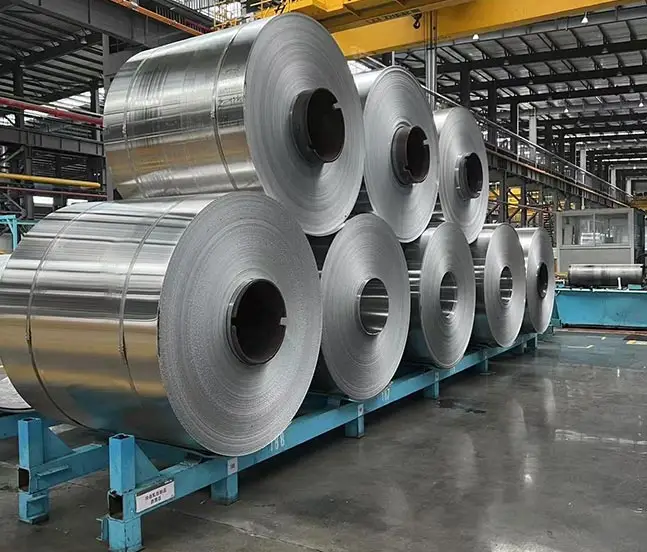
Common Stainless Steel Grades for Food Equipment
304 Stainless Steel Coil
304 stainless steel coil is the most widely used food grade material. It provides excellent corrosion resistance, good weldability, and strong formability, making it ideal for tanks, machine panels, and processing lines.
316 Stainless Steel Coil
316 stainless steel coil contains molybdenum, enhancing resistance to chlorides and acidic environments. It is recommended for seafood processing, dairy production, and applications involving aggressive cleaning agents.
430 Stainless Steel Coil
430 grade offers a cost-effective solution for less corrosive environments and is often used in commercial kitchen panels and decorative components.
Technical Specifications Overview
| Parameter | Typical Range | Description |
|---|---|---|
| Grade | 304 / 316 / 430 | Food-grade stainless steel |
| Thickness | 0.3–3.0 mm | Suitable for tanks and equipment parts |
| Width | 600–1500 mm | Custom slitting available |
| Surface Finish | 2B / BA / No.4 | Hygienic and smooth surface |
| Hardness | Annealed / Half Hard | Adjustable for fabrication |
| Standard | ASTM A240 / EN 10088 | International compliance |
Selecting the proper thickness and grade ensures structural stability and regulatory compliance.
Key Advantages for Equipment Manufacturers
Hygienic Surface Performance
Smooth finishes such as 2B and BA minimize bacterial growth and make cleaning efficient. Stainless steel coil for food processing equipment supports sanitation standards required by food safety authorities worldwide.
Strong Mechanical Properties
The material maintains high tensile strength and structural integrity during continuous industrial use, reducing deformation and operational failure.
Heat and Chemical Resistance
Stainless steel coil withstands high-temperature sterilization and exposure to cleaning chemicals without surface degradation.
Fabrication Flexibility
The coil can be cut, welded, stamped, deep drawn, and roll formed. This flexibility allows manufacturers to produce mixing bowls, conveyor housings, machine enclosures, and structural components with precision.
Long-Term Cost Efficiency
Although the initial cost may be higher than carbon steel, stainless steel coil significantly reduces maintenance and replacement expenses over time.
Applications in Food and Beverage Industry
Stainless steel coil for food processing equipment is used in dairy tanks, beverage filling systems, meat processing machinery, bakery equipment, industrial mixers, commercial kitchens, storage silos, and conveyor systems.
Its corrosion resistance and durability make it suitable for both small workshops and automated industrial production facilities.
Surface Finish Importance
Surface finish plays a critical role in hygiene and appearance.
2B finish is commonly used for industrial applications due to its smooth and practical surface. BA finish offers a brighter, smoother appearance and enhanced cleanability. No.4 finish provides a brushed texture often used in commercial kitchen equipment.
For high hygiene standards, BA finish stainless steel coil is often preferred.
Quality Control and Certification
Reliable suppliers conduct chemical composition testing, mechanical property testing, thickness tolerance inspection, and surface quality checks. Compliance with ASTM and EN standards ensures international acceptance and export suitability.
Bulk Supply for OEM Manufacturers
Professional stainless steel coil suppliers offer large inventories of 304 and 316 grades, custom slitting services, PVC protective film options, export-ready packaging, and flexible order quantities.
Stable monthly production capacity supports uninterrupted manufacturing operations for food equipment producers.
Market Growth Outlook
The global demand for stainless steel coil in food processing continues to grow due to stricter food safety regulations, expansion of packaged food markets, and increased automation in food manufacturing.
As hygiene requirements rise, stainless steel coil for food processing equipment remains the industry benchmark material.
Conclusion
Stainless steel coil for food processing equipment provides corrosion resistance, hygienic performance, mechanical strength, and long-term durability. It is essential for modern food production systems and industrial kitchens.
Choosing a reliable stainless steel coil supplier ensures consistent quality, regulatory compliance, and efficient large-scale production.
FAQ
Q1: Is 304 stainless steel safe for food processing?
Yes, 304 is widely recognized as food grade and suitable for most food applications.
Q2: When should 316 stainless steel be used?
316 is recommended for environments with salt, acids, or aggressive cleaning chemicals.
Q3: What surface finish is best for hygiene?
BA finish offers superior smoothness and easy cleaning.
Q4: Can stainless steel coil be customized?
Yes, thickness, width, and surface finish can be tailored to specific equipment requirements.
Q5: Is bulk export available?
Yes, suppliers provide stable inventory and international shipping solutions.
 English
  Korean
  Arabic
  Vietnamese