

Industrial aluminum foil is a thin but highly functional metal material used in packaging, insulation, electronics, HVAC systems, construction materials, cable wrapping, thermal protection, and many other manufacturing applications. Because it is lightweight, flexible, corrosion resistant, moisture resistant, and easy to laminate with other materials, aluminum foil has become an important choice for buyers who need reliable barrier performance or heat reflection.
For industrial procurement, however, choosing aluminum foil is not as simple as selecting a thickness and comparing prices. Different applications require different alloys, tempers, surface conditions, pinhole control levels, roll widths, and packaging methods. A foil that works well for roof insulation may not be suitable for pharmaceutical packaging. A foil used for lamination may not meet the performance needs of electrical shielding or high-speed wrapping lines.
This guide explains how industrial buyers can choose suitable aluminum foil for packaging and insulation projects. It also covers alloy selection, thickness control, temper, surface quality, slitting, roll quality, supplier communication, and common purchasing mistakes.
Table of Contents
Why Industrial Aluminum Foil Is Used Across Many Industries
Aluminum foil has a strong combination of physical and processing advantages. It is light enough for flexible materials, thin enough for lamination, and stable enough to protect products from moisture, oxygen, light, odor, and contamination when properly produced.
Barrier protection for packaging
In packaging applications, aluminum foil is often used as a barrier layer. It helps protect food, medicine, chemicals, and sensitive industrial products from external conditions. When laminated with plastic film, paper, or other materials, aluminum foil can improve moisture resistance, oxygen resistance, light blocking, and sealing performance.
Heat reflection for insulation
In insulation systems, aluminum foil is commonly used as a reflective layer. It can reflect radiant heat and improve the thermal performance of roof insulation, wall insulation, HVAC duct insulation, pipe insulation, and heat protection materials. When combined with foam, fiberglass, kraft paper, woven fabric, or adhesive layers, aluminum foil becomes part of a stronger composite insulation structure.
Processing flexibility for manufacturers
Industrial aluminum foil can be slit, laminated, coated, printed, embossed, wrapped, stamped, or formed. This makes it suitable for different production lines and product structures. For buyers, the key is not only whether the foil has the right thickness, but whether it can run smoothly in their actual production process.
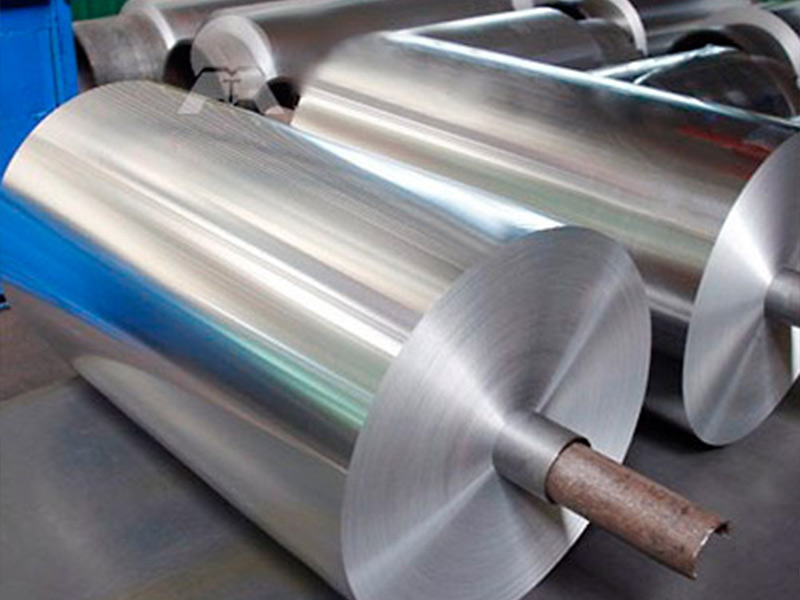
Main Applications of Industrial Aluminum Foil
Industrial aluminum foil is used in several major application fields. Each field has different performance priorities, so buyers should select material specifications according to real production needs.
Packaging materials
In packaging, aluminum foil may be used for flexible packaging, food packaging, pharmaceutical packaging, sealing films, container lids, pouch structures, moisture-proof wrapping, and protective laminated materials. These applications often require good surface cleanliness, stable thickness, suitable temper, and reliable barrier performance.
Insulation and thermal materials
For insulation, aluminum foil is used in roofs, walls, pipes, air ducts, thermal blankets, HVAC systems, and reflective insulation panels. These applications usually require good reflectivity, smooth surface quality, suitable bonding performance, and stable roll processing.
Electronics and electrical products
In electronics and electrical applications, aluminum foil may be used for cable wrapping, electromagnetic shielding, capacitor materials, protective layers, and component insulation. These applications may require accurate thickness, clean surface, stable conductivity, and tight width tolerance.
General industrial protection
Industrial manufacturers also use aluminum foil for anti-corrosion wrapping, heat shielding, machinery protection, moisture-proof packaging, and composite materials. In these cases, buyers often care about roll width, handling strength, flexibility, and packaging safety.
How to Choose the Right Aluminum Foil Alloy
Alloy selection affects formability, strength, corrosion resistance, conductivity, barrier performance, and processing stability. Buyers should not assume that all aluminum foil performs the same.
| Aluminum Alloy | Main Features | Typical Applications | Buying Consideration |
|---|---|---|---|
| 1050 | High purity, good conductivity, easy forming | Electrical foil, insulation foil, general industrial foil | Suitable when purity and conductivity matter |
| 1060 | High aluminum content, soft, flexible, corrosion resistant | Cable foil, wrapping foil, heat reflection materials | Good for flexible and reflective applications |
| 1100 | Good corrosion resistance and workability | Packaging, heat exchange, industrial wrapping | Suitable for general use with moderate strength needs |
| 3003 | Better strength than pure aluminum, good formability | Container foil, insulation composites, heat exchange parts | Useful when slightly higher strength is required |
| 8011 | Good barrier performance and processing stability | Food packaging, sealing foil, pharmaceutical packaging | Common for packaging and lamination |
| 8021 | Strong barrier performance, good deep drawing behavior | Blister packaging, high-barrier packaging | Suitable for demanding packaging applications |
| 8079 | Good elongation and flexibility | Flexible packaging, laminated foil, pouch materials | Suitable for soft packaging and composite structures |
For packaging projects, 8011, 8021, and 8079 aluminum foil are often considered because they offer good barrier performance and lamination stability. For insulation, cable wrapping, and general industrial use, 1050, 1060, 1100, and 3003 may be suitable depending on strength, reflectivity, and processing needs.
Aluminum Foil Thickness and Performance
Thickness is one of the most important factors when buying aluminum foil. It affects strength, flexibility, barrier performance, cost, pinhole control, and production stability.
Thin foil for flexible packaging
Thin aluminum foil is commonly used for flexible packaging, laminated films, pouches, wrapping materials, and lightweight insulation products. It provides flexibility and reduces material weight, but it also requires better pinhole control and careful handling during production.
Medium thickness foil for insulation and sealing
Medium thickness foil is often used for roof insulation, duct insulation, sealing films, container lids, protective wrapping, and industrial composite materials. It offers a practical balance between flexibility, strength, and processing stability.
Thicker foil for forming and protection
Thicker aluminum foil may be selected for formed containers, heat shields, protective layers, and applications that require better handling strength. It can reduce tearing risk, but it may increase cost and reduce flexibility.
Buyers should not choose thickness only according to common market sizes. The right thickness depends on the final product structure, lamination process, tensile strength requirement, elongation, sealing behavior, and required barrier level.
Temper Selection for Aluminum Foil
Temper affects how aluminum foil behaves during production. It influences hardness, ductility, tensile strength, elongation, bending behavior, and forming performance.
Soft temper for forming and lamination
O temper aluminum foil is soft and highly formable. It is often used when the material needs to be laminated, wrapped, deep drawn, sealed, or formed without cracking. Packaging and flexible composite materials often require softer foil.
Hard temper for shape stability
Harder tempers such as H18, H22, H24, and H26 can provide better stiffness and shape stability. These tempers may be suitable for applications where the foil must keep a more stable shape or provide stronger mechanical support.
Why temper should be confirmed early
If the temper is not suitable, the foil may wrinkle, crack, break, or fail during downstream processing. For buyers using high-speed lamination, coating, printing, slitting, or wrapping equipment, stable temper and mechanical properties are essential.
A complete inquiry should include alloy, temper, thickness, width, surface condition, roll size, and application. This allows the supplier to recommend a more suitable specification.
Surface Quality and Cleanliness Requirements
Surface quality is critical because aluminum foil is very thin. Small defects can affect appearance, barrier performance, lamination quality, and production efficiency.
Common surface defects include oil stains, scratches, oxidation marks, wrinkles, pinholes, black spots, water stains, uneven brightness, and rolling marks. For industrial buyers, the acceptable surface condition depends on the final use.
For packaging
Packaging-grade aluminum foil usually requires clean surfaces, stable thickness, good flatness, and strict pinhole control. If the foil will be printed, coated, or laminated, surface contamination may reduce bonding strength or affect final appearance.
For insulation
Foil used in insulation materials should have good reflectivity and suitable surface cleanliness for bonding with paper, foam, fiberglass, woven fabric, or adhesive layers. Poor surface quality may affect lamination strength and thermal performance.
For electrical applications
Electrical and electronic applications may require cleaner surfaces, stable conductivity, and better thickness precision. Buyers should clearly communicate technical requirements when foil is used for cable wrapping, shielding, or component protection.
Pinhole Control in Aluminum Foil
Pinhole control is a major quality factor, especially for thin foil. Pinholes are tiny openings in the material. They may reduce barrier performance and allow moisture, oxygen, light, or vapor to pass through.
For ordinary industrial wrapping, general pinhole control may be acceptable. For food packaging, pharmaceutical packaging, high-barrier lamination, and sensitive industrial protection, stricter pinhole requirements are usually necessary.
The thinner the foil, the more important pinhole control becomes. Buyers should ask whether the selected foil specification is suitable for the intended barrier requirement. A reliable supplier should understand the difference between general industrial foil and high-barrier packaging foil.
Aluminum Foil for Packaging Applications
Packaging is one of the most important uses of industrial aluminum foil. The material is valued because it provides protection while keeping the package lightweight and flexible.
Food packaging
Food packaging may use aluminum foil for sealing, laminated pouches, wrapping, container lids, and protective layers. Buyers should consider barrier performance, surface cleanliness, lamination compatibility, sealing performance, and applicable food contact requirements.
Pharmaceutical packaging
Pharmaceutical packaging usually has stricter requirements. Aluminum foil used for blister packaging or medicine protection may require better pinhole control, stable mechanical properties, clean surface quality, and precise thickness.
Industrial packaging
Industrial packaging may use aluminum foil for moisture-proof wrapping, anti-corrosion protection, chemical packaging, machinery protection, and export packaging layers. These applications may not always require decorative surfaces, but they still need stable roll quality and reliable handling strength.
Aluminum Foil for Insulation Applications
Aluminum foil is widely used in insulation because it reflects radiant heat and works well in composite materials. It is commonly used in construction, HVAC systems, transportation, cold chain materials, and industrial thermal protection.
Roof and wall insulation
In building insulation, aluminum foil can improve heat reflection and moisture resistance when laminated with kraft paper, woven fabric, foam, or fiberglass. Surface reflectivity and bonding performance are important for consistent insulation performance.
HVAC duct insulation
HVAC duct insulation often uses aluminum foil facing to improve heat resistance, moisture resistance, and installation durability. The foil should have stable thickness, clean surface, and good adhesion with the backing material.
Pipe and equipment insulation
For pipes, tanks, and industrial equipment, aluminum foil can be used as part of a protective or reflective layer. Buyers should consider temperature conditions, moisture exposure, tear resistance, and composite structure design.
Slitting, Roll Width, and Winding Quality
Most industrial aluminum foil is supplied in rolls. Roll quality affects whether the material can run smoothly on production lines.
Slitting accuracy
Slitting is used to cut wider foil rolls into narrower widths. Good slitting should provide accurate width, clean edges, low burr, and stable tension. Poor slitting can cause edge cracks, tearing, machine feeding problems, and production waste.
Roll winding quality
A good foil roll should have even winding, stable tension, proper core size, and protected edges. Loose winding may cause shifting during transport. Over-tight winding may create deformation or wrinkles. Damaged edges may cause breakage during high-speed processing.
Roll information buyers should confirm
Before placing an order, buyers should confirm roll width, width tolerance, core inner diameter, roll weight, winding direction, packaging method, and surface protection. These details are especially important for automated lamination, printing, wrapping, or slitting lines.
Packaging, Transportation, and Storage
Aluminum foil is thin and sensitive to moisture, pressure, dust, and handling damage. Proper packaging is essential for export orders and long-distance transportation.
Export packaging may include moisture-proof film, protective paper, edge protectors, roll fixing, cartons, wooden cases, pallets, and clear labels. For packaging-grade or high-cleanliness foil, extra dust prevention and careful handling may be required.
Storage conditions also matter. Aluminum foil should be stored in a dry, clean, and ventilated environment. Sudden temperature changes may cause condensation, which can lead to oxidation marks or water stains. Rolls should be protected from impact, pressure, and direct exposure to moisture.
Good packaging and storage help buyers reduce material loss before production begins.
How to Evaluate an Aluminum Foil Supplier
A reliable supplier should help buyers match the foil specification with the application, not only quote a price. Industrial buyers should evaluate whether the supplier can support alloy selection, temper confirmation, thickness control, surface inspection, slitting requirements, packaging design, and export documentation.
Technical communication
The supplier should ask about the final use, processing method, roll width, lamination needs, barrier requirements, and packaging expectations. This shows whether the supplier understands industrial aluminum foil applications.
Quality control
Buyers should ask whether the supplier can provide material certificates, chemical composition reports, mechanical property data, product photos, packing details, and inspection support before shipment.
Export experience
For international buyers, export packaging and delivery communication are important. Aluminum foil can be damaged if it is not packed correctly, so the supplier should understand long-distance shipping risks.
Practical Case: Aluminum Foil for Insulation Lamination
An insulation material manufacturer needed aluminum foil for laminated roof insulation. The previous material often wrinkled during lamination, and bonding quality was inconsistent. At first, the buyer thought the problem came from machine settings.
After checking the material specification, the supplier found that the foil temper was not suitable for the lamination process. The roll winding was also uneven, which caused unstable feeding.
The buyer changed to a more suitable aluminum foil with stable thickness, better roll quality, cleaner surface condition, and improved packaging. After the adjustment, the lamination process became smoother, wrinkles were reduced, and the finished insulation material had a more consistent appearance.
This case shows that aluminum foil selection should consider both final product performance and actual production behavior.
Common Mistakes When Buying Aluminum Foil
Many purchasing problems come from incomplete specifications. Some buyers only provide thickness and width, but do not mention alloy, temper, surface condition, pinhole requirement, roll size, or final application.
Another common mistake is using general industrial foil for packaging that needs higher barrier performance. If pinhole control and cleanliness are not suitable, the finished package may fail quality requirements.
Some buyers also ignore roll quality. Even if the foil itself is acceptable, poor winding or damaged edges can create breakage, wrinkles, and machine downtime.
Price comparison is also a common issue. A lower unit price may not reduce total cost if the material causes waste, rejection, or production delays. For continuous production lines, stable quality usually matters more than the lowest initial cost.
How to Request a More Accurate Quotation
To receive an accurate quotation, buyers should explain both the material requirement and the application. A clear inquiry should include alloy, temper, thickness, width, roll inner diameter, roll weight, surface condition, quantity, packaging method, and required documents.
It is also helpful to describe whether the foil will be laminated, printed, coated, sealed, wrapped, slit, formed, or used as an insulation layer. If the buyer is not sure which alloy or temper is suitable, the supplier can make a recommendation based on the production process and final product requirements.
Clear communication helps reduce quotation errors, avoid unsuitable material, and improve purchasing efficiency.

Why Choose Huanhai Zhongke for Aluminum Foil Supply
Huanhai Zhongke supplies aluminum foil for packaging, insulation, construction, electrical, HVAC, and general industrial applications. The company also provides related aluminum products such as aluminum plate, aluminum coil, and aluminum rod for different manufacturing needs.
For industrial buyers, stable quality and professional communication are essential. Huanhai Zhongke focuses on material consistency, surface quality, dimensional accuracy, protective packaging, and responsive service. Whether your project requires standard aluminum foil or customized specifications, the team can help match the material with your processing requirements.
You can explore related pages here:
Conclusion
Industrial aluminum foil is a versatile material for packaging, insulation, electronics, HVAC systems, construction, and general manufacturing. To choose the right product, buyers need to consider alloy, temper, thickness, surface quality, pinhole control, roll width, slitting accuracy, winding quality, packaging, and final application.
For packaging, barrier performance and cleanliness are important. For insulation, reflectivity and lamination compatibility matter. For electrical and electronic uses, precision, conductivity, and surface stability may be more important.
A clear specification and a reliable supplier can help buyers reduce material waste, improve production stability, and receive aluminum foil that truly matches the project requirements. If you are sourcing aluminum foil for packaging, insulation, lamination, shielding, or industrial protection, Huanhai Zhongke can provide suitable material support for your project.
FAQ
What is industrial aluminum foil used for?
Industrial aluminum foil is used for packaging, insulation, heat reflection, lamination, electrical shielding, cable wrapping, protective wrapping, and many manufacturing applications.
Which aluminum foil alloy is suitable for packaging?
8011, 8021, and 8079 aluminum foil are commonly used for packaging because they offer good barrier performance, flexibility, and processing stability.
Which aluminum foil is suitable for insulation?
1050, 1060, 1100, and 3003 aluminum foil are often used for insulation materials, depending on reflectivity, strength, flexibility, and lamination requirements.
Why is pinhole control important?
Pinholes can reduce barrier performance. In packaging applications, excessive pinholes may allow moisture, oxygen, light, or vapor to pass through the foil layer.
What thickness should I choose for aluminum foil?
The right thickness depends on the application. Flexible packaging usually uses thinner foil, while insulation, sealing, forming, and protective applications may require thicker or stronger foil.
Can aluminum foil be laminated with other materials?
Yes. Aluminum foil can be laminated with plastic film, paper, kraft paper, foam, fiberglass, woven fabric, and other materials for packaging, insulation, and protective applications.
 English
  Korean
  Arabic
  Vietnamese