

Table of Contents
Copper plate is widely used for busbars, switchgear, grounding components, heat spreaders, electrical contacts, and machined conductive parts. The purchasing challenge is that conductivity depends on more than the word copper. Grade, purity, thickness, surface condition, flatness, and processing all influence final performance.
This copper plate guide helps electrical and industrial buyers write a specification that can be inspected. It focuses on practical procurement decisions and avoids unsupported performance promises.
Start With Electrical Duty
The buyer should begin with the current path, heat behavior, connection method, and operating environment. A copper plate used as a busbar has different priorities from a plate used as a heat spreader or machined contact. Thickness and surface condition can affect resistance, fastening, and contact reliability.
Buyers comparing copper coil sheet and plate applications should treat the drawing as the controlling document. The material needs to match the electrical, mechanical, and fabrication requirements together.
Copper plate for electrical assemblies should also be reviewed for joint design. Bolt hole spacing, contact area, surface cleanliness, and plating plans can affect the reliability of the finished connection as much as the base metal choice.
Grade and Purity
Copper grade and purity affect conductivity, formability, weldability, and machinability. Electrical applications often require high-conductivity copper, while some mechanical parts may prioritize strength or machinability. The inquiry should name the standard and grade instead of relying on the phrase pure copper.
For general background on copper as an engineering material, the Copper Development Association is a useful reference. Final acceptance should come from the purchase order, certificate, and project specification.
| Buyer need | Specification focus | Why it matters |
|---|---|---|
| Busbar | Grade, conductivity, thickness | Controls current path |
| Heat spreader | Flatness, surface contact, thickness | Improves thermal contact |
| Machined part | Tolerance, hardness, surface | Reduces machining issues |
| Grounding plate | Size, holes, surface condition | Supports reliable connection |
Thickness, Flatness, and Size
Thickness affects current capacity, stiffness, weight, and machining allowance. Flatness matters when copper plate must make even contact with another surface. A plate that meets chemical requirements may still be difficult to use if it is bowed, scratched, or outside dimensional tolerance.
Buyers should state width, length, thickness, tolerance, and whether cutting allowance is required. For machined parts, consider whether the plate should be supplied oversized to allow final milling.
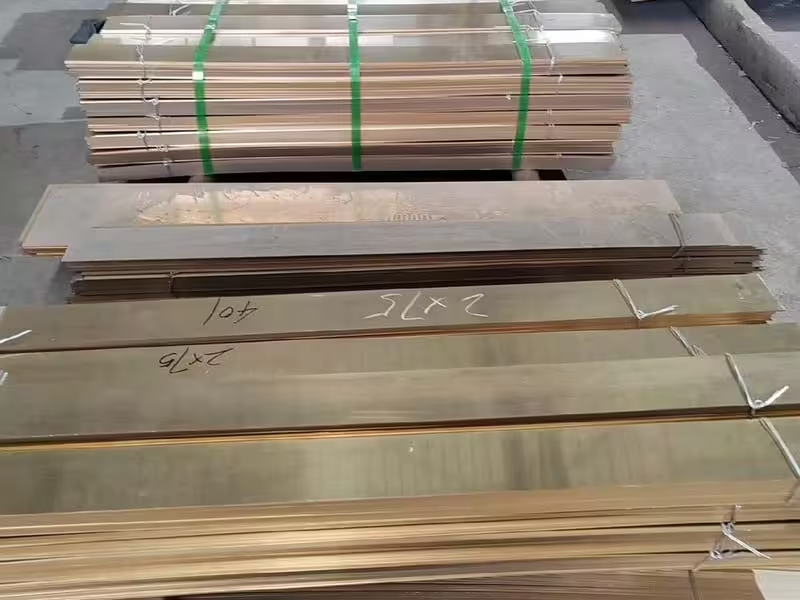
Surface Condition
Surface condition affects contact resistance, soldering, brazing, plating, and appearance. Oxide, oil, scratches, and dents can all matter depending on the part. If the copper plate will be plated or used as an electrical contact face, cleanliness and protection should be included in the inquiry.
Protective packaging is especially important for polished or contact-critical surfaces. Buyers should define whether paper interleaving, film, dry packing, or anti-tarnish protection is required. Copper plate that arrives with avoidable staining or dents may still contain the right chemistry, but it can create extra cleaning, machining, or rejection work.
Copper plate should be handled with the final contact surface in mind. If one face will be used for current transfer, mark that face on the drawing or purchase note and protect it through cutting, drilling, and packing. For larger parts, buyers should also confirm lifting method and sheet separation because soft surfaces can be dented by careless handling before machining starts.
Machining and Fabrication
Copper can be ductile and thermally conductive, which affects machining and drilling. The buyer should state whether the copper plate will be punched, drilled, milled, bent, soldered, brazed, or plated. Those processes influence grade, temper, surface, and dimensional choices.
For conductive parts, hole quality and contact faces often matter as much as the base material. Burrs around bolt holes can reduce contact quality or complicate assembly.
Documents and Testing
Electrical buyers may request a material certificate, chemical composition, conductivity information, dimensions, and inspection records. If conductivity is critical, define the required test basis before production. Avoid accepting vague verbal claims after shipment.
For related material context, buyers can compare this article with copper rods for electrical applications. The same metal family can serve different roles, but the inspection priorities change.
If parts will be cut from one larger plate, keep the traceability link between the parent material certificate and the finished blanks. This is especially useful when multiple electrical assemblies share one shipment.
Buyer Comparison Table
A copper plate inquiry should focus on the problem the plate must solve. The table below shows how application changes the specification.
| Application | Critical details | Inspection focus |
|---|---|---|
| Busbar | Conductivity, thickness, holes | Certificate and dimensions |
| Heat spreader | Flatness and surface contact | Flatness and scratches |
| Machined component | Allowance and hardness | Tolerance and burrs |
| Plated contact | Clean surface and grade | Surface and packaging |
Ordering Checklist
A complete copper plate inquiry should include grade, standard, conductivity requirement if applicable, thickness, width, length, tolerance, flatness, surface condition, cutting method, quantity, packaging, and certificates. If the plate will be machined, include the drawing and required allowance.
The best copper plate order turns an electrical requirement into a measurable material specification. That keeps procurement, production, and inspection aligned.
- Define electrical, thermal, or mechanical duty.
- Specify grade, standard, and conductivity requirement if needed.
- Confirm thickness, flatness, size, and tolerance.
- State machining, drilling, plating, or joining plans.
- Request certificates and protect contact-critical surfaces.
FAQ
What is copper plate used for?
Copper plate is used for busbars, grounding parts, switchgear, heat spreaders, electrical contacts, and machined conductive components.
Does every copper plate have the same conductivity?
No. Conductivity depends on grade, purity, processing, and the specification used for the order.
Why does flatness matter?
Flatness affects contact quality, machining allowance, assembly fit, and thermal or electrical contact surfaces.
Should surface condition be specified?
Yes. Oxide, oil, scratches, and dents can affect plating, contact resistance, soldering, and appearance.
What documents should buyers request?
Buyers should request a certificate showing grade, dimensions, chemistry, and conductivity or test data when required.
Request a Technical Review
Send your drawing, grade requirement, conductivity target, and machining plan to Huanhai Zhongke for a copper plate specification review.
 English
  Korean
  Arabic
  Vietnamese