

Table of Contents
A 1050 vs 1060 aluminum sheet comparison is relevant when a buyer needs commercially pure aluminum for forming, electrical or thermal functions, chemical equipment, reflectors, signs, nameplates, or general fabrication without high structural strength.
The correct 1050 vs 1060 aluminum sheet choice depends on the governing designation system, temper, thickness, conductivity requirement, fabrication, surface finish, and certification. Small composition differences should not be converted into unsupported guarantees about finished-part performance.
Define the Application
Start with the job performed by the sheet. Define electrical current, heat transfer, forming severity, joining, surface appearance, corrosion exposure, cleaning, operating temperature, and mechanical loads. Commercially pure grades are not substitutes for structural alloys when strength governs.
A 1050 vs 1060 aluminum sheet decision should use measurable requirements. Words such as pure, conductive, soft, or corrosion resistant are incomplete without alloy limits, temper, thickness, property criteria, and an acceptance method. Identify whether the value is a design minimum, purchasing limit, or typical reference.
Compare Registered Composition
Both designations belong to the 1xxx series, but their registered composition limits are not identical. Confirm that the designation is recognized in the project market and specification. The Aluminum Association international designation records provide authoritative composition references.
Do not approve 1050 vs 1060 aluminum sheet from a nominal purity statement alone. Review the complete chemical limits and certificate. Equivalent-looking regional designations may not have identical requirements, so the purchase order should avoid informal cross-standard substitution.
Evaluate Conductivity
Electrical and thermal performance can influence grade selection, but conductivity depends on composition, temper, processing, temperature, and the relevant test method. A 1050 vs 1060 aluminum sheet electrical requirement should state the property and measurement basis instead of assuming the alloy name is sufficient.
The 1050 vs 1060 aluminum sheet comparison should separate minimum certified conductivity from a typical handbook value. Typical values are useful for preliminary design, while procurement acceptance needs a specified limit and traceable evidence where required.
Select the Temper
These non-heat-treatable alloys obtain different strength and ductility combinations through annealing and strain hardening. O temper supports severe forming; H tempers identify strain-hardened conditions with additional processing distinctions.
A 1050 vs 1060 aluminum sheet order without temper is incomplete. Select temper from forming, stiffness, handling, surface, and strength needs. A harder condition may resist dents but require different bending, drawing, or leveling controls.
Plan Forming and Joining
Both alloys can support common cutting, bending, stamping, spinning, drawing, joining, and finishing routes when the exact condition is suitable. Tooling, lubrication, grain direction, edge quality, and cleanliness influence results.
For difficult parts, perform a 1050 vs 1060 aluminum sheet trial using production thickness and temper. Review springback, wrinkling, tearing, thinning, burrs, tool marks, and dimensional repeatability rather than relying on the alloy family alone.
Review Corrosion and Finish
Commercially pure aluminum generally offers useful corrosion behavior, but actual service still depends on chemicals, pH, temperature, moisture, crevices, dissimilar metals, coatings, and cleaning. Neither grade is universally resistant to every environment.
The table summarizes 1050 vs 1060 aluminum sheet buyer controls. For visible parts, define mill finish, bright finish, brushed direction, anodizing or coating requirements, color and gloss where applicable, protected face, film, and cosmetic acceptance zones.
| Decision factor | 1050 review | 1060 review |
|---|---|---|
| Composition | Verify registered limits | Verify registered limits |
| Conductivity | Specify and test when critical | Specify and test when critical |
| Forming | Select exact temper | Select exact temper |
| Strength | Not intended for high structural demand | Not intended for high structural demand |
| Surface | Approve finish on production condition | Approve finish on production condition |
Inspect and Certify
Receiving inspection for a 1050 vs 1060 aluminum sheet order should match labels and certificates, then verify alloy, temper, thickness, dimensions, flatness, surface, film, and any ordered conductivity or mechanical testing. Maintain lot identity where the finished part requires traceability. Record the sampling plan, instrument identification, acceptance criteria, nonconforming quantity, and disposition so later fabrication issues can be traced to objective receiving evidence. This 1050 vs 1060 aluminum sheet record also supports supplier corrective action.
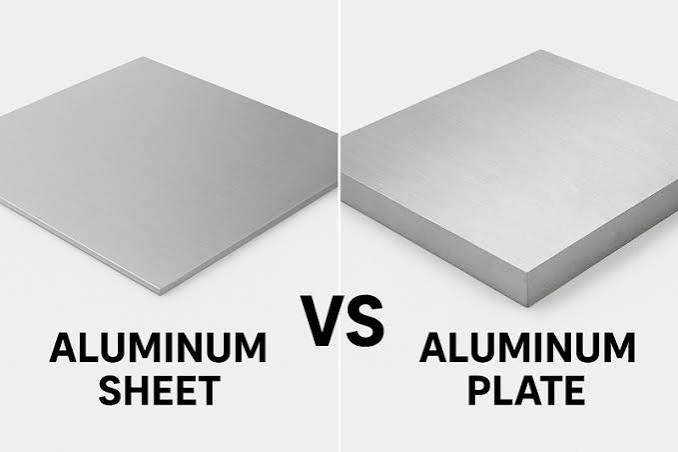
Review the aluminum sheet and plate product range and the aluminum sheet thickness guide. A proper 1050 vs 1060 aluminum sheet comparison links the approved certificate to the delivered dimensions and condition.
- Define electrical, thermal, forming, and appearance needs.
- Name the governing alloy designation system.
- Specify temper, thickness, dimensions, and tolerances.
- Use certified limits instead of typical values for acceptance.
- Qualify severe forming and visible finishes.
- Control traceability, inspection, and packaging.
- Record the 1050 vs 1060 aluminum sheet substitution decision.
Write the RFQ
State governing standard and edition, alloy, temper, thickness, width, length, tolerances, conductivity where required, mechanical properties, finish, protected face, fabrication, testing, certificate, marking, and packaging. List acceptable substitutions separately.
Use ASTM B209/B209M when it is the applicable sheet specification. A complete 1050 vs 1060 aluminum sheet RFQ prevents typical-property tables from replacing the contractual alloy, temper, dimensions, and inspection requirements.
Frequently Asked Questions
What is the main difference between 1050 and 1060 aluminum sheet?
They are separate registered 1xxx-series designations with different composition limits. The practical choice also depends on temper, conductivity requirements, fabrication, dimensions, and certification.
Which has better electrical conductivity, 1050 or 1060?
Do not decide from grade reputation alone. Specify the required conductivity and test basis because composition, temper, processing, and temperature affect the measured result.
Can both 1050 and 1060 aluminum sheet be formed?
Yes, in appropriate tempers. Formability still depends on thickness, bend radius, grain direction, tooling, lubrication, edge condition, and part geometry.
Are 1050 and 1060 heat-treatable aluminum alloys?
They are non-heat-treatable wrought alloys. Their supplied strength and ductility are controlled mainly through annealing and strain-hardening temper routes.
Can 1050 and 1060 aluminum sheet be substituted directly?
Not automatically. Confirm the standard, chemistry, temper, dimensions, conductivity, mechanical properties, fabrication, finish, and certification before approval.
Request an Alloy Review
Send Huanhai Zhongke the application, standard, alloy options, temper, thickness, conductivity requirement, forming route, finish, inspection, certification, and packaging needs for a 1050 vs 1060 aluminum sheet supply review.
 English
  Korean
  Arabic
  Vietnamese