

Yes, you can bend a 6061 aluminum rod, but the result depends heavily on the temper, rod diameter, bend radius, bending method, and direction of the applied force.
A soft or partially heat-treated 6061 aluminum rod can usually be formed more easily than 6061-T6. In contrast, attempting a tight bend in a thick T6 rod without proper tooling may cause surface cracking, flattening, springback, or complete failure at the bend.
For manufacturers and industrial buyers, the important question is therefore not simply, “Can 6061 aluminum rod be bent?” The better question is: “Which 6061 temper and bending process are suitable for the required shape?”
This guide explains how temper affects bendability, why bend radius matters, which defects commonly occur, and what buyers should specify when ordering aluminum rod for a formed component.
Table of Contents
What Is 6061 Aluminum Rod?
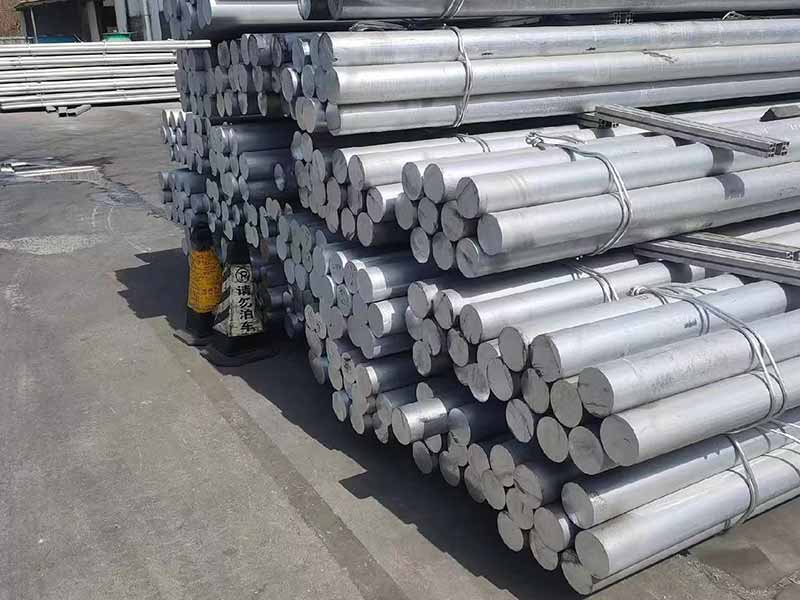
6061 aluminum rod is a solid aluminum-alloy product commonly supplied in round, square, rectangular or hexagonal sections. Round rod is especially common for shafts, pins, spacers, fittings, supports and CNC-machined components.
6061 belongs to the heat-treatable 6000-series aluminum family. Magnesium and silicon are its main alloying elements, providing a useful balance of:
- Mechanical strength
- Corrosion resistance
- Machinability
- Weldability
- Surface finishing capability
- Low material weight
These properties make 6061 a practical general-purpose engineering alloy. However, the heat treatment that increases its strength can also reduce its ability to withstand severe bending.
Buyers can review the available product options on the Aluminum Rod page.
Can 6061 Aluminum Rod Be Bent Without Cracking?
6061 aluminum rod can be bent successfully when the material condition, bend radius and tooling are appropriate.
Cracking is more likely when:
- The rod is in the T6 temper
- The rod diameter is large
- The required bend radius is too small
- The bend is made too quickly
- The tooling creates a sharp stress concentration
- The material surface already contains scratches
- The rod is repeatedly bent and straightened
- The alloy or temper is not correctly identified
Bending stretches the material on the outside of the bend and compresses it on the inside. When the tensile strain on the outer surface exceeds the material’s available ductility, a crack begins to form.
A larger bend radius distributes the deformation over a wider area and usually reduces the risk of cracking.
How Temper Affects 6061 Aluminum Rod Bending
The temper is one of the most important factors in determining whether a 6061 rod can be bent reliably.
6061-O Aluminum Rod
The O temper is annealed and relatively soft. It provides the greatest formability among the common 6061 conditions.
6061-O may be considered when the component requires:
- Tight bends
- Significant reshaping
- Multiple forming operations
- Reduced risk of cracking
- Forming before final heat treatment
The tradeoff is lower strength in the supplied condition. The part may require additional heat treatment after forming when higher final strength is necessary.
6061-T4 Aluminum Rod
6061-T4 has been solution heat-treated and naturally aged. It generally offers better formability than T6 while maintaining more strength than the annealed condition.
T4 can be useful when the part requires a balance between:
- Moderate strength
- Practical bendability
- Subsequent artificial aging
- Further machining or fabrication
In some manufacturing routes, a component is formed in T4 and then aged to achieve higher final properties.
6061-T6 Aluminum Rod
6061-T6 has been solution heat-treated and artificially aged. It is commonly used because of its strength, machining performance and general industrial availability.
However, T6 is less ductile than O or T4. This makes it less suitable for tight-radius bending.
6061-T6 can still be bent when:
- The bend radius is sufficiently large
- The rod diameter is relatively small
- Proper bending equipment is used
- The material is bent in one controlled operation
- Surface damage is minimized
- The design allows for springback
The feasibility should be tested before mass production, particularly for safety-critical or high-volume parts.
Comparison of Common 6061 Tempers
| Temper | Relative Strength | Relative Bendability | Common Use |
|---|---|---|---|
| 6061-O | Low | Excellent | Deep forming and tight bends |
| 6061-T4 | Medium | Good | Forming before final aging |
| 6061-T6 | High | Limited | Machined and structural parts |
| 6061-T651 | High | Limited | Stress-relieved machined products |
T651 is mainly associated with stress-relieved products intended for machining. It should not automatically be selected for a component that requires severe forming.
The correct temper depends on whether bending, machining or final mechanical strength is the most important manufacturing requirement.
Why Bend Radius Matters
The bend radius is the radius measured on the inside surface of the bend. A tight radius concentrates deformation, while a larger radius spreads it across more material.
There is no single minimum bend radius that is correct for every 6061 aluminum rod. The required radius depends on:
- Rod diameter
- Temper
- Bend angle
- Bending method
- Surface finish
- Part geometry
- Mechanical property variation
- Final acceptance criteria
A general engineering principle is that harder tempers require larger radii. A radius that works for 6061-O may crack a rod of the same diameter in T6 condition.
Instead of relying only on a general rule, manufacturers should conduct bend trials using material from the intended production batch.
Diameter-to-Radius Relationship
As rod diameter increases, the force required for bending rises significantly. Thick rods are also more difficult to support without distortion.
For example, a small-diameter rod may be formed using a manual bending fixture, while a large-diameter rod may require:
- Hydraulic bending equipment
- Induction or controlled heating
- Custom dies
- Multi-stage forming
- A larger inside radius
- Intermediate stress relief
The drawing should state both the rod diameter and required inside bend radius.
Common Methods for Bending 6061 Aluminum Rod
Rotary Draw Bending
Rotary draw bending uses a bend die, clamp die and pressure die to control the material around a fixed radius.
This method can provide:
- Consistent bend angles
- Better dimensional repeatability
- Controlled radii
- Improved production efficiency
Custom tooling may be required when the rod has an unusual diameter or when the part must meet tight dimensional requirements.
Press Bending
Press bending applies force at one or more points to create the desired angle or curve.
It is suitable for relatively simple bends, but the manufacturer must control:
- Tool contact marks
- Local flattening
- Bend-angle consistency
- Springback
- Surface cracking
Press bending without correctly matched tooling may produce inconsistent results.
Roll Bending
Roll bending gradually forms the rod into a large-radius curve using multiple rollers.
This method is commonly considered for:
- Rings
- Arches
- Large-radius components
- Frames
- Repeated curved sections
Roll bending generally produces a gentler deformation than a single tight bend.
Hot Bending
Controlled heating can reduce the force required to bend an aluminum rod. However, heating may alter the temper and mechanical properties.
Uncontrolled torch heating can create:
- Local overheating
- Uneven softening
- Surface oxidation
- Loss of strength
- Inconsistent final properties
When final strength is important, the heating process and any subsequent heat treatment must be defined by a qualified manufacturing procedure.
Can You Heat 6061-T6 Before Bending?
Heating may make 6061-T6 easier to form, but it can also reduce or change the properties created by artificial aging.
This means a heated and bent T6 component should not automatically be assumed to retain the same strength as the original rod.
For critical components, the manufacturer should determine:
- The controlled heating temperature
- Heating duration
- Temperature uniformity
- Cooling method
- Whether re-heat-treatment is required
- Final mechanical property requirements
- Whether post-forming testing is necessary
Casual local heating may be acceptable for a non-critical bracket, but it is inappropriate to assume the same process is suitable for a structural, pressure-bearing or safety-related part.
How to Prevent Cracking During Bending
Choose a More Formable Temper
When the design requires a tight bend, consider purchasing 6061-O or 6061-T4 rather than attempting severe forming in T6.
The part can potentially be heat-treated after forming when higher strength is required.
Increase the Bend Radius
A larger radius reduces strain on the outer surface. This is often the simplest design change for reducing cracking risk.
Use Correctly Matched Tooling
Tooling should support the rod and distribute pressure evenly. Sharp contact points can leave dents or initiate cracks.
Remove Surface Defects
Deep scratches, dents and machining marks can act as stress concentrators. Rods intended for bending should be inspected before forming.
Bend in One Controlled Operation
Repeated bending and straightening increases work hardening and fatigue damage. The process should be planned so that the required angle is reached with minimal correction.
Allow for Springback
After the forming force is removed, the aluminum will recover slightly toward its original shape. This is known as springback.
Stronger tempers generally produce more springback than softer conditions. Tooling and bend angle must compensate for this effect.
Conduct a Production Trial
A trial bend is especially important when:
- The rod is thick
- The bend radius is tight
- The temper is T6
- Surface appearance matters
- Dimensional tolerance is strict
- Large quantities will be produced
Testing several samples is usually less costly than discovering a forming problem after full material delivery.
Common Bending Defects
| Defect | Likely Cause | Possible Solution |
|---|---|---|
| Outside cracking | Radius too tight or temper too hard | Increase radius or use O/T4 temper |
| Excessive springback | High-strength temper | Adjust overbend and tooling |
| Surface dents | Poor die contact | Improve tooling support |
| Twist | Misaligned tooling | Improve clamping and alignment |
| Uneven curve | Inconsistent pressure | Use controlled rotary or roll bending |
| Flattening | Insufficient support | Change die geometry or process |
| Dimensional variation | Material or process inconsistency | Use production trials and inspection |
Defect acceptance should be agreed before production. A cosmetic surface line may be acceptable for a hidden bracket but unacceptable for a polished visible component.
Is 6061 the Best Alloy for a Bent Rod?
6061 is not always the best choice for components dominated by severe forming.
Other alloys may be considered depending on the application.
6063 Aluminum
6063 is commonly associated with extruded architectural and structural profiles. It may provide better surface finishing and formability in certain conditions, although its mechanical strength is generally lower than 6061-T6.
5052 Aluminum
5052 offers strong corrosion resistance and good forming performance. However, it is more commonly supplied as sheet and plate than as a general-purpose round rod.
6082 Aluminum
6082 is another heat-treatable 6000-series alloy used for structural and machined parts. Its availability varies by market, and bending performance still depends on temper.
7075 Aluminum
7075 provides substantially higher strength but is generally less suitable for welding and severe forming than 6061. It is normally selected for strength-critical machined components rather than tight bent parts.
For a broader comparison, read the Aluminum Alloy Selection Guide for Industrial Buyers.
Extruded Rod vs Cold-Finished Rod
The production method can affect dimensions, surface quality, tolerance and final performance.
Extruded Aluminum Rod
Extruded rod is produced by forcing heated aluminum through a die. ASTM B221/B221M is commonly referenced for extruded aluminum-alloy bars, rods, wire, profiles and tubes.
Extruded rod is widely used for:
- General machining
- Structural components
- Fabricated assemblies
- Medium-tolerance parts
Cold-Finished Aluminum Rod
Cold-finished rod undergoes additional processing after hot working. It may offer improved dimensional accuracy, straightness or surface finish.
Cold-finished material may be preferred when the part requires:
- Tighter diameter tolerance
- Improved roundness
- Better surface finish
- Reduced machining allowance
The purchase order should specify the required manufacturing route rather than assuming all rods are interchangeable.
What to Specify When Ordering Rod for Bending
A complete request for quotation should include more than the alloy name.
Material Requirements
State:
- Alloy: 6061
- Temper: O, T4, T6 or another required condition
- Manufacturing route
- Applicable standard
- Material certification requirements
ASTM B221/B221M covers extruded aluminum-alloy bars and rods, while other specifications may apply to rolled or cold-finished products. The applicable standard should match the actual manufacturing method.
Dimensional Requirements
Provide:
- Rod diameter
- Length
- Diameter tolerance
- Straightness requirement
- Cut-length tolerance
- Quantity
The Aluminum Rod Sizes Guide provides an overview of typical diameter and length considerations.
Bending Requirements
Include:
- Required bend angle
- Inside bend radius
- Number of bends
- Distance between bends
- Overall finished dimensions
- Permitted springback
- Surface acceptance criteria
A drawing is more reliable than a written description for complex formed parts.
Processing Scope
Clarify whether the supplier is expected to provide:
- Straight raw rod
- Cut-to-length blanks
- Bent semi-finished parts
- CNC-machined components
- Heat-treated finished parts
- Surface-finished assemblies
This prevents quotations from being compared on different scopes of work.
How to Inspect a Bent 6061 Aluminum Rod
Inspection can include:
- Bend angle
- Inside radius
- Overall dimensions
- Straight-section length
- Twist
- Surface cracks
- Tooling marks
- Material certification
- Final hardness or mechanical properties
- Surface finish
For critical components, visual inspection alone may not be sufficient. Additional testing should be defined by the component designer or applicable industry standard.
FAQ
Can 6061-T6 aluminum rod be bent?
Yes, but it normally requires a larger bend radius and controlled tooling. Tight bends in T6 have a greater risk of cracking than bends made in O or T4 temper.
What is the easiest 6061 temper to bend?
6061-O is generally the most formable common condition. T4 can also provide better bending performance than T6 while retaining more strength than the annealed condition.
Does bending weaken 6061 aluminum?
Bending changes the stress and strain distribution in the material. Severe forming, heating or cracking can reduce performance. The final part should be evaluated according to its load and safety requirements.
Can a 6061 aluminum rod be bent with heat?
Controlled heating can make bending easier, but it may change the temper and mechanical properties. Heating procedures should be defined when final strength matters.
Why does 6061 aluminum crack when bent?
Common causes include an excessively tight radius, hard temper, surface scratches, poor tooling, repeated bending or an incorrect material specification.
Conclusion
6061 aluminum rod can be bent successfully, but bendability depends on much more than the alloy number.
The temper is critical. O and T4 conditions provide greater forming capability, while T6 offers higher strength but requires a larger bend radius and more carefully controlled tooling. Rod diameter, surface quality, bending method and heat exposure also affect the final result.
For industrial purchasing, buyers should provide the alloy, temper, diameter, bend radius, finished drawing, tolerance and inspection requirements before requesting a quotation. When the design involves tight bends or large production quantities, a sample trial should be completed before full-scale manufacturing.
Huanhai Zhongke supplies aluminum rods and other aluminum products in multiple alloys, tempers and dimensions. Submit your drawings and application requirements through the contact page to discuss material selection, cutting and project-specific supply.
 English
  Korean
  Arabic
  Vietnamese