
Aluminum plate for CNC machining is widely used in machinery parts, fixtures, tooling, equipment panels, and custom industrial components. For buyers, the right plate specification affects machining accuracy, surface quality, production efficiency, and final part performance.
Choosing aluminum plate is not only about thickness or price. Alloy grade, temper, flatness, tolerance, internal stress, cutting method, and surface condition all influence how the material performs during CNC milling, drilling, bending, welding, or assembly.
This guide explains how industrial buyers can choose suitable aluminum plate for CNC machining and fabrication projects, especially when stable quality, dimensional accuracy, and reliable processing performance are required.
Table of Contents
Why Aluminum Plate Is Used in CNC Machining and Fabrication
Aluminum plate is popular in industrial manufacturing because it offers a practical balance of light weight, strength, corrosion resistance, machinability, and surface finish options. Compared with many steel materials, aluminum is easier to machine and much lighter, which makes it suitable for parts that need strength without unnecessary weight.
Lightweight material for industrial parts
Weight reduction is one of the main reasons manufacturers choose aluminum plate. In machinery, automation equipment, transport systems, and structural components, reducing part weight can make assembly easier and improve equipment handling.
Good machinability for production efficiency
Many aluminum alloys can be milled, drilled, tapped, bored, and cut efficiently. When the correct alloy and temper are selected, aluminum plate can help reduce machining time, improve tool life, and support stable batch production.
Corrosion resistance for long-term use
Aluminum naturally forms an oxide layer on its surface, giving it good corrosion resistance in many indoor and outdoor environments. For humid, marine-related, or outdoor applications, buyers can choose alloys with stronger corrosion resistance or add surface treatment such as anodizing or coating.
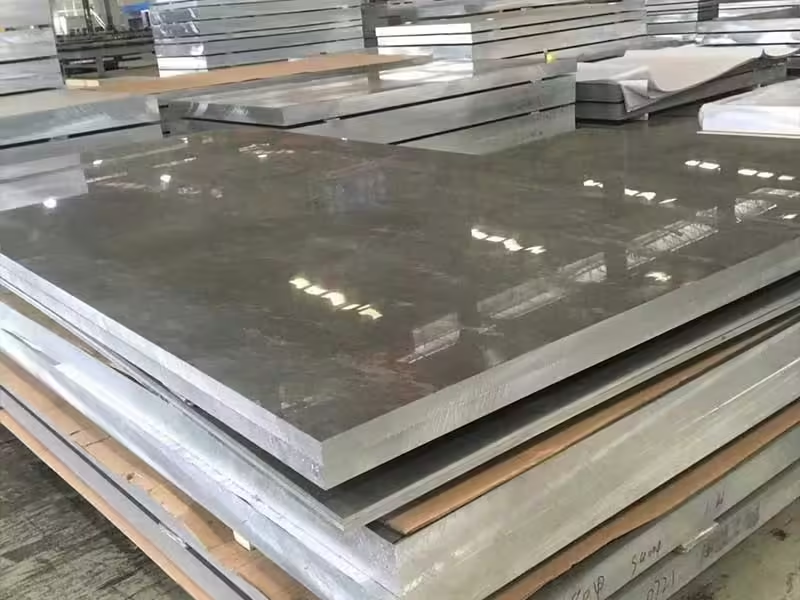
Common Applications of Aluminum Plate
Aluminum plate can be used in many industrial projects. The best specification depends on how the material will be processed and what performance the finished part needs.
CNC machined components
CNC machining is one of the most common uses of aluminum plate. The material can be processed into brackets, mounting plates, housings, fixtures, tooling blocks, machine bases, frames, connector parts, and precision mechanical components.
For these parts, dimensional stability, flatness, thickness tolerance, and machinability are important. A plate that is not flat enough or has unstable internal stress may increase machining time and reduce final accuracy.
Industrial fabrication
In fabrication projects, aluminum plate may be cut, bent, welded, drilled, assembled, or surface treated. It is often used for equipment panels, covers, enclosures, platforms, protective plates, transport parts, and custom metal structures.
Fabrication usually requires a balance between strength and workability. A plate that is too hard may be difficult to bend. A plate that is too soft may not provide enough rigidity for the final product.
Tooling and fixture production
Aluminum plate is often used for jigs, fixtures, molds, templates, and tooling support parts. These applications usually require better flatness, stable thickness, and controlled internal stress. If the plate deforms after machining, tooling accuracy may be affected.
Equipment and machinery manufacturing
Machinery manufacturers use aluminum plate for structural panels, base plates, support blocks, sliding parts, guards, covers, and lightweight machine components. In these applications, buyers often need custom sizes, stable mechanical properties, and reliable surface quality.
How to Choose the Right Aluminum Plate Alloy
Different aluminum alloys offer different levels of strength, corrosion resistance, machinability, weldability, and forming performance. Buyers should match the alloy with the final application instead of choosing only by price or availability.
| Aluminum Alloy | Main Characteristics | Typical Uses | Purchasing Notes |
|---|---|---|---|
| 1060 | High purity, soft, good formability and conductivity | Electrical parts, signage, light panels, chemical equipment | Not suitable for high-strength machined parts |
| 3003 | Good formability, moderate strength, good corrosion resistance | Covers, panels, tanks, general fabrication | Practical for light fabrication and formed parts |
| 5052 | Good corrosion resistance and fatigue strength | Marine-related parts, outdoor panels, equipment covers | Suitable for humid or corrosive environments |
| 5083 | Strong corrosion resistance and higher strength | Marine structures, transport parts, heavy-duty panels | Suitable for demanding outdoor or marine conditions |
| 5754 | Good corrosion resistance and weldability | Vehicle panels, flooring, construction parts | Useful for transport and fabrication projects |
| 6061 | Good strength, machinability, weldability, and availability | CNC parts, fixtures, frames, machinery components | One of the most versatile industrial choices |
| 6082 | Higher strength than many 6000 series options | Structural parts, frames, machinery supports | Suitable when strength and machining performance both matter |
| 7075 | Very high strength and good machinability | High-load parts, molds, precision mechanical components | Higher cost and not always ideal for welding or corrosive environments |
For many CNC machining and fabrication projects, 6061 aluminum plate is a practical choice because it balances strength, machinability, weldability, and availability. For better corrosion resistance, 5052 or 5083 may be more suitable. For high-load precision parts, 7075 may be considered, but buyers should review cost, corrosion environment, and processing requirements carefully.
Understanding Temper and Mechanical Performance
Temper affects hardness, strength, ductility, machinability, bending behavior, and dimensional stability. Buyers should not specify aluminum plate by alloy alone.
Why temper matters in CNC machining
For CNC machining, temper affects how the material cuts and how stable it remains after material removal. If the plate has poor internal stress control, it may warp after milling, especially when the part is large, thin, or machined on both sides.
6061-T6 aluminum plate is commonly used for machined parts because it provides good strength and machining performance. However, buyers still need to confirm flatness, thickness tolerance, and stress condition if the part requires high precision.
Why temper matters in fabrication
For fabrication, temper affects bending and forming performance. A harder plate may provide better strength, but it may crack during bending if the bend radius is too small. A softer plate may bend more easily, but it may not provide enough stiffness for structural use.
How buyers should specify temper
A clear inquiry should include alloy and temper together. For example, “6061-T6 aluminum plate” is more accurate than simply “6061 aluminum plate.” If the project involves bending, welding, CNC machining, anodizing, or coating, that information should also be provided.
Plate Thickness and Tolerance Control
Thickness affects strength, rigidity, weight, machining allowance, and material cost. Choosing the correct thickness is one of the most important steps when buying aluminum plate.
Machining allowance
For CNC parts, the raw plate usually needs enough machining allowance. If the plate is too thin or the thickness tolerance is too wide, the finished part may not meet drawing requirements after surface milling.
Buyers should calculate required thickness based on the final part size, machining process, flatness target, and required tolerance.
Standard tolerance and precision tolerance
Standard commercial tolerance may be acceptable for general fabrication. Precision machining parts may require tighter thickness tolerance and better flatness. Buyers should clearly state whether standard tolerance is acceptable or whether stricter control is needed.
Cost and accuracy balance
Over-specifying tolerance can increase cost. Under-specifying tolerance can create machining problems. The best approach is to match tolerance requirements with the actual function of the part.
A decorative cover may not need the same tolerance as a precision fixture plate. A large equipment panel may need good flatness but not extremely tight thickness tolerance. A CNC-machined mounting base may require both.
Flatness and Internal Stress Control
Flatness is a critical factor for aluminum plate used in CNC machining and fabrication. Poor flatness can increase processing time, reduce accuracy, and create assembly problems.
Why flatness matters
If an aluminum plate is not flat, the machine shop may need extra milling passes before producing the final part. This increases machining time and material waste. In large panels or precision parts, poor flatness may also cause assembly gaps or uneven contact surfaces.
Internal stress and machining deformation
Internal stress can cause aluminum plate to deform after cutting or machining. This is common when a large amount of material is removed from one side or when the plate is processed into a thin component.
For precision applications, buyers should ask whether the plate is suitable for machining and whether better stress control is available. If the project involves complex CNC parts, large flat components, or tight tolerance requirements, it is better to discuss the drawing with the supplier before ordering.
How to reduce flatness problems
Buyers can reduce flatness issues by choosing a suitable alloy and temper, confirming flatness requirements, allowing enough machining allowance, and requesting proper packaging to prevent bending during transport.
Surface Finish and Appearance Requirements
Surface finish affects both function and appearance. Aluminum plate may be supplied with mill finish, brushed finish, polished finish, anodized finish, coated finish, or protective film depending on the application.
Mill finish for general industrial use
Mill finish is suitable for many internal structures, machined parts, machine bases, equipment supports, and general industrial components where appearance is not the main concern.
Brushed and polished surfaces for visible parts
When aluminum plate is used for visible panels, decorative covers, signage, or equipment exteriors, buyers may need better surface control. Scratches, stains, dents, oxidation marks, and color differences can affect product acceptance.
Anodized or coated surfaces
Anodizing can improve surface hardness, corrosion resistance, and appearance. Coating can provide color, weather resistance, and additional surface protection. If surface treatment will be done after machining, buyers should confirm whether the raw plate surface is suitable for the finishing process.
Cutting and Processing Options for Aluminum Plate
Aluminum plate can be processed in different ways before delivery or during downstream production. The right method depends on thickness, accuracy, edge quality, and production volume.
Saw cutting
Saw cutting is commonly used for aluminum plate because it can provide clean edges and accurate dimensions. It is suitable for preparing blanks for CNC machining or fabrication.
Shearing
Shearing is usually used for thinner plate or sheet materials. It can be efficient for straight cuts, but edge deformation may occur depending on thickness and material condition.
CNC cutting and machining
CNC cutting, routing, or milling may be required when the plate needs complex shapes, holes, slots, grooves, or tighter dimensional control. For precision parts, CNC machining is often performed after rough cutting.
Waterjet and laser cutting
Waterjet cutting can handle thicker aluminum plate and complex shapes without heat-affected zones. Laser cutting may be used for certain aluminum thicknesses, but reflectivity and edge quality should be considered. Buyers should confirm the cutting method based on tolerance and edge requirements.
Welding, Bending, and Forming Considerations
Not every aluminum plate is equally suitable for welding, bending, or forming. The alloy and temper should match the fabrication method.
Welding requirements
6061, 5052, 5083, and 5754 are commonly considered for welded aluminum structures, but weldability and post-weld performance depend on alloy, filler material, thickness, and process control. Buyers should confirm welding requirements before selecting material.
Bending requirements
For bending applications, ductility and temper are important. Some high-strength aluminum plates may crack if the bend radius is too small. Softer or more formable alloys may be better for bent covers, panels, cabinets, and enclosures.
Forming performance
Formed aluminum plate parts require careful control of thickness, temper, and surface condition. If the material is too hard or the tooling radius is not suitable, cracking, springback, or uneven surfaces may occur.
Aluminum Plate for Different Industrial Projects
The same aluminum plate specification cannot fit every project. Buyers should connect material selection with application conditions and processing methods.
Machinery and automation equipment
Machinery manufacturers often use aluminum plate for frames, base plates, support blocks, guards, panels, fixtures, and mounting parts. These components may require a balance of strength, machining performance, and surface quality.
Transportation and vehicle parts
Transportation projects often value weight reduction. Aluminum plate may be used for flooring, panels, brackets, covers, and structural components. Corrosion resistance, fatigue performance, and weldability may be important.
Marine and outdoor structures
For humid, outdoor, or marine-related environments, corrosion resistance becomes a key requirement. Buyers may consider 5052, 5083, or other suitable alloys depending on the working conditions.
Tooling and precision fixtures
Tooling and fixture projects often require better flatness and dimensional stability. Buyers should pay attention to internal stress, thickness tolerance, machining allowance, and packaging protection.
How to Inspect Aluminum Plate Before Shipment
Inspection helps reduce procurement risk, especially for export orders or custom-size aluminum plate.
Dimensional inspection
Buyers should confirm thickness, width, length, diagonal tolerance, and flatness. For CNC machining blanks, size accuracy and machining allowance are especially important.
Surface inspection
The surface should be checked for scratches, stains, dents, oxidation marks, rolling marks, and handling damage. If the plate will be used for visible parts, stricter surface inspection may be required.
Material documentation
Material certificates, chemical composition reports, mechanical property reports, packing lists, and product photos can help buyers confirm that the material matches the order. For international orders, clear documentation also helps with customs and internal quality control.
Packaging and Transportation Protection
Aluminum plate can be damaged during handling and transportation if it is not packed properly. Scratches, edge dents, bending, water stains, and surface oxidation may occur when packaging is weak or moisture protection is insufficient.
Export packaging may include protective film, moisture-proof wrapping, wooden pallets, edge protectors, steel straps, and strong outer protection. For precision or decorative aluminum plate, packaging should be upgraded to reduce surface damage.
Buyers should also consider unloading conditions. Large plates require proper lifting and handling methods to avoid bending or scratching after arrival.
Common Mistakes When Buying Aluminum Plate
Many purchasing problems happen because the inquiry is too general. A buyer may request “aluminum plate” without specifying alloy, temper, thickness tolerance, surface requirement, or application. This often leads to material that is technically aluminum plate but not suitable for the actual project.
Another common mistake is choosing material only by price. A cheaper plate may have poor flatness, wider tolerance, weaker surface protection, or unstable quality, which can increase machining cost and scrap rate.
Some buyers also overlook internal stress. For precision machined parts, plate deformation after milling can become a serious problem. This issue is especially common in large plates or parts with heavy material removal.
A further mistake is using one alloy for all parts. A machine base, a decorative panel, a marine cover, and a bending enclosure may require different aluminum plate specifications.
How to Request a More Accurate Quotation
A clear quotation request helps the supplier recommend suitable material and provide a more accurate price. Instead of sending only thickness and quantity, buyers should explain how the aluminum plate will be used.
A complete inquiry should include alloy, temper, thickness, width, length, tolerance requirements, surface finish, cutting needs, application, quantity, packaging method, and required documents. If the plate will be CNC machined, bent, welded, anodized, or coated, that information should also be included.
When buyers do not know the best alloy, they can share the drawing, application environment, processing method, and performance requirement. A professional supplier can then help select a more suitable aluminum plate.
Why Choose Huanhai Zhongke for Aluminum Plate Supply
Huanhai Zhongke supplies aluminum plate for CNC machining, fabrication, machinery manufacturing, tooling, construction components, transportation parts, and general industrial applications. The company also provides related aluminum products such as aluminum coil, aluminum rod, and aluminum foil for different project needs.
For industrial buyers, stable quality and clear communication are essential. Huanhai Zhongke focuses on material consistency, dimensional accuracy, surface quality, packaging protection, and reliable export supply. Whether your project requires standard aluminum plate or custom-cut material, the team can help match the specification with your processing requirements.
You can explore related pages here:
Conclusion
Aluminum plate is a practical material for CNC machining, fabrication, tooling, machinery, transportation, construction, and industrial manufacturing. To choose the right product, buyers should consider alloy, temper, thickness, tolerance, flatness, internal stress, surface finish, cutting method, welding needs, bending behavior, packaging, and final application.
For CNC machining, machinability and dimensional stability are important. For fabrication, strength, formability, weldability, and surface quality matter. For visible products, appearance and surface protection should not be ignored. For export orders, packaging and inspection can reduce delivery risk.
A clear specification and a reliable supplier can help buyers reduce machining waste, improve production efficiency, and receive aluminum plate that truly matches their project requirements. If you need aluminum plate for CNC machining, industrial fabrication, equipment production, or custom metal parts, Huanhai Zhongke can provide suitable material support for your project.
FAQ
What aluminum plate is best for CNC machining?
6061 aluminum plate is commonly used for CNC machining because it provides good strength, machinability, weldability, and availability. For higher strength parts, 7075 may be considered, while 5052 or 5083 may be better when corrosion resistance is more important.
Why is temper important when buying aluminum plate?
Temper affects hardness, strength, ductility, machining behavior, and bending performance. The same alloy can perform very differently in different tempers, so buyers should always confirm both alloy and temper.
What causes aluminum plate to warp during machining?
Warping can be caused by internal stress, poor flatness, uneven material removal, unsuitable machining methods, or insufficient machining allowance. For precision parts, buyers should choose suitable plate quality and communicate machining requirements early.
Can aluminum plate be welded?
Yes, many aluminum plates can be welded, but weldability depends on alloy, temper, thickness, filler material, and welding process. Buyers should confirm welding requirements before choosing the material.
What surface finish is available for aluminum plate?
Common options include mill finish, brushed finish, polished finish, anodized finish, coated finish, and protective film. The right surface finish depends on whether the part is functional, decorative, visible, or exposed to harsh environments.
 English
  Korean
  Arabic
  Vietnamese