

When you are sourcing seamless steel pipes for construction, machinery, energy, or industrial manufacturing, the supplier you choose can affect far more than the purchase order. Material consistency, dimensional accuracy, inspection documents, packaging, and delivery stability all influence whether your project runs smoothly.
A reliable seamless steel pipe supplier should not only provide products in standard sizes. They should also understand steel grades, wall thickness requirements, application conditions, international standards, and export procedures. For global buyers, this kind of support can reduce procurement risk and help avoid costly delays.
Jiatianxia works with industrial buyers who need stable steel pipe supply for demanding applications. This guide explains how to evaluate a seamless steel pipe supplier and what details you should confirm before placing an order.
Table of Contents
What Is a Seamless Steel Pipe?
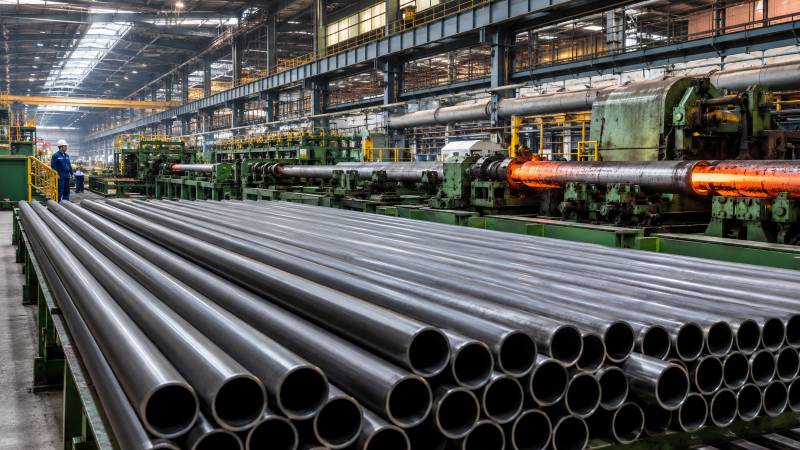
A seamless steel pipe is a steel tube manufactured without a welded seam. During production, a solid round billet is heated and pierced to form a hollow tube, then processed through hot rolling, cold drawing, or other forming methods to achieve the required diameter and wall thickness.
Because there is no welded joint, seamless steel pipe is often selected for applications that require higher strength, better pressure resistance, and more reliable performance under stress. It is commonly used in industrial pipelines, mechanical parts, hydraulic systems, boiler equipment, structural components, and energy-related projects.
For buyers, the key point is simple: seamless steel pipe is not a one-size-fits-all product. The correct choice depends on the steel grade, pipe size, wall thickness, tolerance, surface condition, and working environment.
Why Choosing the Right Seamless Steel Pipe Supplier Matters
Many buyers start by comparing quotations, but price alone does not show whether a supplier is reliable. A low quote may become expensive if the pipes arrive with inconsistent wall thickness, incorrect material grade, poor surface quality, weak packaging, or missing inspection documents.
A professional seamless steel pipe supplier should help you reduce these risks before production and shipment. This includes confirming the technical standard, checking the application requirements, arranging suitable inspection, and making sure the final goods match the order details.
For international procurement, supplier reliability becomes even more important. Once the goods are shipped overseas, quality problems are harder to solve. That is why buyers should evaluate supplier capability before confirming an order, not after problems appear.
Key Factors to Evaluate Before Choosing a Supplier
Product Range and Specification Capability
A qualified supplier should be able to support different pipe diameters, wall thicknesses, lengths, and material grades. This is especially important when your project requires multiple specifications or repeated orders over time.
For example, construction projects may require pipes with strong structural performance, while machinery manufacturers may need tighter dimensional tolerances. Energy and pressure-related applications may require stricter standards and inspection procedures.
When reviewing a seamless steel pipe supplier, check whether they can provide both common specifications and project-based requirements. A supplier with a wider product range can help simplify procurement, especially if you also need related steel materials such as steel plates, galvanized steel products, stainless steel materials, or structural steel.
Steel Grade and Standard Confirmation
Steel grade directly affects strength, toughness, pressure resistance, processing performance, and service life. Before placing an order, buyers should confirm whether the supplier can provide the required standard, such as ASTM, API, EN, DIN, JIS, GB, or other project specifications.
A reliable supplier should be able to explain the difference between suitable grades instead of simply offering whatever is available in stock. If your pipe will be used in a pressure system, mechanical component, chemical environment, or high-temperature condition, material selection becomes especially important.
Jiatianxia supports buyers by helping confirm suitable steel pipe specifications according to practical application needs. This helps reduce the risk of choosing a material that looks similar on paper but performs differently in actual use.
Dimensional Accuracy and Tolerance Control
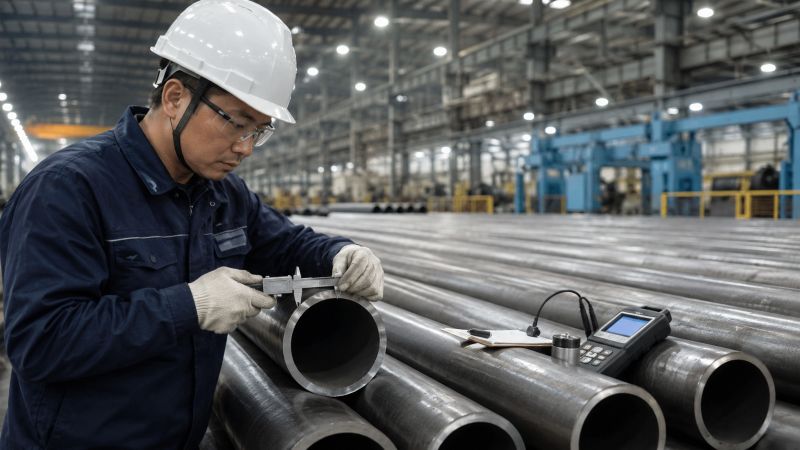
Seamless steel pipes often need to meet strict dimensional requirements. Outer diameter, wall thickness, straightness, ovality, and length tolerance can all affect installation and further processing.
For general structural use, standard tolerance may be acceptable. For hydraulic cylinders, machined parts, rollers, sleeves, and equipment components, tighter tolerance may be required. If the pipe is used for pressure transmission, inconsistent wall thickness can also affect safety and performance.
Before confirming an order, buyers should ask how the supplier controls and checks dimensional accuracy. This is one of the most practical ways to judge whether a seamless steel pipe supplier has real quality control capability.
Inspection and Testing Support
Inspection is not just a formality. It is an important part of industrial steel procurement. Depending on the application, seamless steel pipes may require chemical composition analysis, mechanical property testing, hydrostatic testing, ultrasonic testing, eddy current testing, surface inspection, or dimensional inspection.
Not every order needs every test. However, the supplier should understand which tests are relevant for your application and be able to provide the necessary documentation.
For buyers serving construction, machinery, energy, or industrial equipment markets, inspection records can also support internal quality control and customer approval. A supplier that can provide clear inspection support is usually more suitable for long-term cooperation.
Export Experience and Delivery Stability
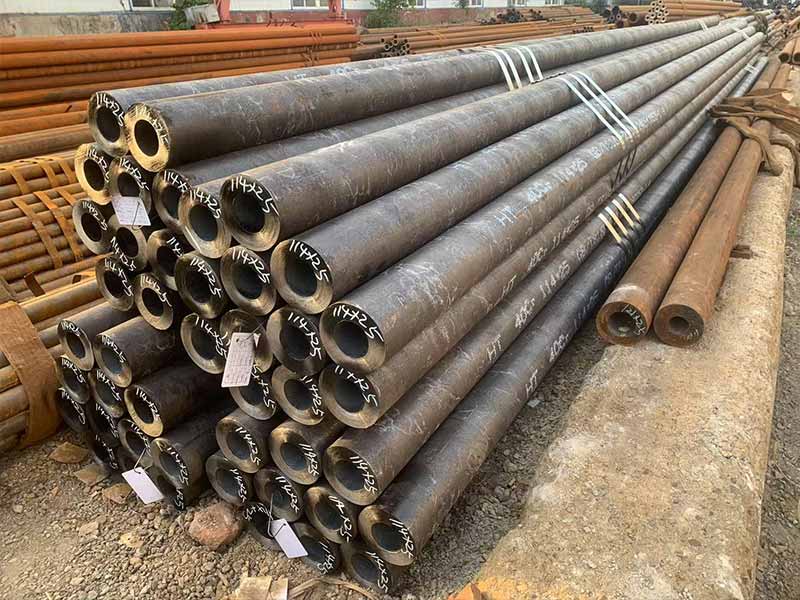
For overseas buyers, export capability is just as important as product capability. A good supplier should understand export packaging, shipping marks, container loading, customs documents, and communication requirements during international shipping.
Poor packaging can lead to rust, scratches, deformation, or unloading difficulties. Incomplete documents may delay customs clearance. Unclear delivery schedules can affect project planning.
Jiatianxia focuses on supporting global buyers with practical supply coordination, including product confirmation, export packing, documentation, and shipment arrangement. For buyers who need stable steel material supply, this kind of service can make procurement more predictable.
Seamless Steel Pipe Selection Guide
| Selection Point | Why It Matters | What Buyers Should Confirm |
|---|---|---|
| Steel grade | Determines strength, toughness, and application suitability | Confirm material grade and applicable standard |
| Pipe size | Affects installation, connection, and processing | Confirm outer diameter, wall thickness, and length |
| Tolerance | Influences machining accuracy and assembly performance | Confirm OD tolerance, wall thickness tolerance, and straightness |
| Surface condition | Affects coating, storage, and further processing | Confirm black, oiled, pickled, polished, or customized surface |
| Inspection documents | Support quality verification and customs clearance | Confirm mill test certificate and required test reports |
| Packaging | Protects goods during long-distance transportation | Confirm bundle method, waterproof protection, and end protection |
| Delivery ability | Impacts project schedule and repeat orders | Confirm lead time, stock availability, and shipment plan |
Common Applications of Seamless Steel Pipe
Construction and Structural Projects
In construction and structural engineering, seamless steel pipes are used where strength, durability, and load-bearing reliability are important. They may be applied in structural supports, engineering frames, foundation-related components, and heavy-duty building systems.
For this application, buyers usually need to confirm wall thickness, steel grade, surface treatment, and whether additional corrosion protection is required.
Machinery Manufacturing
Machinery manufacturers often use seamless steel pipes for shafts, sleeves, rollers, hydraulic cylinder tubes, support parts, and processed components. These applications usually require better dimensional consistency and stable material performance.
If the pipe will be cut, drilled, turned, welded, or assembled into equipment, buyers should pay close attention to tolerance and surface condition.
Energy and Pressure Systems
Seamless steel pipes are widely used in energy, boiler, heat exchange, and pressure-related systems. These applications often require stronger pressure resistance and stricter testing.
For this type of project, buyers should confirm the required standard, working pressure, temperature condition, inspection method, and documentation before ordering.
Chemical and Industrial Fluid Transport
In chemical plants and industrial fluid systems, pipe material must match the medium, temperature, and operating environment. Incorrect material selection can lead to corrosion, leakage, or shorter service life.
A professional seamless steel pipe supplier should help buyers evaluate whether carbon steel, alloy steel, stainless steel, or another material is more suitable for the actual working condition.
Seamless Steel Pipe vs Welded Steel Pipe
Seamless steel pipe and welded steel pipe are both widely used, but they are suitable for different needs.
| Comparison Item | Seamless Steel Pipe | Welded Steel Pipe |
|---|---|---|
| Structure | No welded seam | Has a welded joint |
| Pressure performance | Better for high-pressure applications | Suitable for many low- and medium-pressure uses |
| Strength consistency | More uniform structure | Depends on welding quality |
| Common applications | Boilers, machinery, energy, pressure systems | Construction, fencing, general fluid transport |
| Selection focus | Strength, reliability, pressure resistance | Cost efficiency, size flexibility, general use |
For demanding industrial applications, seamless steel pipe is often preferred because of its structural integrity. For general construction or low-pressure projects, welded pipe may also be a practical option. The right choice depends on the actual application rather than a simple “better or worse” comparison.
What Information Should Buyers Provide Before Requesting a Quote?
To receive an accurate quotation, buyers should provide clear technical details. A vague inquiry can lead to inaccurate pricing or delays in confirmation.
A complete inquiry should include the steel grade, standard, outer diameter, wall thickness, length, quantity, surface requirement, application, inspection documents, packaging method, destination country, and expected delivery time.
For example, instead of saying “I need seamless steel pipe,” a more useful request would be:
“We need carbon seamless steel pipe for machinery parts, outer diameter 60.3 mm, wall thickness 5.5 mm, 6-meter length, black surface with oil protection, 25 tons, with mill test certificate, shipped by sea.”
Clear information helps the supplier confirm whether the specification is available, whether production is required, and which inspection or packaging method should be used.
Why Work with Jiatianxia?
Jiatianxia understands that industrial buyers need more than a basic steel pipe quotation. They need a supplier that can help confirm product details, support stable quality, and coordinate international delivery.
As a metal material supplier, Jiatianxia can support buyers with seamless steel pipes and related steel products for construction, machinery, manufacturing, energy, and industrial projects. The company focuses on practical procurement support, including specification confirmation, material selection, export packaging, documentation, and shipment coordination.
For buyers who require long-term supply, Jiatianxia can also help simplify sourcing by supporting different metal material categories, including steel pipes, steel plates, galvanized materials, stainless steel products, aluminum materials, copper products, rebar, and structural steel.
The value of working with Jiatianxia is not only in receiving steel products. It is in reducing uncertainty during procurement and making each order easier to manage.
Common Mistakes to Avoid When Buying Seamless Steel Pipe
Choosing Only Based on Price
A lower quotation may look attractive, but it can create risk if quality, tolerance, material grade, or delivery cannot be guaranteed. Buyers should compare total value, not only unit price.
Ignoring the Actual Application
The same pipe size may not be suitable for every project. A pipe used for structural support may not meet the requirements of a pressure system or mechanical component.
Failing to Confirm Standards
Different standards have different requirements for chemical composition, mechanical properties, testing, and tolerance. Always confirm the required standard before ordering.
Overlooking Packaging Requirements
Steel pipes may be exposed to moisture, handling impact, and long-distance shipping conditions. Proper export packaging helps reduce rust, scratches, and deformation.
Requesting Documents Too Late
Inspection documents and certificates should be confirmed before production or shipment. Waiting until after shipment can create customs or project approval problems.
FAQ
What makes a seamless steel pipe supplier reliable?
A reliable seamless steel pipe supplier should provide stable product quality, accurate specifications, clear standards, inspection support, export packaging, and dependable delivery communication.
Is seamless steel pipe better than welded steel pipe?
Seamless steel pipe is usually better for high-pressure, high-strength, and demanding industrial applications. Welded steel pipe can still be suitable for many general construction and low-pressure uses.
What details should I provide when requesting a quotation?
You should provide the steel grade, standard, outer diameter, wall thickness, length, quantity, surface requirement, application, inspection documents, packaging method, and delivery destination.
Can seamless steel pipes be customized?
Yes. Many seamless steel pipes can be supplied in different sizes, wall thicknesses, lengths, surface conditions, and material grades. Custom requirements should be confirmed with technical details or drawings.
Why are inspection documents important?
Inspection documents help verify material quality and confirm that the pipes meet project or import requirements. They are especially important for industrial, construction, pressure, and export orders.
Conclusion
Choosing a seamless steel pipe supplier is an important procurement decision for industrial buyers. The right supplier should understand not only pipe sizes and prices, but also material standards, application conditions, inspection requirements, packaging, and delivery control.
For construction, machinery, energy, chemical processing, and manufacturing projects, seamless steel pipe quality can directly affect safety, performance, and project efficiency. By working with Jiatianxia, buyers can receive practical support from specification confirmation to shipment arrangement.
If you need a reliable seamless steel pipe supplier for your next project, Jiatianxia can help you choose suitable specifications and provide a professional supply solution based on your actual application.
 English
  Korean
  Arabic
  Vietnamese