

Table of Contents
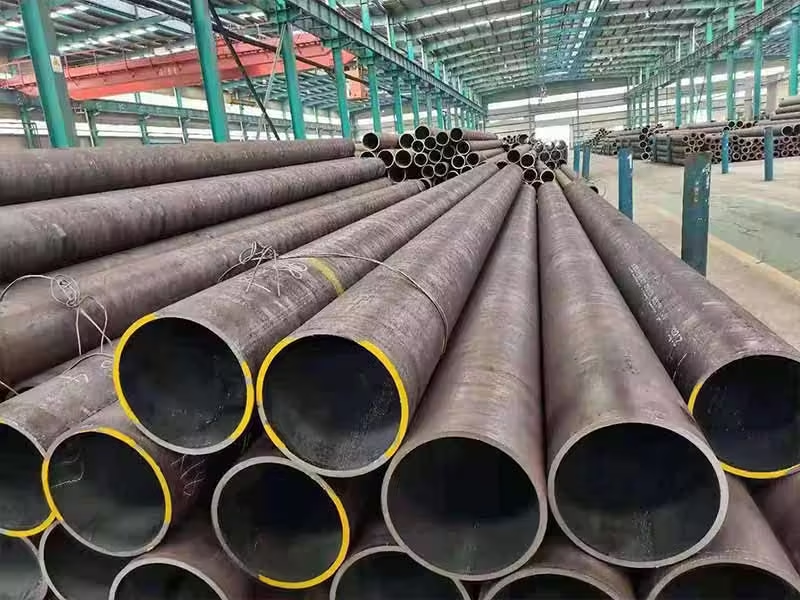
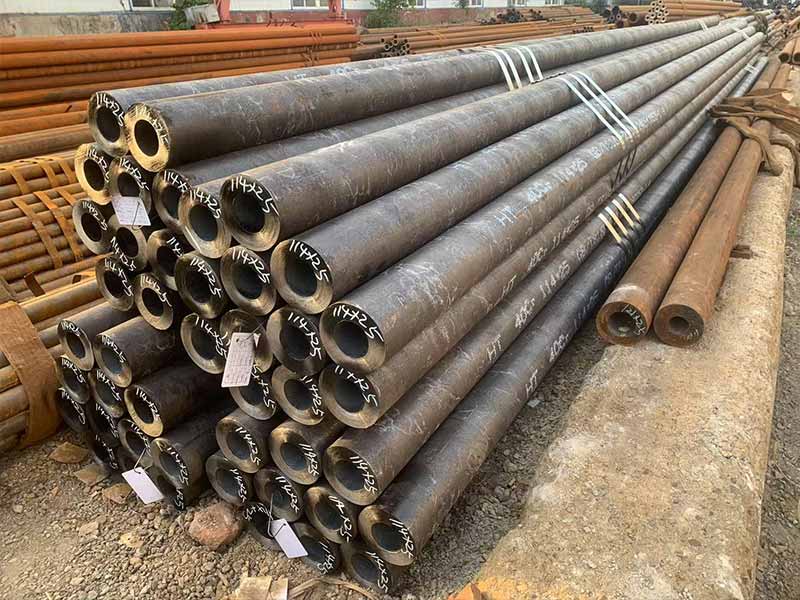
Seamless Steel Pipe
Seamless steel pipe is made by hot rolling or cold drawing process, without welds.
Introduction
Seamless steel pipes are essential components in industries that require high strength, durability, and resistance to extreme pressure and temperature. Compared to welded pipes, seamless pipes offer superior performance due to their uniform structure and absence of weld seams.
As a professional seamless steel pipe manufacturer and supplier, understanding the specifications, grades, and applications of seamless pipes is critical for making the right purchasing decision. In this comprehensive guide, we will cover everything you need to know about seamless steel pipes, including manufacturing processes, standards, applications, and how to choose a reliable supplier.
What Is a Seamless Steel Pipe?
A seamless steel pipe is a hollow cylindrical tube made from solid steel billets through a process that does not involve welding. The billet is heated and pierced to form a tube, then further processed through rolling or drawing to achieve the desired diameter and wall thickness. Because there are no welded joints, seamless steel pipes provide consistent mechanical properties throughout the entire structure.
Manufacturing Process of Seamless Steel Pipes
Understanding the manufacturing process helps buyers evaluate product quality and supplier capability.
1. Billet Preparation
High-quality carbon steel or alloy steel billets are selected as raw materials.
2. Heating
The billets are heated to high temperatures (typically above 1200°C) to make them malleable.
3. Piercing
A rotary piercing mill is used to create a hollow shell from the solid billet.
4. Rolling / Elongation
The hollow shell is elongated and shaped into a pipe using rolling mills.
5. Sizing & Stretch Reduction
The pipe diameter and wall thickness are adjusted to meet required specifications.
6. Heat Treatment
Processes such as annealing or normalizing improve mechanical properties.
7. Surface Treatment
Options include black painted, galvanized, or anti-corrosion coating.
8. Inspection & Testing
Strict quality checks include ultrasonic testing, hydrostatic testing, and chemical composition analysis. A reliable seamless steel pipe manufacturer will strictly control every step.
Key Advantages of Seamless Steel Pipes
High Strength and Reliability
Without welded seams, seamless pipes eliminate structural weak points, making them ideal for critical applications.
Excellent Pressure Resistance
They are widely used in high-pressure environments such as oil pipelines, boilers, and hydraulic systems.
Superior Corrosion Resistance
When combined with proper coatings or stainless materials, they perform well in harsh environments.
Wide Size Range
Seamless pipes are available in various diameters and thicknesses, suitable for customized industrial requirements.
Long Service Life
Lower failure rates and reduced maintenance costs make them cost-effective in the long term.
Common Applications of Seamless Steel Pipes
Seamless steel pipes are used across multiple industries:
Oil and Gas Industry
Used for transporting crude oil, natural gas, and petroleum products under high pressure.
Aerospace Industry
Applied in structural components and high-performance systems requiring lightweight and strength.
Automotive Industry
Used in drive shafts, suspension systems, and hydraulic tubing.
Marine Engineering
Ideal for offshore pipelines and shipbuilding due to corrosion resistance.
Construction Industry
Used in structural supports, piling, and heavy-duty frameworks.
Seamless Steel Pipe Grades and Standards
Selecting the correct grade is essential for performance and compliance.
Common International Standards
- ASTM A106 – High-temperature service
- ASTM A53 – General-purpose structural applications
- API 5L – Oil and gas pipeline transportation
- EN 10216 – European pressure applications
Material Types
- Carbon Steel Seamless Pipe
- Alloy Steel Pipe
- Stainless Steel Seamless Pipe
Each grade differs in tensile strength, yield strength, and chemical composition.
Seamless Pipe vs Welded Pipe: Key Differences
| Feature | Seamless Steel Pipe | Welded Steel Pipe |
|---|---|---|
| Manufacturing | No welding | Welded seam |
| Strength | Higher | Lower |
| Pressure Resistance | Excellent | Moderate |
| Cost | Higher | Lower |
| Applications | Critical industries | General applications |
For high-pressure, high-temperature, or safety-critical projects, seamless pipes are the preferred choice.
How to Choose the Right Seamless Steel Pipe Supplier
Choosing a reliable seamless steel pipe supplier is crucial for project success.
Certifications
Ensure the supplier has ISO and CE certifications.
Production Capacity
A strong manufacturer should support large-volume orders with stable supply.
Quality Control System
Look for third-party inspection and full testing reports.
Customization Capability
Ability to produce custom sizes, special coatings, and specific grades.
Pricing & Delivery
Competitive pricing and on-time delivery are key factors in B2B procurement.
Seamless Steel Pipe Price Factors
The price of seamless steel pipes depends on several factors:
- Raw material cost (carbon steel, alloy steel)
- Pipe diameter and wall thickness
- Manufacturing process
- Surface treatment
- Order quantity
Bulk orders usually get better pricing from manufacturers.
Why Choose Shandong Jiatianxia Metal Materials Co., Ltd.?
As a professional seamless steel pipe manufacturer with over 20 years of experience, we offer:
- Monthly production capacity of 50,000 tons
- ISO & CE certified products
- Full range of steel materials
- Competitive factory prices
- Fast global delivery
We are committed to providing high-quality seamless steel pipes for industries such as oil & gas, aerospace, automotive, and marine engineering.
Get a Free Quote from a Seamless Steel Pipe Manufacturer
If you are looking for a reliable seamless steel pipe supplier, we are here to help. Contact us today to receive a free quotation, product specifications, and technical consultation. Our team will respond within 24 hours.
 English
  Korean
  Arabic
  Vietnamese