

Stainless Steel Plate is a versatile, corrosion-resistant, and high-strength material widely used in industrial manufacturing, mechanical components, construction, chemical equipment, and marine engineering. Its flat, uniform thickness and smooth surface make it ideal for fabrication, cutting, welding, and CNC machining.
Industrial contractors, OEM manufacturers, and fabricators rely on stainless steel plates for structural supports, machinery parts, architectural components, and precision equipment where long-term durability and corrosion resistance are essential.
Table of Contents
What Is Stainless Steel Plate
Stainless Steel Plate is a flat sheet of high-quality stainless steel, available in various thicknesses and sizes for industrial applications.
Key features include:
- Excellent corrosion and oxidation resistance
- High strength and load-bearing capability
- Smooth and uniform surface for precise machining
- Long-term durability in harsh environments
Stainless steel plates are widely used in mechanical fabrication, construction, chemical processing, food industry equipment, and marine structures.
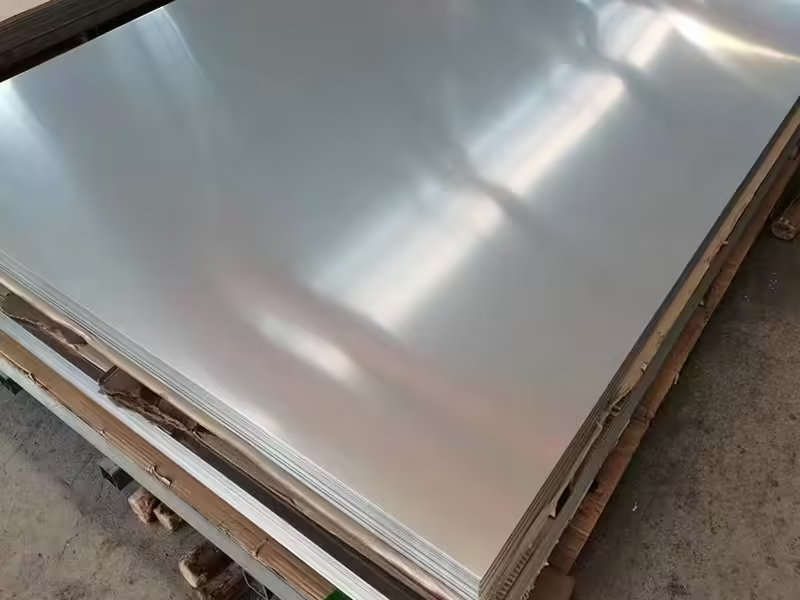
Technical Specifications Overview
| Parameter | Typical Range | Notes |
|---|---|---|
| Thickness | 2 mm – 200 mm | Custom thickness available |
| Width | 1000 mm – 2500 mm | Standard or cut-to-size |
| Length | 2000 mm – 6000 mm | Standard or cut-to-length |
| Surface | Mill finish / Polished / Brushed | Depending on application |
| Tolerance | +/- 0.1 mm | Precision option |
| Standard | ASTM / EN / JIS | International compliance |
Custom dimensions and high-precision tolerances are available to meet engineering requirements and project specifications.
Applications in Industrial Manufacturing
Stainless Steel Plates are widely used for:
- Machinery frames and industrial equipment bases
- Fabricated parts for CNC machining
- Chemical and food processing tanks
- Precision mechanical assemblies
- Automotive and aerospace structural components
Their corrosion resistance, durability, and smooth surface make them ideal for both indoor and outdoor applications.
Construction and Architectural Applications
Stainless steel plates are increasingly used in construction for:
- Structural support beams and frameworks
- Decorative architectural panels
- Facades and cladding
- Handrails and safety barriers
Surface finishes such as brushed, mirror-polished, or matte are often selected to match aesthetic and functional requirements.
Marine and Chemical Applications
Stainless steel plates are ideal for marine and chemical environments due to:
- Resistance to seawater corrosion
- High durability in chemical processing
- Structural supports in offshore platforms
- Tanks, vessels, and piping for industrial fluids
Anodizing, passivation, or protective coatings can further enhance resistance to harsh conditions.
Fabrication and Machining
Stainless steel plates can be:
- CNC cut, milled, or drilled
- Welded using MIG, TIG, or spot welding
- Bent or rolled into custom shapes
- Polished or brushed for decorative or protective purposes
Proper fabrication ensures precision, surface quality, and long-term performance.
Surface Finishing Options
- Polished: for aesthetic or hygienic requirements
- Brushed: reduces surface glare and improves appearance
- Mill finish: for industrial applications
- Coated or passivated: enhances corrosion resistance
Quality Control and Certification
Suppliers provide:
- Chemical composition verification
- Mechanical tensile and yield strength testing
- Surface inspection for scratches, defects, or impurities
- Dimensional inspection for flatness and thickness
- Mill Test Certificates (MTC)
Compliance with ASTM, EN, and JIS standards ensures quality and reliability for global projects.
Supply Capability
Manufacturers offer:
- Bulk production and export
- Custom thickness, width, and length
- Cut-to-size and precision machining services
- Protective packaging for safe transport
Stable supply chains support industrial, architectural, and marine projects.
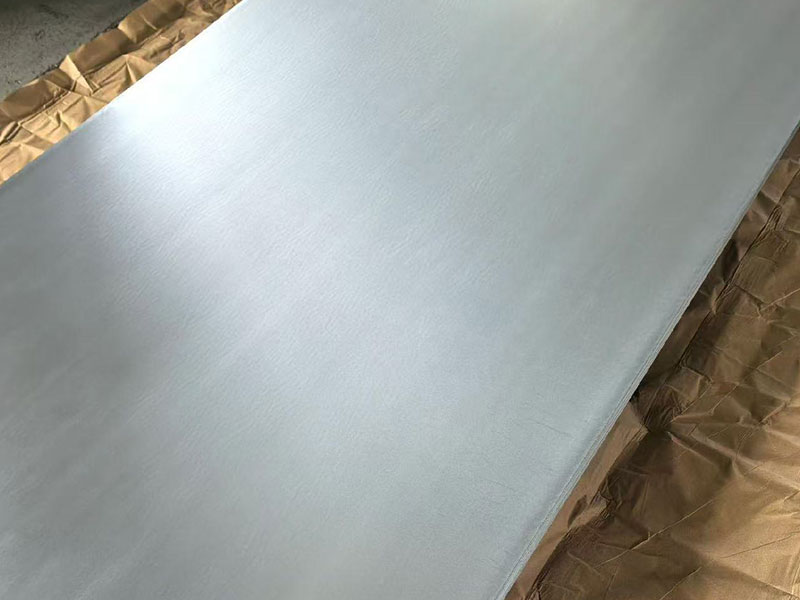
Market Demand Outlook
The demand for stainless steel plates continues to grow due to:
- Expansion in industrial manufacturing and CNC machining
- Structural and decorative applications in construction
- Growth in chemical, food, and marine industries
- High corrosion resistance and durability requirements
Their combination of strength, corrosion resistance, and versatility makes stainless steel plates a preferred material for modern industrial and mechanical applications.
Conclusion
Stainless Steel Plate provides high strength, corrosion resistance, durability, and excellent machinability.
It is ideal for industrial machinery, CNC components, construction frameworks, chemical and food equipment, and marine applications.
Selecting certified stainless steel plates ensures precise dimensions, consistent mechanical performance, and long-term reliability.
FAQ
Q1: What industries use stainless steel plates?
Industrial manufacturing, CNC machining, construction, chemical processing, food equipment, and marine engineering.
Q2: Can stainless steel plates be polished or brushed?
Yes, surface treatments improve aesthetics and corrosion resistance.
Q3: Are custom thicknesses and sizes available?
Yes, manufacturers provide a wide range of dimensions and cut-to-size services.
Q4: Can stainless steel plates be welded?
Yes, MIG, TIG, and spot welding are commonly used.
Q5: Is bulk supply available?
Yes, suppliers support large-scale industrial, architectural, and marine orders.
 English
  Korean
  Arabic
  Vietnamese