

Stainless steel coil for oil and gas pipeline systems is widely used in the fabrication of transmission pipelines, gathering systems, offshore flow lines, refinery piping, and high-pressure transport networks. Oil and gas environments are among the most demanding industrial conditions, involving high pressure, temperature fluctuation, corrosive media, and long-distance operation requirements.
In such environments, material performance directly impacts operational safety, environmental protection, and long-term project profitability. Stainless steel coil for oil and gas pipeline systems provides corrosion resistance, structural strength, and durability required for upstream, midstream, and downstream infrastructure.
As global energy demand grows and offshore exploration expands, stainless steel continues to play a critical role in pipeline engineering and hydrocarbon transport systems.
Table of Contents
Operating Conditions in Oil and Gas Pipelines
Pipeline systems in oil and gas sectors are exposed to:
High internal pressure
Hydrogen sulfide (H₂S) exposure
Carbon dioxide corrosion
Saltwater and marine environments
Extreme temperature variation
Abrasion from transported media
Traditional carbon steel pipelines require internal coatings and corrosion inhibitors. However, coating degradation can lead to leaks and costly shutdowns. Stainless steel coil provides inherent corrosion resistance, significantly reducing risk in harsh environments.
Common Stainless Steel Grades for Pipeline Systems
304 Stainless Steel Coil
304 stainless steel coil is suitable for:
Low-corrosion oil transport
Gas transmission lines
Refinery auxiliary piping
Non-saline environments
It offers strong weldability and mechanical performance for general industrial applications.
316 Stainless Steel Coil
316 stainless steel coil contains molybdenum, enhancing resistance to chloride corrosion and pitting. It is recommended for:
Offshore pipelines
Marine oil platforms
Saline environments
Chemical transport lines
Sour gas systems
For environments containing chlorides or aggressive chemicals, 316 significantly extends pipeline lifespan.
Technical Specifications Overview
| Parameter | Typical Range | Description |
|---|---|---|
| Grade | 304 / 316 | Corrosion-resistant pipeline material |
| Thickness | 1.5–10.0 mm | Pipe forming and reinforcement |
| Width | 800–2000 mm | Large diameter pipe production |
| Surface Finish | No.1 / 2B | Industrial grade |
| Yield Strength | ≥205 MPa | Structural integrity |
| Tensile Strength | ≥520 MPa | High-pressure reliability |
| Standard | ASTM A240 / API related specs | Industry compliance |
Material thickness depends on pipeline diameter, pressure rating, and environmental exposure.
Corrosion Resistance in Hydrocarbon Transport
Oil and gas pipelines often encounter internal corrosion from:
Water condensation
Hydrogen sulfide
Chloride ions
Carbon dioxide
Stainless steel forms a stable passive layer that resists oxidation and localized corrosion. In offshore systems, 316 grade significantly improves pitting resistance compared to standard carbon steel.
Mechanical Strength and Pressure Handling
Pipeline systems must withstand:
High internal pressure
Mechanical stress
Thermal expansion
Ground movement
Stainless steel coil offers strong tensile and yield strength while maintaining ductility. This combination reduces fracture risk and improves structural reliability.
Fabrication Advantages for Pipe Manufacturers
Stainless steel coil is suitable for:
Roll forming into welded pipes
Longitudinal seam welding
Spiral pipe forming
Laser cutting
Automated welding processes
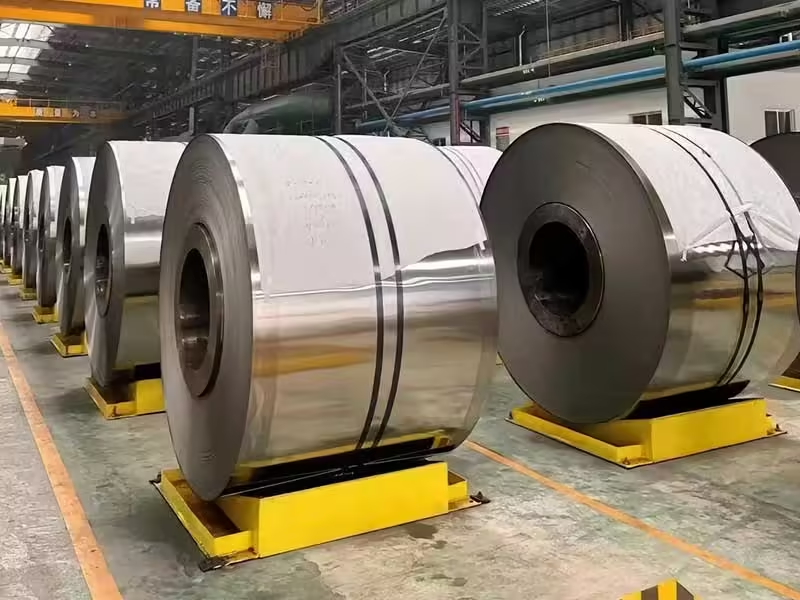
The coil format ensures consistent thickness and mechanical performance, improving production efficiency for pipe mills.
Offshore and Marine Applications
Offshore oil platforms operate in highly corrosive marine environments. Stainless steel coil for oil and gas pipeline systems provides resistance to:
Salt spray
Marine humidity
Seawater immersion
High wind and vibration exposure
316 stainless steel is particularly suitable for offshore and subsea pipeline applications.
Comparison: Stainless Steel vs Carbon Steel in Oil & Gas
Carbon steel requires corrosion protection systems.
Maintenance costs increase over time.
Risk of internal corrosion remains high.
Stainless steel offers inherent corrosion resistance.
Lower lifecycle maintenance cost.
Improved environmental safety.
For long-term offshore and corrosive projects, stainless steel coil provides higher reliability.
Compliance and Quality Standards
Oil and gas projects require strict compliance. Professional suppliers provide:
Mill Test Certificates
Chemical composition analysis
Mechanical property testing
PMI verification
Ultrasonic testing (if required)
Traceability documentation
Compliance with ASTM and relevant API standards ensures acceptance in global pipeline projects.
Supply Capacity for Energy Projects
Large energy projects require stable and high-volume supply. Reliable stainless steel coil suppliers provide:
Heavy gauge coil availability
Wide-width production
Custom slitting services
Export-grade packaging
Flexible logistics coordination
Support for EPC procurement schedules
Stable supply ensures uninterrupted pipeline production and project timelines.
Industry Outlook
Global oil and gas infrastructure investment continues due to:
Energy demand growth
Offshore exploration expansion
Pipeline modernization projects
Stricter environmental regulations
As safety and durability standards increase, stainless steel coil for oil and gas pipeline systems remains a strategic material choice.
Conclusion
Stainless steel coil for oil and gas pipeline systems delivers corrosion resistance, high mechanical strength, structural reliability, and long-term cost efficiency. It supports safe hydrocarbon transport in onshore, offshore, and refinery environments.
For pipeline manufacturers and energy EPC contractors, selecting certified stainless steel coil ensures regulatory compliance, operational safety, and extended infrastructure lifespan.
FAQ
Q1: Is 304 suitable for oil pipelines?
Yes, for non-aggressive and low-chloride environments.
Q2: Why is 316 recommended for offshore systems?
316 offers improved chloride corrosion resistance due to molybdenum content.
Q3: What thickness is commonly used for pipeline fabrication?
Typically 1.5–10.0 mm depending on diameter and pressure rating.
Q4: Can stainless steel coil be formed into large-diameter pipes?
Yes, it supports spiral and longitudinal welded pipe manufacturing.
Q5: Is bulk supply available for energy projects?
Yes, suppliers support large-scale oil and gas EPC projects.
 English
  Korean
  Arabic
  Vietnamese