

In today’s global industrial landscape, product quality and safety are paramount. Companies sourcing metal materials or steel products face the challenge of ensuring consistent quality across batches, suppliers, and countries. International quality management systems, such as ISO 9001 and CE certification, provide the framework and assurance that products meet rigorous standards.
This article explores how these certifications work, their benefits for procurement, practical considerations when selecting certified suppliers, how to implement quality control in supply chains, and how certification translates into reliability and safety for end-users.
Table of Contents
Understanding ISO 9001 Certification
ISO 9001 is the international standard for quality management systems (QMS). It focuses on consistent processes, continuous improvement, and meeting customer requirements.
Key Elements of ISO 9001
- Process Approach: Organizations identify key processes, manage resources, and monitor performance
- Customer Focus: Ensures products meet or exceed customer expectations
- Risk-Based Thinking: Identifies potential quality risks and implements preventive measures
- Continuous Improvement: Encourages ongoing evaluation and enhancement of processes
Benefits for Procurement
ISO 9001 certification provides assurance that a supplier:
- Implements standardized production processes
- Maintains thorough documentation for traceability
- Conducts regular internal audits and inspections
- Reduces the risk of defective or inconsistent products
ISO Certification Audit Process
Understanding the audit process helps buyers assess supplier reliability:
- Documentation Review: Evaluates QMS manuals, procedures, and records
- On-Site Audit: Confirms that documented processes are followed
- Corrective Actions: Any deviations are documented and rectified
- Certification Issuance: ISO 9001 certificate is granted, typically valid for 3 years
- Surveillance Audits: Annual or periodic audits ensure continuous compliance
Understanding CE Certification
CE marking indicates that a product complies with European Union safety, health, and environmental protection requirements. While primarily applicable in Europe, CE certification has become a benchmark for international buyers seeking high-quality products.
Key Aspects of CE Certification
- Conformity Assessment: Verifies compliance with applicable EU directives
- Product Safety: Ensures materials and components meet essential safety requirements
- Documentation: Suppliers provide technical files, test reports, and compliance declarations
- Market Access: CE-certified products can be legally sold in the European Economic Area (EEA)
Benefits for International Buyers
- Confidence that products meet rigorous safety and quality standards
- Simplified customs and import procedures
- Reduced liability risks when using certified materials in construction, manufacturing, or industrial projects
How Quality Management Translates to Procurement Safety
Certification alone is not enough. Effective quality management involves:
- Supplier Selection: Prioritize ISO 9001 and CE-certified suppliers
- Material Verification: Request certificates of conformity, material test reports, and inspection records
- Consistent Production: Certified processes ensure each batch meets specifications
- Traceability: Full documentation allows rapid identification and correction of any quality issues
| Certification | Scope | Benefits | Key Industries |
|---|---|---|---|
| ISO 9001 | Quality management systems | Process consistency, continuous improvement, supplier reliability | Manufacturing, construction, automotive, aerospace |
| CE | Product conformity with EU directives | Product safety, legal market access | Construction, machinery, electrical equipment, metal products |
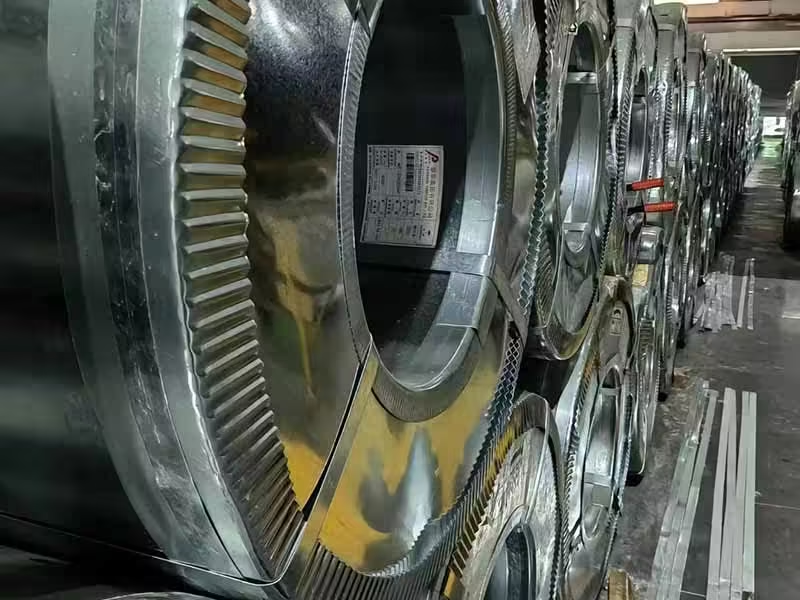
Case Study: Steel Coil Procurement
A multinational construction company required steel coils for a bridge project. By selecting ISO 9001 and CE-certified suppliers, the company ensured:
- High consistency in coil thickness and strength
- Compliance with EU safety standards
- Reliable documentation for regulatory inspections
The result was reduced project delays, fewer material defects, and increased confidence in supplier reliability.
Lessons Learned
- Pre-Audit Verification: Always check certificate validity and issuing authority
- Batch Documentation: Request quality reports per shipment to track consistency
- Supplier Communication: Clear requirements prevent misunderstandings
Implementing Quality Control in Your Supply Chain
- Verify Certifications: Confirm validity and scope of ISO and CE certifications
- Review Quality Records: Request inspection reports, tensile tests, and metallurgical analysis
- Audit Supplier Processes: Conduct on-site audits when possible
- Maintain Communication: Ensure deviations or improvements are documented
- Integrate Continuous Improvement: Encourage suppliers to adopt feedback and improve processes
Advanced Quality Control Techniques
- Statistical Process Control (SPC): Monitors production to detect deviations in real-time
- Material Sampling Plans: Ensures random testing covers every batch adequately
- Non-Destructive Testing (NDT): Detects internal defects in metals without damaging products
- Supplier Performance Metrics: Track defect rates, on-time delivery, and compliance over time
Global Considerations
- ISO 9001 and CE standards provide a common baseline for international procurement
- They help reduce risk when sourcing from multiple countries or regions
- Buyers should be aware of regional standards (e.g., ASTM, JIS, GB) and ensure compatibility with ISO/CE requirements
Integration with Other Standards
- ISO 14001: Environmental management
- OHSAS 45001 / ISO 45001: Occupational health and safety
- Industry-Specific Certifications: Automotive (IATF 16949), Aerospace (AS9100)
FAQ
What is the main purpose of ISO 9001 certification?
To establish a quality management system that ensures consistent processes, traceability, and continuous improvement.
What does CE marking indicate?
CE marking shows that a product meets European safety, health, and environmental protection standards.
How do these certifications benefit procurement?
They assure product quality, traceability, and compliance with international standards, reducing supply chain risks.
Can ISO 9001 and CE certifications apply to metal products?
Yes, both certifications are widely used for steel, aluminum, and other metal materials in manufacturing and construction.
How can buyers verify a supplier’s certification?
Request official certificates, check the issuing body, confirm the scope, and validate the certificate’s validity dates.
 English
  Korean
  Arabic
  Vietnamese