

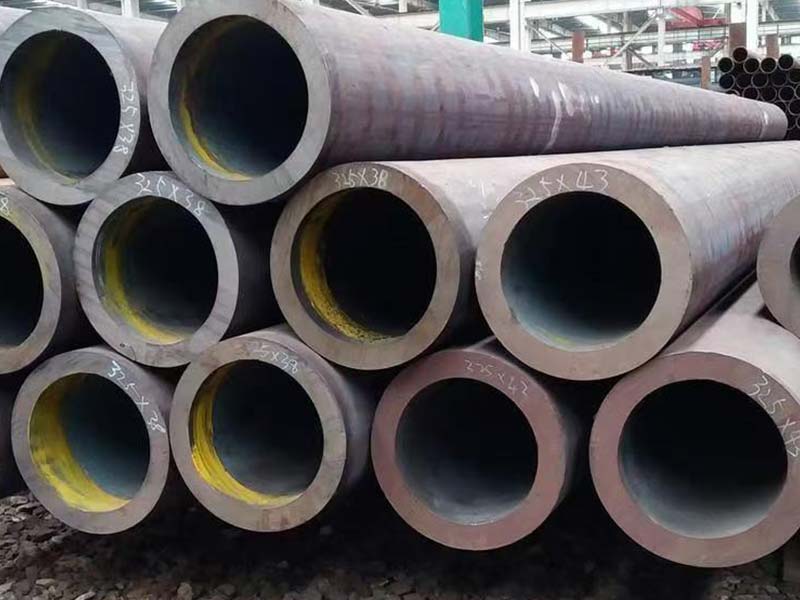
The aerospace industry demands materials with exceptional strength, precision, and reliability. Seamless steel pipes are widely used in aircraft engines, landing gear, hydraulic systems, and structural components because they provide superior mechanical performance and safety under extreme conditions.
This article explores why seamless steel pipes are critical for aerospace applications, including their material properties, production processes, performance advantages, and real-world examples in the industry.
Table of Contents
Understanding Seamless Steel Pipes
Seamless steel pipes are manufactured without any welded seams, providing a uniform cross-section throughout the pipe. This continuous structure eliminates weak points that could fail under stress, making them ideal for high-pressure and high-temperature aerospace applications.
Key properties include:
- High tensile and compressive strength
- Excellent fatigue resistance
- Uniform wall thickness for precise engineering tolerances
- Corrosion resistance in harsh operational environments
Material Selection for Aerospace Applications
Aerospace components require steels that combine high strength with lightweight and corrosion resistance. Common grades used include:
| Steel Grade | Composition | Tensile Strength (MPa) | Fatigue Resistance | Applications |
|---|---|---|---|---|
| 4140 Alloy Steel | Cr-Mo alloy | 950–1100 | High | Hydraulic cylinders, landing gear |
| 17-4 PH Stainless Steel | Cr-Ni-Cu | 1000–1200 | Very High | Aircraft structural components |
| 4340 Alloy Steel | Ni-Cr-Mo | 980–1150 | High | Engine shafts, high-stress fittings |
Selecting the right material ensures that pipes can withstand extreme pressures, temperature fluctuations, and cyclic loads typical in aerospace operations.
Advantages of Seamless Pipes in Aerospace
Superior Strength and Safety
Without welded seams, seamless pipes offer higher burst pressure, uniform load distribution, and reduced risk of crack initiation. This is critical for flight-critical systems such as hydraulic lines and fuel pipelines.
Precision and Reliability
Seamless pipes can be manufactured to precise tolerances, ensuring compatibility with complex aerospace assemblies. Accurate dimensions help reduce stress concentrations and improve overall component longevity.
Fatigue Resistance
Cyclic loading is common in aircraft operations. Seamless pipes resist fatigue failure better than welded pipes due to the absence of seam defects, ensuring long-term reliability.
Corrosion Resistance
Many aerospace environments expose components to moisture, fuels, and hydraulic fluids. Alloying elements and surface treatments enhance corrosion resistance, prolonging service life and reducing maintenance.
Production Standards and Quality Control
Aerospace-grade seamless pipes must meet stringent standards, including ASTM, SAE, and ISO specifications. Key production steps include:
- Hot Rolling or Cold Drawing: To achieve precise diameter and wall thickness
- Heat Treatment: Quenching and tempering for optimal strength and toughness
- Non-Destructive Testing (NDT): Ultrasonic, radiographic, or eddy current testing to detect micro-defects
- Dimensional Inspection: Ensures strict adherence to aerospace engineering tolerances
| Quality Check | Purpose | Typical Method |
|---|---|---|
| Tensile Test | Measures ultimate strength and yield | Universal testing machine |
| Hardness Test | Assesses surface hardness | Rockwell or Brinell |
| Ultrasonic Test | Detects internal defects | Ultrasonic flaw detector |
| Dimensional Check | Confirms diameter and wall uniformity | Precision micrometers, calipers |
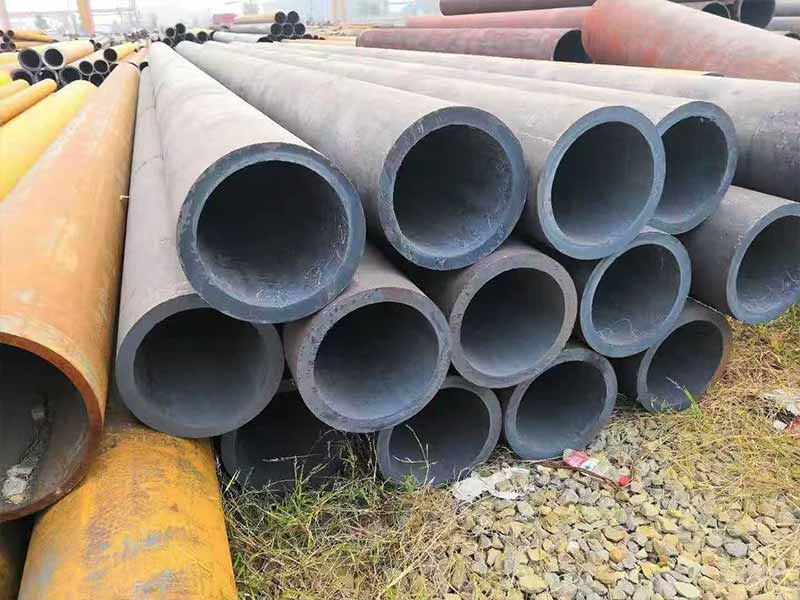
Real-World Applications in Aerospace
- Landing Gear Systems: Hydraulic and structural components rely on seamless pipes for high-pressure performance.
- Fuel and Hydraulic Lines: Seamless pipes prevent leaks and withstand repeated thermal cycling.
- Engine Shafts and High-Stress Fittings: Require fatigue-resistant materials with uniform strength.
- Aircraft Structural Components: Tubular supports and frames benefit from lightweight, high-strength seamless steel.
Case Study: Hydraulic Systems in Commercial Aircraft
A commercial aircraft manufacturer required pipes capable of handling hydraulic pressures exceeding 350 bar while maintaining fatigue resistance over thousands of flight cycles. Seamless 4140 alloy steel pipes were selected, heat-treated, and subjected to ultrasonic testing to ensure defect-free performance. The result was a reliable, lightweight system with minimal maintenance needs over a 20-year service life.
Maintenance and Lifespan Considerations
While seamless pipes are highly reliable, proper maintenance is essential in aerospace:
- Regular inspections for corrosion, wear, and micro-cracks
- Monitoring pressure and temperature cycles to detect abnormal stresses
- Replacement schedules based on manufacturer and aviation authority recommendations
- Protective coatings or plating in corrosive environments
FAQ
Why are seamless pipes preferred over welded pipes in aerospace?
Seamless pipes have no weld seam, reducing weak points and enhancing fatigue resistance under cyclic loads.
What materials are used for aerospace seamless pipes?
Common materials include 4140 alloy steel, 17-4 PH stainless steel, and 4340 alloy steel, selected for strength, toughness, and corrosion resistance.
How is the quality of aerospace pipes ensured?
Through heat treatment, non-destructive testing, tensile and hardness testing, and strict dimensional inspections.
Can seamless pipes withstand high pressures?
Yes, their uniform wall thickness and defect-free structure allow them to handle extreme pressures safely.
Are seamless pipes suitable for fuel and hydraulic lines?
Absolutely. They are widely used in hydraulic and fuel systems because they resist fatigue, high pressure, and corrosion.
 English
  Korean
  Arabic
  Vietnamese