

목차
Selecting copper busbar material is not simply a matter of ordering a copper strip with the right width and thickness. The material must carry the design current, release heat under the actual enclosure conditions, withstand short-circuit forces, accept holes and bends, and maintain stable joints throughout service. A purchase specification should therefore connect electrical design, mechanical requirements, fabrication, inspection, and packing.
This guide explains how engineers and procurement teams can define copper busbar material without relying on vague terms such as pure copper or electrical grade. It focuses on information that can be placed on a drawing, request for quotation, inspection plan, and material certificate. Final ampacity and protection decisions remain the responsibility of the system designer and the applicable electrical code.
Start With the Electrical Design
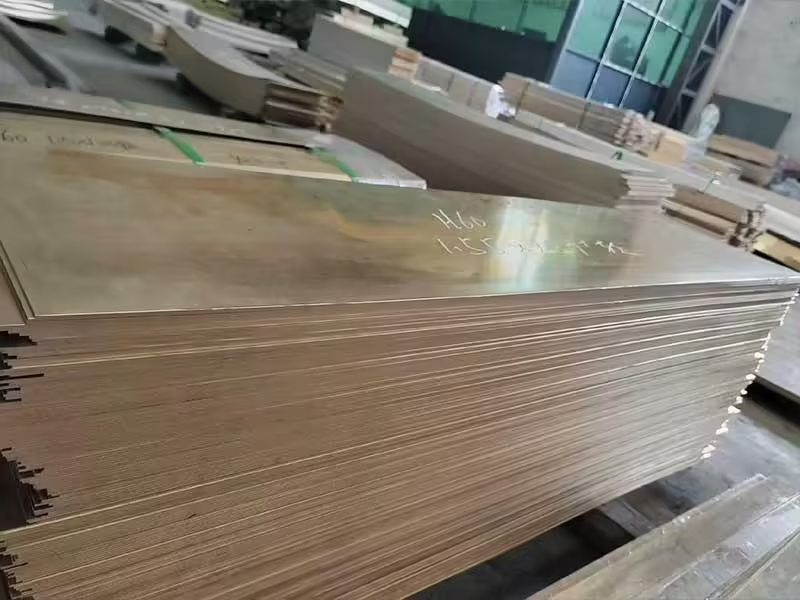
The correct copper busbar material starts with the busbar system rather than a preferred grade name. Define AC or DC service, continuous and intermittent current, allowable temperature rise, ambient temperature, enclosure ventilation, bar orientation, spacing, number of parallel bars, joint locations, and the fault forces the assembly must resist. Surface condition also matters because radiation and convection affect heat dissipation.
For copper busbar material, published ampacity tables are useful design references, but they are not universal ratings. The Copper Development Association’s rectangular copper busbar design resources show that bar size, temperature rise, surface emissivity, spacing, and the number of bars influence current-carrying performance. The designer should verify the actual configuration instead of selecting copper busbar material from cross-sectional area alone.
Choose the Copper Grade
A complete copper busbar material description names a recognized copper designation and the product standard that controls composition, properties, dimensions, and test methods. High-conductivity wrought copper is commonly considered for electrical busbars, but different grades are not automatically interchangeable. Oxygen content, deoxidation practice, conductivity, joining method, and exposure to elevated-temperature processing can change the suitable choice.
C11000 electrolytic tough-pitch copper is widely associated with electrical conductors and busbars. Oxygen-free and deoxidized coppers may be evaluated when the manufacturing route includes demanding brazing, welding, or reducing atmospheres. That does not mean one grade is categorically better. The right copper busbar material is the grade whose documented properties and processing compatibility match the drawing and service conditions.
When ordering copper busbar material, do not accept a quotation that lists only red copper, pure copper, or an approximate purity. Those labels do not establish the UNS designation, temper, conductivity requirement, product form, or certificate evidence. If regional designations are used, the purchase documents should identify the required standard and any approved equivalent before production begins.
Balance Conductivity and Strength
Electrical conductivity is central to copper busbar material, but it must be specified and verified correctly. Conductivity is commonly reported relative to the International Annealed Copper Standard, while resistance changes with temperature. Alloying additions and some strengthening mechanisms can improve mechanical performance while reducing conductivity, so a high-strength copper alloy should not be substituted for high-conductivity copper without an electrical and thermal review.
The Copper Development Association’s electrical conductivity design guide explains the use of percent IACS and the effect of temperature and alloying elements. For procurement, the practical action is to state the minimum conductivity required by the approved design, identify the test method when it matters, and require results linked to the supplied lot.
Mechanical properties still matter. Long unsupported bars need adequate stiffness; formed offsets need sufficient ductility; bolted joints must retain contact pressure; and the assembly must withstand handling and fault loading. Copper busbar material should therefore be evaluated through conductivity, temper, tensile or hardness requirements where relevant, and the geometry of the finished busbar.
Specify Temper and Fabrication
Temper describes the metallurgical condition delivered by rolling, drawing, and annealing. A softer copper busbar material generally forms more readily, while a harder condition can improve stiffness and handling but may demand larger bend radii or different tooling. The drawing should state the required temper or property range rather than asking the fabricator to infer it from the intended use.
Fabrication details for copper busbar material belong in the material review. List shearing, sawing, punching, drilling, milling, bending, brazing, welding, plating, and insulation steps. Hole quality, burr direction, edge cracks, bend orientation, residual stress, and local heating can affect assembly. If severe bends or closely spaced holes are required, confirm the process with representative copper busbar material before releasing the full quantity.
Define Dimensions and Tolerances
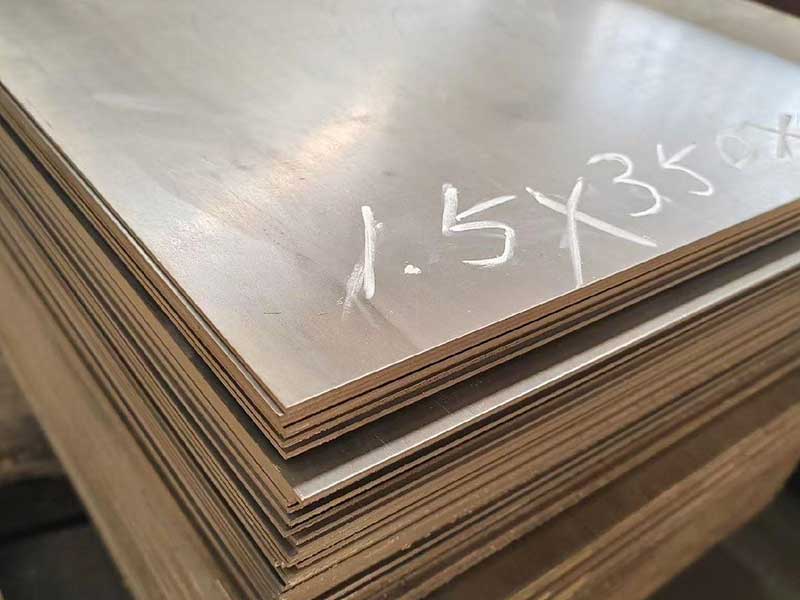
Copper busbar material dimensions should be driven by the electrical calculation and the enclosure. Specify thickness, width, cut length, straightness, flatness, edge condition, corner radius, hole size and position, slot geometry, and any formed offsets. For copper busbar material supplied as plate or strip, state whether dimensions apply before or after machining, plating, or insulation.
Tolerance should protect function. Thickness and width affect cross-sectional area; flatness affects stacking and contact; hole position affects assembly; and burrs can damage insulation or create unsafe clearances. At the same time, unnecessarily tight tolerances can constrain sourcing without improving the finished system. Define measurement locations, datum references, and inspection conditions for every critical feature.
Buyers can review available copper plate product forms when deciding whether to purchase mill-size plate, precision strip, or fabricated blanks. The RFQ should make clear who is responsible for final cutting, hole making, deburring, cleaning, plating, and dimensional inspection.
Control Joints and Contact Surfaces
Copper busbar material is only as reliable as its joints. Contact surfaces need controlled flatness, cleanliness, finish, plating where specified, and protection from scratches or contamination. Copper busbar material that passes bulk conductivity testing can still create an unstable connection if the joint face is distorted, oxidized, dirty, or assembled with unsuitable hardware and torque.
Specify whether surfaces remain bare, are tin plated, silver plated, insulated, or receive another approved treatment. Include plating thickness and adhesion requirements only when supported by the project standard. Masked areas, coating boundaries, and acceptable cosmetic zones should be shown on the drawing. Packaging must keep finished contact faces separated and dry during storage and transport.
For the electrical basis behind these decisions, the site’s 동판 전도도 가이드 explains certificate review and conductivity evidence in more detail. Use that information together with the system designer’s thermal and joint calculations when approving copper busbar material.
Compare Procurement Options
The table compares common ways to procure copper busbar material. The appropriate route depends on drawing maturity, internal equipment, inspection capability, volume, and the consequences of dimensional or surface nonconformity.
| Supply condition | Buyer completes | Main controls to specify |
|---|---|---|
| Mill-size plate or strip | All cutting, holes, forming, finishing, and inspection | Grade, temper, conductivity, dimensions, tolerance, surface, certificate, and packing |
| Cut blanks | Holes, forming, finishing, and final inspection | Blank dimensions, squareness, flatness, burr, surface protection, and traceability |
| Machined busbars | Assembly and any final treatment | Drawing revision, datums, hole position, edge finish, cleanliness, and inspection report |
| Finished and plated busbars | Incoming inspection and assembly | Plating system, masked zones, contact surfaces, packaging, labels, and lot-linked records |
Buying more processing can reduce internal work, but it also makes drawing control and traceability more important. The quotation should separate approved deviations from assumptions. A supplier should not change copper busbar material, temper, thickness, plating, or processing route without written technical approval.
Build an Inspection Plan
Receiving inspection for copper busbar material should confirm identity before dimensions are measured. Match labels, heat or lot references, packing lists, and certificates. Review grade, temper or mechanical condition, chemical composition when required, conductivity evidence, dimensions, surface, and processing records. Sampling frequency should reflect order size, project risk, and the purchase specification.
- Verify the copper designation, product standard, temper, and lot identity.
- Review conductivity results and the stated test method when required.
- Measure thickness, width, length, flatness, straightness, and critical features.
- Inspect edges, holes, bends, joint faces, plating, insulation, and cleanliness.
- Confirm that certificates and reports remain traceable to each package or part.
- Photograph wet wrapping, impact damage, shifted bundles, scratches, or missing labels before unloading.
Use instruments appropriate to the tolerance and record where measurements were taken. Copper busbar material with formed or machined features should be inspected against the drawing datums, not only against overall dimensions. Nonconformity reports should identify the affected lot and feature so conforming material is not unnecessarily placed on hold.
자주 묻는 질문
Which copper grade is used for busbars?
High-conductivity wrought copper such as C11000 is commonly considered, but the approved grade must match conductivity, temper, joining, fabrication, atmosphere, and the governing product standard.
Is conductivity alone enough to select a busbar?
No. Copper busbar material must also satisfy temperature-rise design, mechanical strength, stiffness, bendability, joint performance, dimensions, surface condition, and fault-force requirements.
Why does copper temper matter?
Temper influences strength, stiffness, hardness, bendability, machining behavior, and joint performance. State the required temper or property range instead of relying on a generic electrical-grade description.
What should be checked during receiving inspection?
Check grade and lot identity, certificates, conductivity evidence where specified, dimensions, flatness, edges, holes, joint faces, plating or insulation, surface protection, and packaging condition.
What information belongs in a copper busbar RFQ?
Include the design standard, copper designation, temper, conductivity requirement, dimensions, tolerances, drawing revision, fabrication, surface treatment, inspection, traceability, labeling, and packaging.
Prepare a Complete RFQ
A useful copper busbar material RFQ includes the approved drawing, copper designation, product standard, temper, minimum conductivity where required, dimensions, tolerances, fabrication sequence, joint-face requirements, plating or insulation, inspection plan, certificate scope, labels, and packing method. State the operating environment and any critical assembly constraints without asking the material supplier to perform the system designer’s electrical approval.
Send Huanhai Zhongke the drawing, required copper grade, dimensions, processing scope, surface treatment, and inspection requirements for a technical supply review before requesting a quotation. Clear inputs allow the supplier to confirm copper busbar material availability and identify technical exceptions before production.
 Korean
  English
  Arabic
  Vietnamese