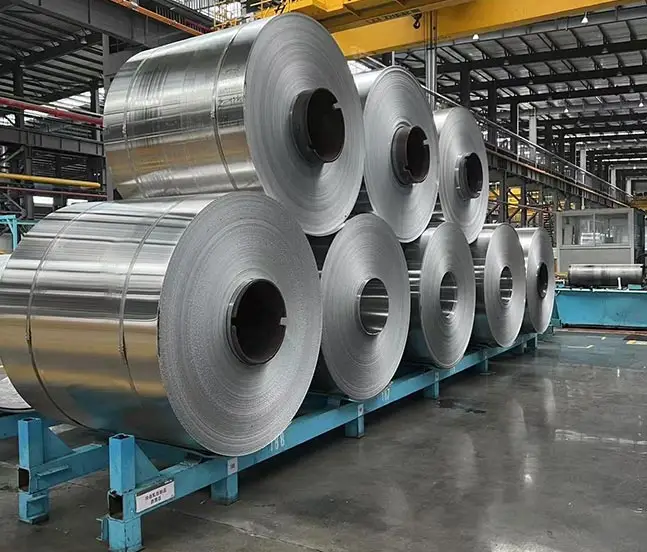

LNG 저장 탱크 제조용 스테인레스 스틸 코일

304 및 316 등급의 LNG 저장 탱크 제조 용 스테인레스 스틸 코일, 극저온 저항성, 무거운 게이지, EPC 프로젝트 용 대량 공급.

Stainless steel coil for LNG storage tank manufacturing is widely used in the fabrication of cryogenic tanks designed to store and transport liquefied natural gas at extremely low temperatures. LNG is stored at approximately -162°C, requiring materials that maintain mechanical strength, toughness, and structural stability under cryogenic conditions.

Material performance is critical in LNG infrastructure. Any structural failure may result in leakage, safety hazards, and severe economic losses. Stainless steel coil for LNG storage tank manufacturing provides the low-temperature toughness, corrosion resistance, and fabrication reliability required for cryogenic engineering applications.

With global energy transition accelerating and LNG trade expanding, demand for high-performance cryogenic storage materials continues to grow.

Working Conditions in LNG Storage Systems

LNG storage tanks operate under extreme conditions, including:

Ultra-low temperature (-162°C)
Thermal contraction and expansion
Internal pressure
Marine exposure (for LNG carriers)
Long-term outdoor service
Corrosive coastal environments

Not all materials maintain ductility at cryogenic temperatures. Stainless steel offers stable mechanical properties even at extremely low temperatures, making it suitable for LNG storage systems.

Why Stainless Steel Is Suitable for Cryogenic Applications

Stainless steel retains impact toughness and ductility at low temperatures. Unlike carbon steel, which becomes brittle under cryogenic conditions, austenitic stainless steels maintain structural integrity and resist cracking.

Stainless steel coil for LNG storage tank manufacturing ensures:

High fracture toughness
Stable tensile strength at low temperature
Resistance to thermal stress
우수한 용접성
장기 내구성

These characteristics are essential for safe LNG storage and transport.

스틸 코일

Common Stainless Steel Grades for LNG Tanks

304 스테인레스 스틸 코일

304 stainless steel coil provides good low-temperature performance and is used in:

Inner tank shells
Structural reinforcement
Auxiliary cryogenic components

It offers balanced cost and performance for certain LNG system components.

316 스테인레스 스틸 코일

316 stainless steel coil includes molybdenum, enhancing corrosion resistance in coastal and marine environments. It is commonly used in:

Offshore LNG storage systems
Marine LNG carriers
Coastal LNG terminals
Cryogenic pipelines

For combined cryogenic and saline exposure, 316 provides enhanced reliability.

기술 사양 개요

매개변수일반적인 범위설명
등급304 / 316Cryogenic-grade stainless steel
두께2.0–14.0 mmHeavy-duty tank shells
너비1000~2000mm대형 쉘 형성
표면 마감1호 / 2B산업 끝
항복 강도≥205MPa구조 안정성
신장≥40%Low-temperature ductility
기준ASTM A240 / EN 10088국제 규정 준수

Thickness selection depends on tank diameter, pressure design, and structural engineering calculations.

Structural Performance Under Cryogenic Conditions

At -162°C, materials experience thermal contraction. Stainless steel has a predictable thermal expansion coefficient and maintains toughness under low temperatures.

Its austenitic structure prevents brittle fracture, ensuring structural safety in LNG storage tanks and cryogenic pipelines.

Corrosion Resistance in LNG Infrastructure

LNG terminals are often located in coastal regions, where exposure to salt spray and marine humidity accelerates corrosion. Stainless steel coil provides natural corrosion resistance without requiring heavy protective coatings.

For offshore LNG carriers, 316 stainless steel offers improved resistance to chloride-induced corrosion.

Fabrication Advantages for LNG Tank Manufacturers

Stainless steel coil supports:

Plate rolling into large cylindrical shells
Automatic welding for cryogenic seams
Precision cutting for structural reinforcements
Heavy-gauge forming
Stable dimensional control

Consistent coil quality ensures predictable welding performance and structural integrity.

Applications in LNG Infrastructure

Stainless steel coil for LNG storage tank manufacturing is used in:

Onshore LNG storage tanks
Floating storage units
LNG transport vessels
Cryogenic transfer pipelines
Re-gasification facilities
LNG fueling stations

Its low-temperature performance makes it essential in modern LNG energy systems.

Comparison with Carbon Steel in Cryogenic Storage

Carbon steel becomes brittle at cryogenic temperatures.
Risk of cracking increases significantly.
Additional alloying or special treatment is required.

Austenitic stainless steel naturally maintains toughness at low temperature.
No brittleness under cryogenic service.
Improved safety margin in LNG applications.

For long-term cryogenic safety, stainless steel coil remains a preferred solution.

Compliance and Engineering Standards

LNG storage tanks must comply with strict international standards. Certified stainless steel coil typically meets:

ASTM A240
EN 10088
ASME material requirements

공급업체는 다음을 제공합니다:

밀 테스트 인증서
Impact testing data
기계적 특성 검증
화학 성분 보고서
Full traceability documentation

These ensure acceptance in global LNG engineering projects.

Supply Capacity for LNG Projects

LNG infrastructure projects require large quantities of heavy-gauge material. Reliable suppliers provide:

High production capacity
Wide coil widths
Heavy thickness options
프로젝트 기반 납품 조정
수출 포장
Stable long-term supply contracts

Consistent supply supports complex engineering timelines.

시장 전망

Global LNG demand continues to grow due to:

Energy transition strategies
Lower carbon fuel adoption
Expansion of LNG export terminals
Increased international gas trade

As LNG infrastructure expands worldwide, demand for cryogenic-grade stainless steel coil continues to rise steadily.

결론

스테인리스 스틸 코일 for LNG storage tank manufacturing delivers low-temperature toughness, corrosion resistance, mechanical strength, and fabrication reliability. It plays a critical role in safe LNG storage and transportation systems.

For LNG tank manufacturers and EPC contractors, selecting certified stainless steel coil ensures compliance, safety, and long-term structural stability in cryogenic applications.

자주 묻는 질문

Q1: Why is stainless steel suitable for LNG storage tanks?
Because it maintains toughness and strength at cryogenic temperatures.

Q2: Does carbon steel perform well at -162°C?
No, carbon steel becomes brittle under cryogenic conditions.

Q3: Which grade is commonly used in LNG tanks?
304 and 316 are commonly used depending on corrosion requirements.

Q4: What thickness is typical for LNG tank shells?
Usually 2.0–14.0 mm depending on tank size and design pressure.

Q5: Is bulk supply available for LNG EPC projects?
Yes, suppliers support large-scale LNG infrastructure procurement.

ko_KRKorean