

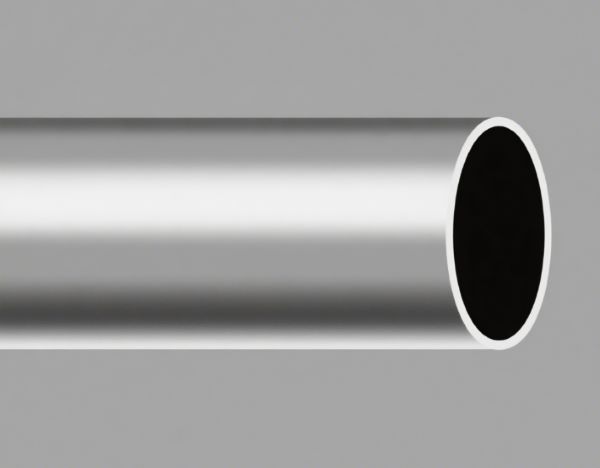
Stainless Steel Pipe is a corrosion-resistant, high-strength tubular product widely used in industrial fluid systems, structural frameworks, construction projects, chemical processing plants, and marine engineering. Its excellent durability, pressure resistance, and long service life make it an essential material in demanding environments.
Industrial contractors and OEM manufacturers rely on stainless steel pipes for transporting liquids and gases, fabricating structural supports, and building reliable piping systems that withstand high pressure and corrosive conditions.
Mục lục
Là gì Ống thép không gỉ
Stainless Steel Pipe is a hollow cylindrical tube made from high-quality stainless steel, designed for fluid transmission and structural applications.
Key features include:
- Excellent corrosion and oxidation resistance
- High pressure-bearing capacity
- Strong mechanical strength
- Long service life in harsh environments
Stainless steel pipes are widely used in industries requiring safe and efficient fluid handling as well as structural reliability.
Technical Specifications Overview
| Tham số | Phạm vi điển hình | Ghi chú |
|---|---|---|
| Đường kính ngoài | 10 mm – 600 mm | Có sẵn kích thước tùy chỉnh |
| Độ dày của tường | 1 mm – 30 mm | Depending on pressure requirements |
| Chiều dài | 3 m / 6 m | Standard or cut-to-length |
| Bề mặt | Pickled / Polished / Annealed | Application-based |
| Tiêu chuẩn | ASTM / EN / JIS | International compliance |
Custom diameters, thicknesses, and lengths are available to meet engineering specifications and project requirements.
Applications in Fluid Transmission
Stainless steel pipes are commonly used for:
- Water supply and drainage systems
- Oil and gas pipelines
- Chemical and pharmaceutical fluid transport
- Steam and high-temperature systems
- Compressed air pipelines
Their corrosion resistance ensures safe operation and reduced maintenance costs.
Construction and Structural Applications
Beyond fluid transport, stainless steel pipes serve as:
- Structural columns and support frames
- Handrails and guardrails
- Architectural frameworks
- Heavy-duty industrial supports
Their clean surface and durability make them suitable for both functional and decorative applications.
Chemical and Food Processing Applications
In chemical and food industries, stainless steel pipes are preferred for:
- Hygienic fluid systems
- Sanitary processing lines
- Tank and reactor connections
- High-temperature and corrosive media handling
Polished and passivated surfaces improve hygiene and corrosion resistance.
Marine and Offshore Applications
Stainless steel pipes are ideal for marine environments due to:
- Resistance to seawater corrosion
- Structural strength under harsh conditions
- Reliability in offshore platforms and shipbuilding
Additional surface treatments further enhance performance in saltwater exposure.
Fabrication and Welding
Stainless steel pipes can be:
- Welded using TIG or orbital welding
- Cut and threaded for assembly
- Bent or fabricated into complex piping systems
Proper welding and installation ensure leak-free, long-lasting performance.
Tùy chọn hoàn thiện bề mặt
- Pickled finish for industrial use
- Polished finish for hygienic systems
- Annealed finish for improved ductility
- Passivated surface for enhanced corrosion protection
Quality Control and Certification
Reliable suppliers provide:
- Chemical composition testing
- Hydrostatic pressure testing
- Dimensional inspection
- Surface defect inspection
- Mill Test Certificates (MTC)
Compliance with ASTM, EN, and JIS standards ensures global quality assurance.
Supply Capability
Manufacturers offer:
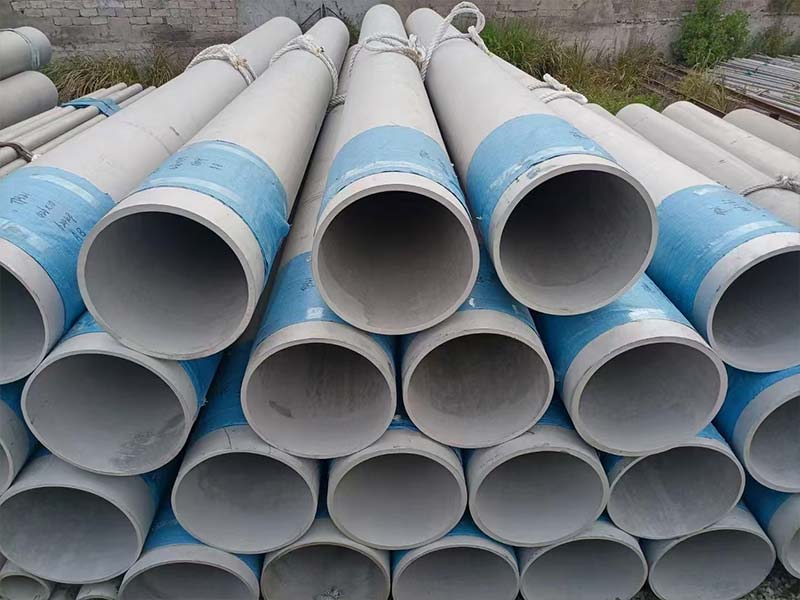
- Bulk production and export
- Custom pipe diameters and wall thickness
- Cut-to-length and fabrication services
- Secure packaging for transportation
Stable supply chains support industrial projects, infrastructure development, and OEM manufacturing.
Market Demand Outlook
Demand for stainless steel pipes continues to grow due to:
- Infrastructure expansion
- Industrial fluid system upgrades
- Oil, gas, and chemical industry growth
- Increasing hygiene standards in food and pharmaceutical sectors
Their corrosion resistance, pressure tolerance, and structural strength make stainless steel pipes essential in modern engineering.
Phần kết luận
Stainless Steel Pipe delivers high strength, corrosion resistance, and reliable performance for industrial, structural, and fluid transmission applications.
It is widely used in construction, chemical processing, marine engineering, and industrial piping systems.
Selecting certified stainless steel pipes ensures safe operation, long service life, and compliance with international standards.
Câu hỏi thường gặp
Q1: What industries use stainless steel pipes?
Oil and gas, chemical processing, construction, marine engineering, food and pharmaceutical industries.
Q2: Are custom pipe sizes available?
Yes, manufacturers provide various diameters, wall thicknesses, and lengths.
Q3: Can stainless steel pipes handle high pressure?
Yes, they are designed for high-pressure and high-temperature systems.
Q4: Are stainless steel pipes weldable?
Yes, TIG and orbital welding methods are commonly used.
Q5: Is bulk supply available?
Yes, suppliers support large-scale industrial and infrastructure projects.
 Vietnamese
  English
  Korean
  Arabic