

Mục lục
stainless steel passivation affects more than the line item on a purchase order. It influences whether material fits the drawing, runs through the intended process, passes receiving inspection, and performs in service. Passivation should be treated as a controlled cleaning and surface-treatment step, not as a repair for the wrong alloy or poor fabrication.
This stainless steel passivation guide is written for industrial buyers, engineers, quality teams, and fabricators. It concentrates on measurable requirements and practical purchasing decisions, without assuming that one grade, tolerance, finish, or test plan is correct for every project.
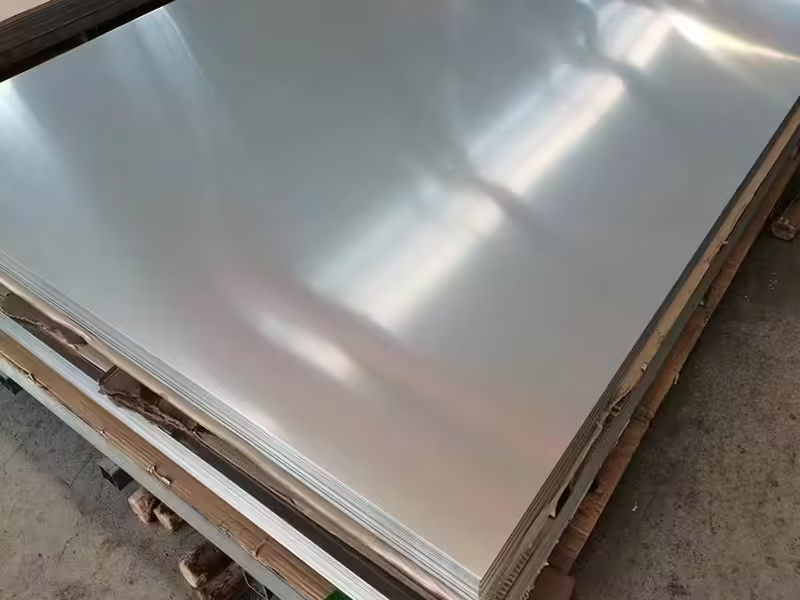
Bắt Đầu Với Phần Đã Hoàn Thành
A stainless steel passivation inquiry should begin with the finished component and its operating conditions. Typical uses for stainless steel sheet and plate include food and process equipment, tanks, cabinets, cladding, machinery, platforms, enclosures, and fabricated components. The buyer should identify the load, environment, expected life, joining method, appearance requirement, and any regulatory or project specification that controls the work.
stainless steel passivation becomes easier to specify when procurement receives input from design, production, and quality before quotations are requested. Machined parts, welded equipment, food-contact components, and general fabricated assemblies may use different procedures and verification. This review prevents a technically valid material from arriving in a form that creates avoidable cutting, forming, welding, installation, or inspection work.
Điều kiện vật liệu
The material baseline for stainless steel passivation should state grade, product standard, thickness, tolerance, flatness, finish, grain direction, edge condition, fabrication route, and exposure. A familiar trade name is not a complete specification. The purchase order should identify the governing standard and edition required by the project, because requirements can differ by product form, thickness, grade, temper, and delivery condition.
For stainless steel passivation, buyers should compare certificate wording with the drawing and inquiry rather than relying on visual appearance. A useful independent industry reference is the worldstainless. nghiệm thu dự án vẫn phải tuân theo các văn bản hợp đồng đã nêu.
Đầu vào quy trình quan trọng
Dimensions for stainless steel passivation need nominal values and accepted variation. Depending on the product, this may include thickness or wall, width, length, diameter, straightness, flatness, ovality, camber, edge condition, coil dimensions, or profile geometry. The purchase order should identify the applicable procedure, pretreatment, solution route, rinsing, acceptance test, and documentation.
Do not request a tighter stainless steel passivation tolerance simply because a smaller number appears more precise. Tolerance should protect fit, forming, sealing, machining allowance, line stability, and final performance. Unnecessary restrictions can reduce sourcing flexibility without improving the part.
Dụng cụ và chất lượng cạnh
The production plan for stainless steel passivation should name every important downstream operation: cutting, bending, stamping, machining, welding, grinding, pickling, passivation, polishing, and assembly. Material condition, directionality, residual stress, edge quality, surface cleanliness, and dimensional variation can affect these processes in different ways.
stainless steel passivation should be evaluated with the actual equipment and tooling limits in mind. Oil, scale, heat tint, embedded iron, shop dirt, and incompatible cleaners must be removed appropriately before passivation. When geometry or acceptance is demanding, a representative sample or first-article run is more useful than an unsupported promise that the material is generally suitable.
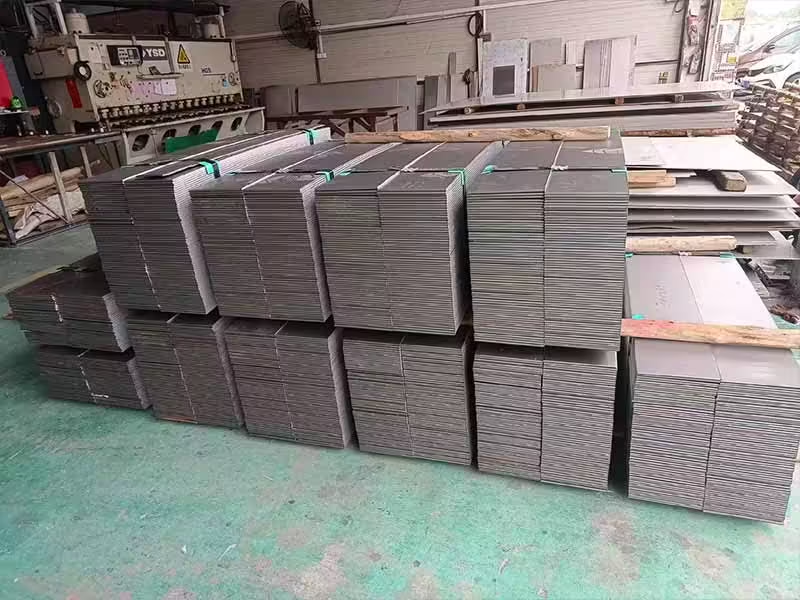
Bề mặt và Xử lý
Surface requirements for stainless steel passivation should be tied to function. Relevant conditions may include 2B or other specified finish, scratches, dents, protective film, heat tint, embedded contamination, directionality, and cosmetic zones. A broad note such as clean surface or good finish is difficult to inspect consistently; visible zones and functional contact areas should have objective acceptance language.
Handling and storage can change stainless steel passivation after production. interleaving or protective film where justified, dry wrapping, edge protection, clean handling, and separation from carbon-steel contamination Receiving teams should photograph wet, torn, crushed, or shifted packaging before material is moved, because later handling can obscure the original condition.
Kiểm soát chất lượng
A proportionate stainless steel passivation inspection plan normally reviews grade identity, certificate, thickness, width, length, flatness, finish, edge quality, surface condition, and protective film. The sampling frequency, instruments, measurement locations, and acceptance limits should be agreed before shipment when the order is critical.
Documentation for stainless steel passivation may include material certificate, finish or processing record, dimensional report, traceability information, and inspection release. Verification can include agreed surface tests or records, but it should never substitute for confirming grade and removing visible fabrication defects. Records should connect the inspected material to its labels or traceability references so that a finding can be isolated without placing unrelated material on hold.
Bảng so sánh quy trình
The correct stainless steel passivation requirement depends on what the buyer is trying to protect. The comparison below turns common purchasing priorities into practical specification actions.
| Ưu tiên người mua | Rủi ro nếu không xác định | Hành động đặt hàng hữu ích |
|---|---|---|
| Kích thước phù hợp | Làm lại, lắp ráp kém hoặc xử lý không ổn định | Kích thước danh nghĩa trạng thái, dung sai và phương pháp đo |
| Chế tạo | Cracking, biến dạng, các vấn đề về dụng cụ hoặc nối kém | Đặt tên cho quá trình, điều kiện vật liệu và hình học quan trọng |
| Hiệu suất bề mặt | Các vấn đề về lớp phủ, liên kết, ăn mòn hoặc bề ngoài | Xác định các vùng hoàn thiện, bảo vệ và chấp nhận có thể nhìn thấy |
| Khả năng truy xuất nguồn gốc | Tuyên bố chậm và danh tính vật chất không chắc chắn | Yêu cầu giấy chứng nhận, nhãn mác, hồ sơ kiểm tra liên kết lô hàng |
For stainless steel passivation, the strongest specification is not the longest one. It is the specification that links each requirement to a drawing feature, process limit, service condition, or receiving check. Requirements that cannot be measured or connected to use should be clarified before the order is placed.
Danh sách kiểm tra đơn hàng mua hàng
A complete stainless steel passivation request should give suppliers the same technical basis. Buyers can review tùy chọn sản phẩm tấm thép không gỉ và những liên quan hướng dẫn kết thúc tấm thép không gỉ trước khi hoàn tất cuộc điều tra.
- Identify the application and governing standard for stainless steel passivation.
- Cấp tiểu bang, tình trạng hoặc tính khí và tất cả các kích thước danh nghĩa.
- Xác định dung sai, điều kiện cạnh hoặc cuối và các vùng bề mặt quan trọng.
- Mô tả cắt, tạo hình, gia công, hàn, phủ, hoặc nối.
- Danh sách các yêu cầu kiểm tra, chứng nhận, truy xuất nguồn gốc, ghi nhãn và đóng gói.
Before approving stainless steel passivation, procurement should confirm that the quotation has no silent substitutions or vague phrases such as standard quality where the project needs a named condition. Technical exceptions should be written and resolved before production.
Những câu hỏi thường gặp
What should a stainless steel passivation specification include?
Nó phải xác định tiêu chuẩn, cấp độ hoặc điều kiện quản lý, kích thước, dung sai, bề mặt, lộ trình xử lý, tài liệu kiểm tra, truy xuất nguồn gốc và bao bì cần thiết cho ứng dụng.
Người mua nên kiểm tra như thế nào
Phù hợp với giấy chứng nhận và nhãn trước, sau đó kiểm tra kích thước, hình dạng sản phẩm, bề mặt, cạnh hoặc kết thúc, và bất kỳ thử nghiệm có tên trong đơn đặt hàng bằng cách sử dụng một kế hoạch lấy mẫu tài liệu.
Khi nào thì sự khoan dung chặt chẽ hơn là hợp lý
Dung sai chặt chẽ hơn là hợp lý khi sự thay đổi tiêu chuẩn có thể ảnh hưởng đến độ vừa vặn, độ kín, phụ cấp gia công, hình dạng, độ ổn định của đường, hình thức bên ngoài hoặc yêu cầu có thể đo lường khác của bộ phận hoàn thiện.
Người mua có nên yêu cầu một mẫu trước khi đặt hàng số lượng lớn?
Một thử nghiệm mẫu hoặc bài viết đầu tiên là hợp lý khi vật liệu sẽ phải đối mặt với các yêu cầu khắt khe về tạo hình, thẩm mỹ, nối, phủ hoặc xử lý chính xác mà không thể xác nhận chỉ từ tài liệu.
Những tài liệu nào là quan trọng nhất?
The required documents depend on the project, but stainless steel passivation commonly needs a material certificate, traceability, dimensional or test records where specified, and a packing list linked to the shipment.
Yêu cầu xem xét xử lý
Send Huanhai Zhongke the drawing, standard, grade, dimensions, process route, service environment, and inspection needs for a stainless steel passivation specification review before requesting a quotation.
 Vietnamese
  English
  Korean
  Arabic