

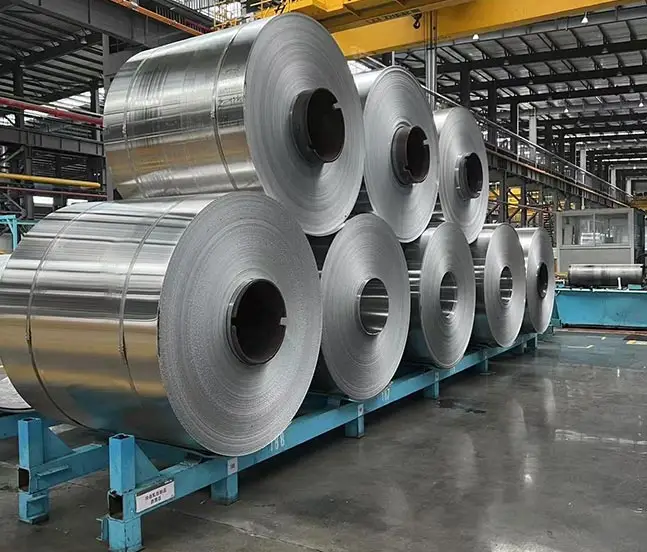
Stainless steel coil for pressure vessel fabrication is widely used in manufacturing industrial vessels designed to withstand internal or external pressure. Pressure vessels are critical components in oil and gas processing, petrochemical plants, power generation facilities, pharmaceutical systems, and compressed gas storage units.
Because pressure vessels operate under high stress, elevated temperatures, and potentially corrosive media, material reliability is a primary safety concern. Stainless steel coil for pressure vessel fabrication provides the corrosion resistance, mechanical strength, and weldability required to meet strict engineering standards.
Selecting high-quality stainless steel coil ensures structural integrity, long service life, and compliance with international codes such as ASME and ASTM standards.
Mục lục
What Is a Pressure Vessel and Why Material Matters
A pressure vessel is a sealed container designed to hold gases or liquids at pressures significantly different from ambient conditions. These vessels are used in:
Boilers
Reactors
Gas storage tanks
Bộ trao đổi nhiệt
Air receivers
Chemical processing units
Failure of pressure vessels can lead to severe safety hazards. Therefore, materials must demonstrate high tensile strength, fatigue resistance, and corrosion resistance. Stainless steel coil offers a balanced combination of these properties.
Common Thép không gỉ Grades for Pressure Vessels
304 Stainless Steel Coil
304 stainless steel coil is used in general-purpose pressure vessels where corrosive exposure is moderate. It offers:
Good mechanical strength
Excellent weldability
Reliable corrosion resistance
Cost-effective solution
Applications include compressed air tanks, mild chemical vessels, and industrial storage systems.
316 Stainless Steel Coil
316 stainless steel coil contains molybdenum, enhancing resistance to chloride corrosion and aggressive chemicals. It is preferred for:
Chemical reactors
Marine pressure systems
High-salinity environments
Petrochemical processing equipment
For corrosive fluids and demanding environments, 316 significantly improves long-term durability.
Technical Specifications Overview
| Tham số | Phạm vi điển hình | Sự miêu tả |
|---|---|---|
| Cấp | 304 / 316 | Pressure-resistant stainless steel |
| Độ dày | 2.0–12.0 mm | Heavy-duty vessel fabrication |
| Chiều rộng | 1000–2000 mm | Large shell forming |
| Hoàn thiện bề mặt | No.1 / 2B | Industrial finish |
| Cường độ chịu kéo | ≥205 MPa | Structural stability |
| Độ bền kéo | ≥520 MPa | High-pressure reliability |
| Tiêu chuẩn | ASTM A240 / ASME SA240 | Engineering compliance |
Thickness selection depends on pressure rating, vessel diameter, and operating temperature.
Mechanical Properties and Structural Reliability
Pressure vessels must withstand:
Internal pressure stress
Thermal expansion
Cyclic loading
Vibration and shock
Stainless steel coil provides strong yield strength and ductility, reducing the risk of brittle fracture. Its excellent elongation allows safe deformation during fabrication and stress distribution under pressure.
Corrosion Resistance in Harsh Environments
Industrial pressure vessels often store:
Compressed gases
Chemical solvents
Steam
High-temperature liquids
Chloride-containing fluids
Corrosion can weaken vessel walls and compromise safety. Stainless steel coil forms a protective passive film that resists oxidation and chemical attack, reducing maintenance frequency and inspection costs.
Fabrication Advantages for Vessel Manufacturers
Stainless steel coil supports efficient manufacturing processes:
Plate rolling for cylindrical shells
Automatic welding for longitudinal seams
CNC cutting for precision fitting
Deep forming for end caps
Structural reinforcement integration
The consistent thickness and mechanical performance of coil material ensure predictable fabrication quality.
Compliance with Engineering Standards
Pressure vessels must meet strict regulatory standards. High-quality stainless steel coil complies with:
ASTM A240
ASME SA240
EN 10088
Certified materials include Mill Test Certificates and full traceability documentation, ensuring acceptance in global engineering projects.
Comparison with Carbon Steel Pressure Vessels
Carbon steel requires internal coatings and corrosion protection systems. Over time, coating degradation increases maintenance costs and safety risks.
Stainless steel pressure vessels offer inherent corrosion resistance without additional lining, providing longer service life and lower lifecycle cost.
For high-pressure and corrosive applications, stainless steel coil provides superior reliability.
Ứng dụng trong ngành
Stainless steel coil for pressure vessel fabrication is widely used in:
Oil and gas processing
Petrochemical plants
Power generation systems
Compressed air systems
Pharmaceutical reactors
Food-grade pressure tanks
Industrial gas storage
Its versatility supports both high-pressure industrial reactors and medium-pressure storage systems.
Kiểm soát và thử nghiệm chất lượng
Professional suppliers provide strict inspection procedures, including:
Phân tích thành phần hóa học
Kiểm tra tính chất cơ học
Ultrasonic testing (if required)
Surface inspection
Thickness tolerance measurement
PMI testing
These processes ensure consistent quality and safe performance in pressure applications.
Supply Capacity for EPC and OEM Projects
Large-scale industrial projects require stable material supply. Reliable suppliers offer:
Heavy gauge coil inventory
Wide width production capability
Custom slitting services
Export packaging
Flexible delivery schedules
Project-based procurement coordination
Stable supply supports timely vessel fabrication and installation.
Market Outlook
With the expansion of oil, gas, chemical, and energy sectors, demand for pressure vessels continues to grow. Stricter safety regulations and industrial modernization further drive the use of corrosion-resistant materials.
Stainless steel coil for pressure vessel fabrication remains a key raw material in global industrial infrastructure development.
Phần kết luận
Stainless steel coil for pressure vessel fabrication provides high strength, corrosion resistance, structural stability, and fabrication efficiency. It ensures safe and reliable operation in demanding industrial environments.
For vessel manufacturers and EPC contractors, selecting certified stainless steel coil improves safety compliance, extends equipment lifespan, and reduces long-term maintenance costs.
Câu hỏi thường gặp
Q1: Is 304 stainless steel suitable for pressure vessels?
Yes, for moderate pressure and non-aggressive environments.
Q2: When should 316 stainless steel be used?
316 is recommended for corrosive chemicals or chloride-rich environments.
Q3: What thickness is typical for pressure vessel fabrication?
Usually 2.0–12.0 mm depending on pressure design.
Q4: Does stainless steel meet ASME standards?
Yes, compliant materials follow ASTM A240 and ASME SA240 specifications.
Q5: Is bulk supply available for engineering projects?
Yes, suppliers support large-scale industrial and EPC procurement.
 Vietnamese
  English
  Korean
  Arabic