

Mục lục
Aluminum strip width tolerance affects feeder setup, stamping location, roll-forming stability, seam alignment, scrap rate, and finished-part geometry. A nominal width alone is not a complete requirement. Buyers also need a measurement method, sampling plan, edge condition, camber limit, winding specification, and traceability.
This guide explains how to specify aluminum strip width tolerance for slit coil used in electrical, HVAC, packaging, appliance, automotive, insulation, and general fabrication work. It focuses on measurable controls that can be placed on a drawing, purchase order, and incoming inspection plan.
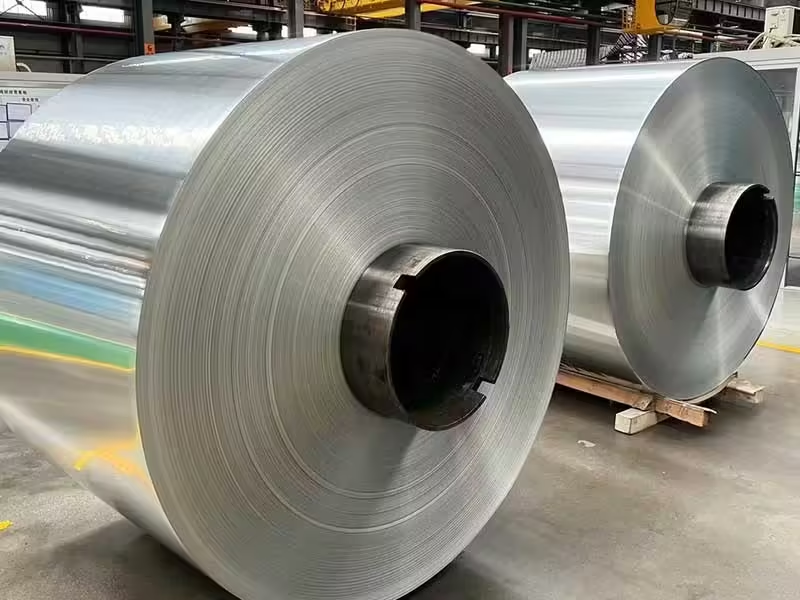
Connect Width to the Process
Start with the line that will consume the strip. Identify guide clearance, feeder range, stamping pitch, roll-form entry, seam geometry, tool location, and finished-part width. Aluminum strip width tolerance should protect process stability and fit, not simply use the tightest number a drawing system can display.
A tolerance that is too broad can cause wandering, poor registration, uneven forming, or assembly gaps. An unnecessarily tight aluminum strip width tolerance may restrict processing options without improving the part. Engineering should connect each limit to a known equipment or product requirement.
Define the Measurement Method
State nominal width, plus and minus limits, units, reference temperature if required, measurement equipment, and locations along the coil. Clarify whether width is measured under light tension, on a flat sample, or by another agreed method. Flexible thin strip can produce inconsistent readings if it is wrinkled or pulled during measurement.
The sampling plan for aluminum strip width tolerance should cover the length of the coil, not only the leading wrap. Specify how many coils, positions, and longitudinal locations are checked. For critical applications, retain measurement records linked to coil and slit-lot identity.
Understand Slitting Variables
Slitting performance depends on knife condition, clearance, overlap, strip tension, separator setup, recoiling, incoming coil shape, alloy, temper, and thickness. Each variable can influence aluminum strip width tolerance, edge profile, winding, and the ability to run the strip through downstream equipment.
The parent coil width and thickness profile also matter. Slit strands taken from different positions across a master coil may not behave identically. The aluminum strip width tolerance plan should set inspection frequency around the material condition and order requirements instead of relying on one universal machine setting.
Control Burr, Camber, and Edge
Width is only one part of slit-strip quality. Burr height and direction can affect safe handling, insulation, tool wear, coating, and electrical clearances. Camber can cause the strip to track sideways. Edge wave, damaged corners, cracks, and coating fracture can interfere with forming or visible surfaces.
An aluminum strip width tolerance specification should therefore include edge condition and camber when they affect use. Define the camber measurement length and method. If burr direction matters to stamping or assembly, state the required orientation. Avoid vague notes such as smooth edge unless an objective acceptance method is provided.
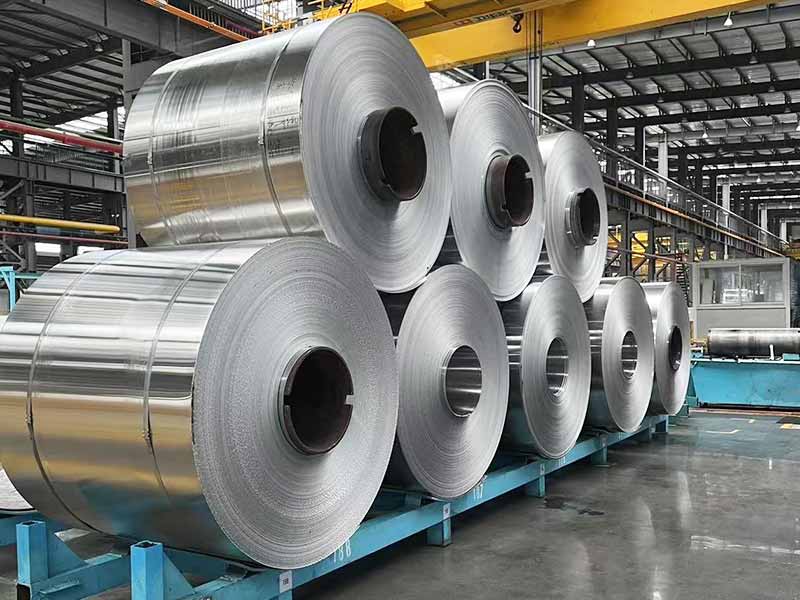
Specify Coil Build and Winding
Coil inside diameter, outside-diameter limit, coil mass, winding direction, number of joints, splice identification, and oscillate or ribbon winding all affect line setup. Aluminum strip width tolerance can be technically correct while poor winding, telescoping, loose wraps, or crushed cores still make a coil unusable.
Packaging should restrain coils without damaging edges. Use face protection, edge guards, suitable cores, stable pallets, moisture barriers, and clear labels. Thin or soft strip needs particular care because concentrated banding pressure and unsupported faces can create permanent distortion.
Match Alloy, Temper, and Thickness
Alloy, temper, and thickness change strip stiffness, springback, edge response, and handling. Soft thin aluminum can deform during measurement or winding; harder material may show different burr and forming behavior. Aluminum strip width tolerance must be reviewed with the complete product condition.
The governing material specification should define composition, temper, mechanical properties, dimensions, and finish. ASTM B209/B209M covers aluminum and aluminum-alloy flat sheet, coiled sheet, and plate, while the Tài nguyên tiêu chuẩn Hiệp hội nhôm provides recognized mill-product reference information. Use the edition required by the project.
| Vấn đề quan sát được | Possible source | Receiving check |
|---|---|---|
| Width varies along the coil | Slitter setup, tension, knife movement, or parent-coil condition | Measure at agreed longitudinal intervals using the specified method |
| Strip tracks sideways | Camber, winding, or line alignment | Check camber over the specified length and inspect coil build |
| Edges damage tooling or insulation | Burr, sharp edge, cracks, or handling damage | Measure burr where required and inspect edge direction and continuity |
| Coil telescopes or unwinds poorly | Recoiling tension, separators, core, or transport movement | Inspect faces, wraps, core, bands, and pallet restraint |
| Surface is scratched near edges | Separator contact, chips, rubbing, or poor protection | Inspect both faces and record defect position and direction |
Inspect Width Consistently
Incoming inspection should first match labels, packing lists, and certificates. Then review coil width, thickness, inside diameter, outside diameter, mass, winding, edges, burr, camber, surface, film, and packaging. Aluminum strip width tolerance readings should be recorded with instrument identification and measurement location.
The table summarizes typical failure modes and useful checks. When an aluminum strip width tolerance result falls outside the specified limit, isolate the affected slit lot and confirm the method before rejecting an entire shipment. A damaged outer wrap or local edge impact should not be confused with a consistent slitting-width error.
- State nominal width, upper and lower limits, units, and measurement method.
- Define sampling positions across the coil length and shipment.
- Specify burr, edge condition, camber method, and surface requirements.
- List alloy, temper, thickness, coating, film, and downstream process.
- Set coil ID, OD, mass, winding direction, joints, labels, and packaging.
- Require lot-linked dimensional records where process risk justifies them.
Chuẩn bị một RFQ hoàn chỉnh
A complete inquiry states parent material, alloy, temper, thickness, nominal width, aluminum strip width tolerance, slit quantity, edge, burr, camber, coil dimensions, winding, surface, protective film, inspection, certificate, labels, and packaging. Disclose the downstream process and equipment limits.
Xem lại aluminum coil supply forms và những liên quan aluminum coil slitting guide when preparing the specification. Written technical exceptions should be resolved before the parent coil is slit because finished narrow coils may not be recoverable economically.
Những câu hỏi thường gặp
How is aluminum strip width tolerance measured?
Measure the strip with suitable calibrated equipment at agreed positions and under a defined support or tension condition. Thin strip should not be stretched, wrinkled, or doubled during measurement.
What affects aluminum strip width tolerance during slitting?
Knife condition and setup, strip tension, separators, recoiling, parent-coil shape, alloy, temper, and thickness can all affect width and edge quality.
Is camber included in aluminum strip width tolerance?
No. Width and camber are separate characteristics. Specify both when sideways tracking or downstream registration matters, including the camber measurement length and method.
Why should burr be specified with strip width?
Burr can affect handling, insulation, tooling, coating, forming, and assembly. State the allowed condition, measurement method where needed, and burr direction if orientation matters.
What belongs in an aluminum strip width tolerance RFQ?
Include alloy, temper, thickness, nominal width, tolerance, edge, burr, camber, coil dimensions, winding, surface, film, testing, certificates, labels, and packaging.
Request a Slitting Review
Send Huanhai Zhongke the alloy, temper, thickness, target width, aluminum strip width tolerance, edge and camber requirements, coil limits, downstream process, inspection plan, and packaging needs for a slitting review before quotation.
 Vietnamese
  English
  Korean
  Arabic