

Mục lục
Aluminum coil storage protects surface quality, coil shape, packaging integrity, and operator safety between delivery and processing. The main controls are straightforward: receive the coil carefully, keep water away, prevent condensation, support the load correctly, preserve traceability, and inspect stored material on a defined schedule.
A useful aluminum coil storage plan is specific to the product and warehouse. Alloy, finish, coating, protective film, coil mass, eye orientation, packaging, climate, dwell time, lifting equipment, and downstream surface requirements all affect the controls. A generic instruction to keep coils dry is not enough for receiving or audit purposes.
Kiểm tra mọi lần đến
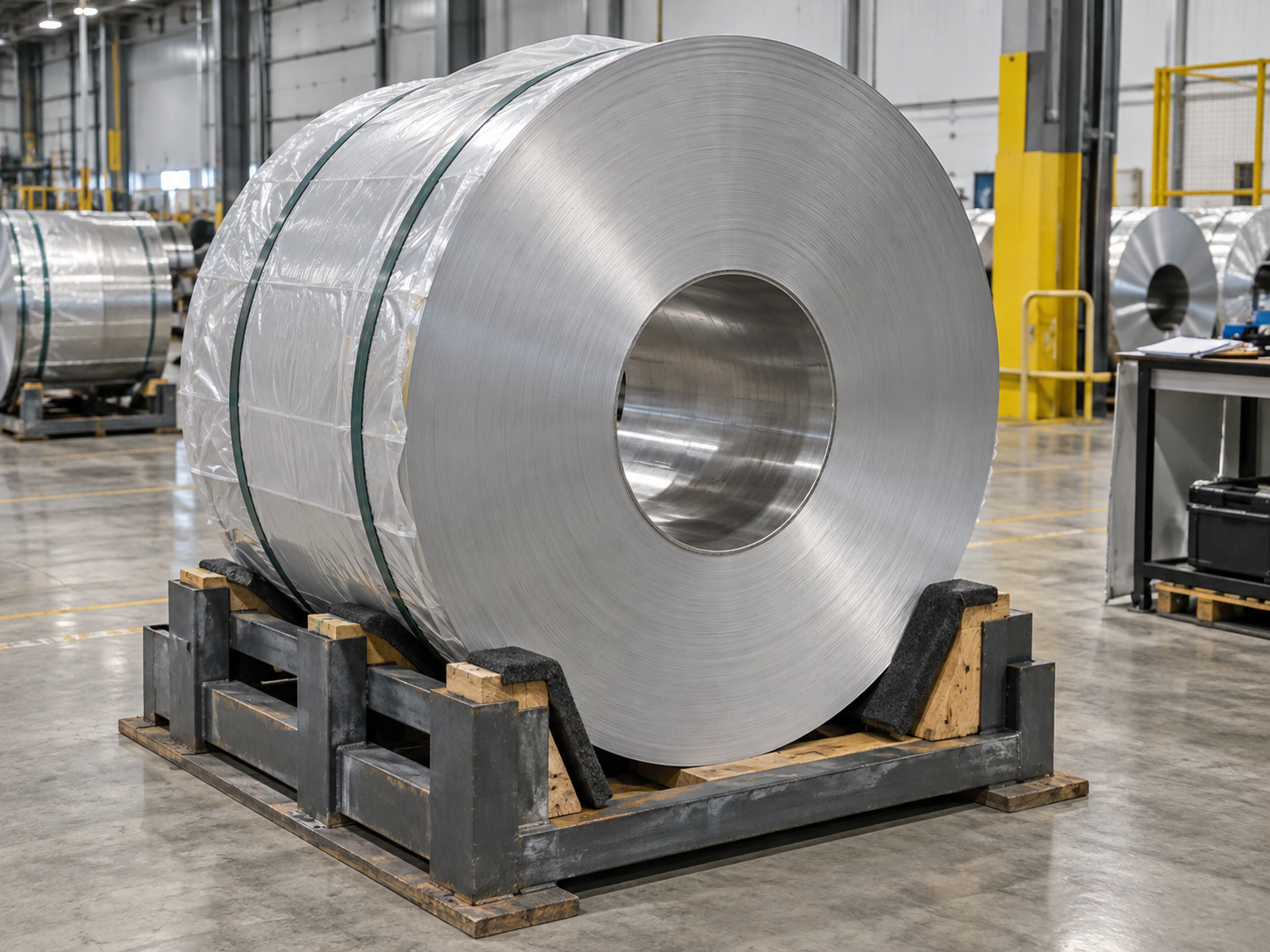
Begin aluminum coil storage control at the unloading point. Match the coil identification to the packing list and certificate, then inspect the skid, wrapping, end protection, bands, core, edges, and visible surfaces. Record dents, telescoping, loose wraps, torn packaging, staining, standing water, or transport movement before the carrier leaves.
Measure the temperature of representative incoming coils when outdoor and warehouse conditions differ. Photograph suspect areas and preserve package labels. Aluminum coil storage receiving evidence separates transport damage from later warehouse exposure and gives quality teams a factual basis for isolation, claim handling, or conditional release.
Kiểm soát rủi ro Dew Point
Condensation forms when the metal surface is colder than the dew point of the surrounding air. For aluminum coil storage, compare coil temperature with warehouse temperature and relative humidity rather than relying on touch. A cold shipment entering warm humid air may be at risk even when the floor and packaging initially look dry.
Keep an intact package closed while the load acclimates under controlled conditions. Do not publish one universal waiting time: coil mass, starting temperature, wrapping, airflow, and weather change the stabilization period. Release aluminum coil storage packages only after the documented condition is acceptable for the product and process.
Chuẩn bị Khu vực lưu trữ
Use a clean, dry, ventilated indoor area protected from rain, roof leaks, plumbing, washdown, chemical spray, and rapid outdoor-air changes. The Aluminum Association water-staining guidance explains why metal temperature and dew point must be considered together.
Separate aluminum coil storage from corrosive chemicals, wet timber, dirty traffic routes, and grinding debris. Keep aluminum coil storage packages away from doors, windows, and cold walls when those locations produce unstable temperatures. Define housekeeping, roof inspection, drainage, climate monitoring, and emergency relocation responsibilities.
Hỗ trợ và cuộn dây an toàn
Select a rated rack, skid, saddle, or padded cradle for the actual coil mass and eye orientation. Safe aluminum coil storage requires positive restraint against rolling for an eye-horizontal coil. Contact surfaces should be clean, dry, non-damaging, and arranged so concentrated loads do not deform edges, cores, or packaging.
Các in-plant handling guideline discusses support and restraint practices. Site engineers must approve rack capacity, stacking, aisle clearance, fire access, and lifting rules. Aluminum coil storage instructions should never assume that every package can be stacked the same way.
Protect the Package
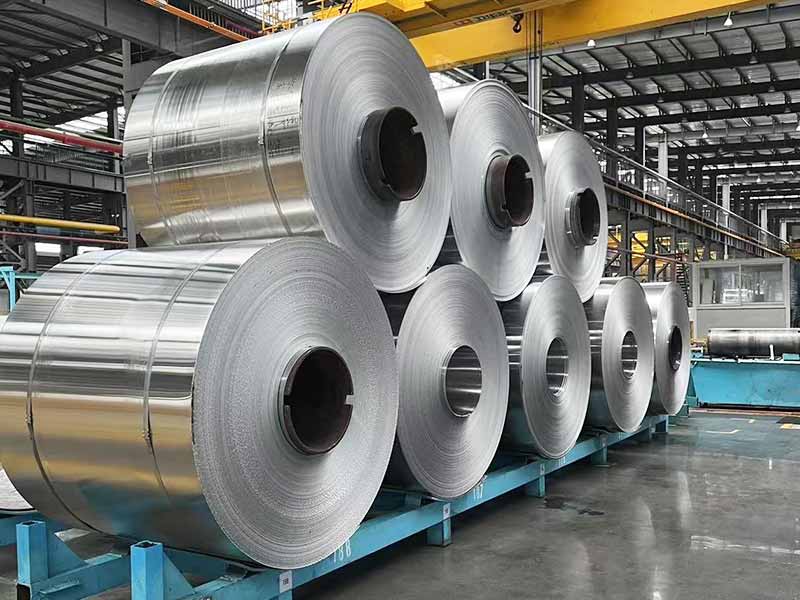
Keep moisture-resistant wrapping, end caps, and skid attachment intact until processing unless inspection requires controlled opening. Repair tears with the approved material and method. Packaging reduces exposure but is not automatically airtight, so it cannot replace temperature control, indoor storage, and routine observation.
For coated or surface-critical coil, define whether contact paper, film, edge protectors, or barrier wrapping must remain in place. Review the hướng dẫn đóng gói cuộn dây nhôm before shipment and the phạm vi sản phẩm cuộn nhôm when specifying finish, dimensions, and protection together.
Manage Partial Coils
Partially used material needs a separate aluminum coil storage procedure. Secure the outer wrap with new approved banding or tape, protect exposed edges, restore the moisture barrier, and identify alloy, temper, finish, remaining width, approximate mass, lot, and return date. Never leave a loose tail that can scratch adjacent wraps.
Return aluminum coil storage remnants to a designated location using compatible supports. Do not place narrow or damaged coils in a rack intended for a different geometry. Define who may repackage and release remnants, how often they are inspected, and when short or compromised coils move to priority processing or technical disposition.
| Observed condition | Immediate action | Release evidence |
|---|---|---|
| Cold intact package | Hold closed in controlled area | Coil temperature above applicable dew-point threshold |
| Torn wrapping | Inspect and repair approved barrier | Damage record and dry package |
| Loose outer wrap | Stop movement and secure coil | Approved rebanding and edge check |
| Visible moisture | Isolate affected load | Quality disposition and inspection record |
| Long dwell time | Increase scheduled review | Traceable condition and stock-rotation decision |
Respond to Moisture
If water, condensation, or staining is found, stop normal movement and isolate the affected package. Record the extent, temperature history if available, wrapping condition, contact surfaces, and affected lots. Do not rub wet mating surfaces or apply an unapproved cleaner because this can spread marks or alter a coated finish.
Quality personnel should decide whether controlled drying, uncoiling inspection, cleaning trials, recoiling, downgrade, or rejection is appropriate. Aluminum coil storage records should link the decision to photographs, sampling, customer surface criteria, and downstream use. Resume handling only after the load and its support are confirmed safe.
- Verify identification and transport condition at receipt.
- Compare representative coil temperature with warehouse dew point.
- Use rated supports and positive rolling restraint.
- Keep packaging intact and repair damage promptly.
- Control partial coils as separately identified inventory.
- Inspect stored material on a documented schedule.
- Record every aluminum coil storage exception and disposition.
Write the Storage Plan
Write the plan as an operational document: approved locations, support type, orientation, restraint, maximum load, lifting method, climate checks, acclimation release, packaging repair, inspection frequency, stock rotation, partial-coil handling, wet-material response, traceability, and escalation. Assign each action to a named role.
A complete aluminum coil storage specification also communicates requirements to suppliers and logistics providers. Include destination climate, transport mode, eye orientation, skid limits, surface class, protective materials, receiving data, and acceptable package condition in the RFQ so storage controls begin before dispatch.
Những câu hỏi thường gặp
Should aluminum coils be stored indoors?
Yes. Aluminum coil storage should use a dry indoor area because outdoor packaging cannot reliably eliminate rain, condensation, dirt, and temperature cycling.
How do you prevent condensation on aluminum coils?
Measure coil temperature and warehouse conditions, determine dew-point risk, keep cold packages closed while they acclimate, and minimize rapid humidity and temperature changes.
Can an aluminum coil be stored directly on the floor?
Use a rated skid, rack, saddle, or padded cradle instead. The support must protect the coil and prevent rolling, instability, contamination, and concentrated damage.
What should be done if an aluminum coil arrives wet?
Isolate it, document the condition, protect personnel, and obtain a quality disposition. Do not process or clean it routinely until the affected wraps and finish are assessed.
How long can aluminum coil remain in storage?
There is no universal duration. Aluminum coil storage time depends on finish, packaging, climate stability, inspection results, customer requirements, and stock-rotation controls.
Yêu cầu xem xét cuộn dây
Send Huanhai Zhongke the coil dimensions, mass, alloy, temper, finish, eye orientation, destination climate, dwell time, handling equipment, packaging, and inspection requirements for an aluminum coil storage review.
 Vietnamese
  English
  Korean
  Arabic