

Choosing the right aluminum rod grades and sizes can directly affect machining efficiency, component strength, corrosion resistance, material utilization, and purchasing cost. Industrial buyers should therefore consider more than rod diameter when preparing an order.
The correct aluminum rod depends on the alloy, temper, diameter tolerance, straightness, surface condition, processing method, and final application. This guide explains how to select aluminum rod for CNC machining, machinery, electrical components, structural parts, and general industrial manufacturing.
جدول المحتويات
What Is Aluminum Rod Used For?
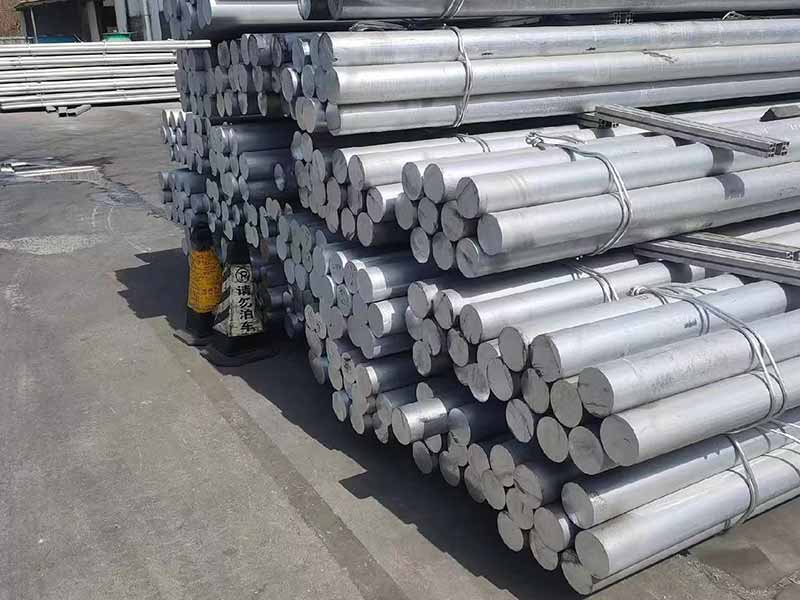
Aluminum rod is a solid aluminum product commonly supplied in round sections for machining, fabrication, electrical applications, and engineered components. Depending on the alloy and temper, it can provide a useful combination of low weight, corrosion resistance, conductivity, strength, and machinability.
Manufacturers frequently machine aluminum rod into shafts, spacers, connectors, pins, fittings, fasteners, bushings, supports, and other components. It can also serve as feedstock for further processing where a solid round section is more efficient than cutting parts from aluminum plate.
The site’s broader aluminum product range also includes aluminum plate, coil, and foil, allowing buyers to compare product forms according to their manufacturing process.
When Is Rod More Practical Than Plate?
Rod is usually the more efficient starting material when the finished component is predominantly cylindrical. A CNC shop producing round fittings, pins, or turned components can often reduce material removal by starting with a rod diameter close to the finished outside diameter.
Plate is generally more appropriate for flat components, large machined blocks, fixtures, bases, and structural panels.
The correct product form can therefore influence both material utilization and machining time.
Which Aluminum Rod Grades Are Commonly Used?
There is no single aluminum grade suitable for every industrial application. Alloy selection should begin with the mechanical, environmental, and processing requirements of the finished component.
| Aluminum Grade | الخصائص الرئيسية | Typical Purchasing Application |
|---|---|---|
| 1050 | High aluminum content and good conductivity | Electrical and general-purpose parts |
| 1060 | Good conductivity and formability | Electrical components and light-duty parts |
| 2024 | High strength and good machinability | High-load machined components |
| 5052 | مقاومة جيدة للتآكل | Outdoor and corrosion-sensitive components |
| 6061 | Balanced strength, corrosion resistance and machinability | CNC parts, machinery and general engineering |
| 6082 | Good structural strength and machinability | Structural and mechanical components |
| 7075 | Very high strength and good machining characteristics | High-load precision components |
Buyers should confirm actual grade availability and required standards with the supplier rather than assuming every diameter is available in every alloy.
For projects where the alloy has not yet been finalized, Huanhai Zhongke’s دليل اختيار سبائك الألومنيوم provides a broader comparison of alloy families and application requirements.
How Do 6061 and 7075 Aluminum Rod Differ?
6061 and 7075 are frequently considered for machined components, but they solve different engineering problems.
6061 Aluminum Rod
6061 is widely used for general engineering because it combines useful mechanical strength with good corrosion resistance, machining performance, and weldability.
It is often suitable for machine components, fixtures, structural parts, connectors, supports, and general CNC products where extremely high strength is not required.
7075 Aluminum Rod
7075 provides substantially higher strength and is more appropriate when mechanical loading is a primary design requirement.
Typical applications can include highly stressed machined components, precision mechanical parts, tooling, and aerospace-related applications where the applicable specification permits the alloy.
The stronger material is not automatically the better purchase. If 6061 already satisfies the drawing and service requirements, specifying 7075 can add material cost without delivering a functional advantage.
Buyers comparing these materials in more detail can review the site’s 6061 vs 7075 aluminum comparison.
How Should Buyers Choose Aluminum Rod Diameter?
Rod diameter should be selected from the finished component backward rather than simply choosing the closest catalog size.
For turned components, the raw diameter needs enough machining allowance to clean up the surface and achieve the finished dimension. Excessive allowance, however, means more material must be removed.
Finished Diameter and Machining Allowance
Consider a component that will be turned on a CNC lathe. The raw aluminum rod must be larger than the final diameter, but the appropriate allowance depends on the raw material tolerance, straightness, surface condition, chucking method, and machining plan.
A very oversized rod may increase cycle time and generate unnecessary chips. A rod with insufficient allowance can leave unmachined areas or make it impossible to achieve the required finished diameter.
For precision work, the machining supplier and material supplier should review these requirements before the production quantity is ordered.
Why Do Diameter Tolerance and Straightness Matter?
Nominal diameter alone does not fully define aluminum rod quality.
Two rods can carry the same nominal size but behave differently in an automated machining line because their actual diameter variation, straightness, surface condition, or cut length differs.
Diameter Tolerance
Diameter tolerance becomes important when the raw rod is loaded into collets, bar feeders, guides, or other production equipment.
If variation is too large for the process, feeding and workholding can become less consistent.
Tighter tolerance should be requested when the manufacturing process actually requires it. Specifying unnecessarily tight tolerances can increase procurement cost without improving the finished component.
الاستقامة
Straightness matters particularly for long rods and automated bar-fed machining.
A rod that is not sufficiently straight can contribute to vibration, feeding difficulties, inconsistent rotation, or increased setup work.
Buyers should therefore identify a measurable straightness requirement when the application is sensitive to it instead of relying on descriptions such as “good straightness.”
Which Aluminum Rod Is Best for CNC Machining?
The answer depends on what the finished part needs to do.
6061 aluminum rod is a common choice for CNC machining because it provides a practical combination of machinability, mechanical performance, corrosion resistance, and availability.
7075 may be selected when substantially higher strength is required, while other grades may be appropriate when corrosion resistance, conductivity, forming, or a specific industry standard controls the material choice.
تحول
Round aluminum rod is particularly suitable for CNC turning because its geometry closely matches cylindrical finished parts.
Material consistency matters in volume production because variations in diameter, straightness, or mechanical condition can affect bar feeding and cutting behavior.
Drilling and Tapping
Components manufactured from aluminum rod frequently require axial drilling, cross holes, or threads.
Alloy and temper affect cutting behavior, chip formation, thread quality, and tooling conditions. The machining process should therefore be considered when selecting the raw material.
Surface Finish After Machining
If the final component will be anodized, polished, coated, or used as a visible part, raw material condition and alloy selection can also affect the final appearance.
Buyers should tell the supplier about subsequent finishing rather than treating it as an unrelated operation.
How Does Temper Affect Aluminum Rod Performance?
Temper describes the metallurgical condition of the material and can significantly change mechanical performance.
For heat-treatable alloys such as 6061 and 7075, the specified temper is an essential part of the purchase description. Ordering “6061 aluminum rod” without a temper leaves an important technical requirement undefined.
A buyer should therefore use a complete designation appropriate to the applicable specification, such as alloy plus temper, rather than alloy alone.
Mechanical properties should then be verified against the governing material standard rather than copied from a generic online table.
For international procurement, buyers can use the standards catalog from ايه اس تي ام الدولية to identify applicable ASTM material specifications, while projects governed by other systems should follow the standard stated on the drawing or purchase specification.
What Standards Apply to Aluminum Rod?
Standards are important because they establish a common technical basis between buyer and supplier.
Depending on the market, product form, alloy, and end use, aluminum rod may be ordered according to ASTM, EN, AMS, or another applicable specification.
The buyer should not simply write “ASTM standard” in an RFQ. The exact applicable specification and revision should be identified where the project requires it.
Why Product Form Matters
A material standard is normally tied to a particular product form and set of technical requirements.
Plate, sheet, bar, rod, extrusion, and other forms should not automatically be treated as interchangeable simply because they share an alloy number.
Procurement teams should confirm that the requested standard actually covers the product form being purchased.
Certification Requirements
Where required, buyers should state what documentation must accompany the shipment. This may include material certification, chemical composition, mechanical test results, heat or lot traceability, dimensional inspection, or other project-specific records.
The documentation requirement should be agreed before production rather than requested after the shipment is complete.
How Does Surface Condition Affect Aluminum Rod?
For many machined components, the raw surface will eventually be removed. Even so, the incoming surface condition still matters.
Deep scratches, dents, oxidation, handling marks, or other damage may require additional machining allowance and can create problems if defects extend deeper than expected.
For components where part of the original rod surface remains on the finished product, surface acceptance becomes even more important.
Rods for Anodizing
If machined parts will later be anodized, the buyer should communicate this requirement early.
Alloy chemistry, machining marks, surface preparation, and the anodizing process can all influence the final appearance. When cosmetic consistency matters, a sample or first-article approval may be useful before a large production run.
Aluminum Rod for Electrical Applications
Some aluminum grades are used in electrical applications because aluminum combines relatively low density with useful electrical conductivity.
However, an electrical application should not select material simply because it is described as “high-purity aluminum.”
The design may also depend on conductivity requirements, mechanical strength, connection method, operating temperature, corrosion environment, and applicable electrical standards.
For this reason, the required conductivity or governing specification should be stated directly in the RFQ when it is a functional requirement.
Aluminum Rod for Machinery and Equipment
Machinery manufacturing is an important application for aluminum rod because many mechanical components are cylindrical and can be produced efficiently by turning.
Possible parts include spacers, sleeves, supports, connectors, handles, shafts for suitable loads, and custom CNC components.
Material selection should reflect the actual load and environment. A general-purpose machine component may be well served by 6061, while a highly loaded component may require another alloy or even a different material family after engineering review.
The goal is not to specify the highest grade available. It is to select a grade that satisfies the design with an appropriate manufacturing route.
How Should Aluminum Rod Be Cut and Supplied?
Aluminum rod may be purchased in standard lengths or cut into shorter blanks before delivery.
Cut-to-length supply can be useful when a customer wants to reduce internal sawing, simplify production scheduling, or receive blanks that can move directly into machining.
Cut Length Tolerance
When ordering cut blanks, buyers should specify the required length and acceptable tolerance.
A rough machining blank may permit a wider tolerance than a component entering a tightly controlled automated process.
End Condition
Saw-cut ends may require subsequent facing during CNC machining. If the end condition has a specific functional requirement, it should be stated explicitly rather than assumed.
Identification and Traceability
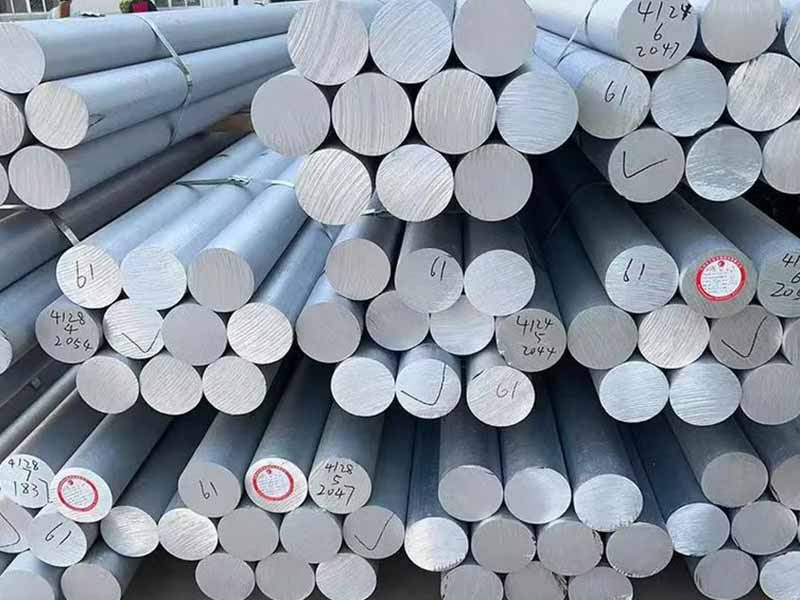
For orders containing several alloys, diameters, or tempers, clear labeling helps prevent material mix-ups.
Where traceability is required, labels and certificates should connect the delivered bundles or lots to the appropriate material records.
What Should Buyers Inspect Before Accepting Aluminum Rod?
Receiving inspection should be based on the purchase specification.
The first check is material identity: alloy, temper, diameter, length, quantity, and markings should match the order.
Dimensional checks can then verify diameter and length, while straightness should be inspected where it is a controlled requirement.
Surface inspection should look for damage that could interfere with machining or final appearance.
Documentation should also be reviewed before the material is released into production.
A practical acceptance plan might look like this:
| Inspection Point | What to Verify | لماذا يهم |
|---|---|---|
| Material identity | سبيكة والمزاج | Prevents wrong-material production |
| القطر | Actual size and tolerance | Supports machining and feeding |
| طول | Supplied or cut length | Controls blank preparation |
| الاستقامة | Requirement where specified | Supports stable turning |
| سطح | Scratches, dents, oxidation | Protects machining allowance and appearance |
| شهادة | Required material records | Supports quality and traceability |
| التعبئة والتغليف | Moisture and impact protection | Reduces transit damage |
Inspection requirements should be proportional to the application rather than copied mechanically from another project.
What Should an Aluminum Rod RFQ Include?
A strong RFQ gives the supplier enough information to quote the actual requirement rather than guess.
Instead of writing only “6061 aluminum rod,” procurement should state the required alloy and temper, diameter, length, quantity, applicable standard, dimensional tolerances, straightness where necessary, surface condition, cutting requirements, inspection documentation, packaging, and delivery destination.
The final application is also valuable information.
If the supplier knows that the material will run through an automatic bar feeder and then be anodized, for example, diameter consistency, straightness, surface condition, and lot consistency become much more meaningful than they would be for a simple manually machined component.
How Can Buyers Reduce Aluminum Rod Procurement Waste?
The lowest material price does not necessarily produce the lowest finished-part cost.
A cheaper rod can become expensive if excessive machining allowance, inconsistent dimensions, poor straightness, damaged surfaces, or unsuitable cut lengths increase processing time.
Conversely, specifying unnecessarily tight tolerances can also increase procurement cost.
The most efficient specification is one that matches the production process closely.
For turned parts, selecting a sensible raw diameter can reduce chip volume. Cut-to-length blanks may reduce internal handling. Consistent material can help stabilize machining parameters across repeat orders.
Procurement, engineering, and production teams should therefore review the specification together when the order volume is significant.
Why Source Aluminum Rod from Huanhai Zhongke?
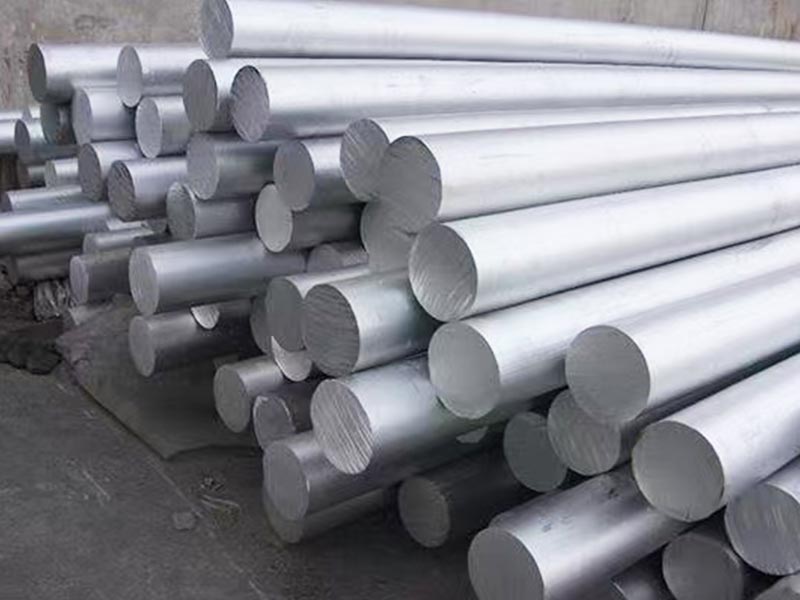
Huanhai Zhongke supplies aluminum rod as part of its wider منتجات الألمنيوم portfolio, alongside aluminum plate, coil, and foil.
Industrial buyers can provide the required alloy, temper, diameter, length, standard, machining route, inspection requirements, and packaging expectations for a material review before quotation.
For projects involving additional processing, Huanhai Zhongke also presents machining and material testing services as part of its value-added capabilities.
A detailed inquiry is particularly useful for OEM and repeat-production projects because it allows material requirements to be aligned with the downstream manufacturing process before an order is placed.
خاتمة
اختيار الحق aluminum rod grades and sizes requires more than choosing a diameter from a catalog.
Alloy and temper determine the material’s basic mechanical behavior, while diameter tolerance, straightness, surface condition, cut length, certification, and packaging influence how reliably the rod moves from receiving inspection into production.
For CNC turning, the raw diameter should provide sufficient machining allowance without creating unnecessary waste. For high-load components, strength may become the main selection factor. For electrical or corrosion-sensitive applications, conductivity or environmental resistance may take priority.
Buyers who communicate the finished application and production process clearly are better positioned to receive an aluminum rod specification that supports both technical performance and manufacturing efficiency.
If you are preparing an aluminum rod RFQ, send Huanhai Zhongke the alloy and temper requirement, diameter, length, quantity, applicable standard, drawing or application, tolerance requirements, and required inspection documents so the material can be reviewed before quotation.
الأسئلة الشائعة
Which aluminum rod is commonly used for CNC machining?
6061 aluminum rod is widely used for general CNC machining because it offers a useful balance of strength, machinability, corrosion resistance, and availability. The final choice should still follow the component’s engineering requirements.
Is 7075 aluminum rod stronger than 6061?
7075 generally provides substantially higher mechanical strength than 6061 in comparable commonly used tempers, but higher strength does not automatically make it the better material for every component.
How do I choose an aluminum rod diameter for turning?
Start with the finished outside diameter and add enough material for machining allowance, raw-material tolerance, surface cleanup, and the planned machining process. Avoid excessive oversizing because it increases material removal.
Why is aluminum rod straightness important?
Straightness can affect rotation, vibration, workholding, and automatic bar feeding, especially when machining long rods at production scale.
Can aluminum rod be anodized after machining?
Many aluminum alloys can be anodized. The resulting appearance and performance depend on alloy, machining condition, surface preparation, and the anodizing process.
Should an aluminum rod RFQ specify temper?
Yes. Temper can significantly change mechanical properties and machining behavior, so alloy and temper should normally be specified together.
Can aluminum rod be supplied as cut blanks?
Depending on supplier capability, aluminum rod can be cut to specified lengths before shipment. Buyers should state the required cut length and tolerance.
What documents should I request with aluminum rod?
The required documentation depends on the project. Material certificates, chemical composition, mechanical property records, traceability, and dimensional inspection may be requested when required by the applicable specification or quality plan.
 Arabic
  English
  Korean
  Vietnamese