

Choosing the right seamless steel pipe sizes is essential for ensuring reliable performance, safe operation, and efficient installation in industrial piping systems. Pipe dimensions affect pressure capacity, flow characteristics, connection methods, material consumption, and overall project cost.
For engineers, procurement teams, and industrial buyers, selecting a seamless steel pipe should therefore involve more than simply choosing a nominal diameter. Outside diameter, wall thickness, pipe length, and dimensional tolerances all need to match the requirements of the intended application.
This guide explains the key factors behind seamless steel pipe sizes and dimensions and provides a practical framework for selecting the right pipe for different industrial projects.
جدول المحتويات
What Are Seamless Steel Pipe Sizes?
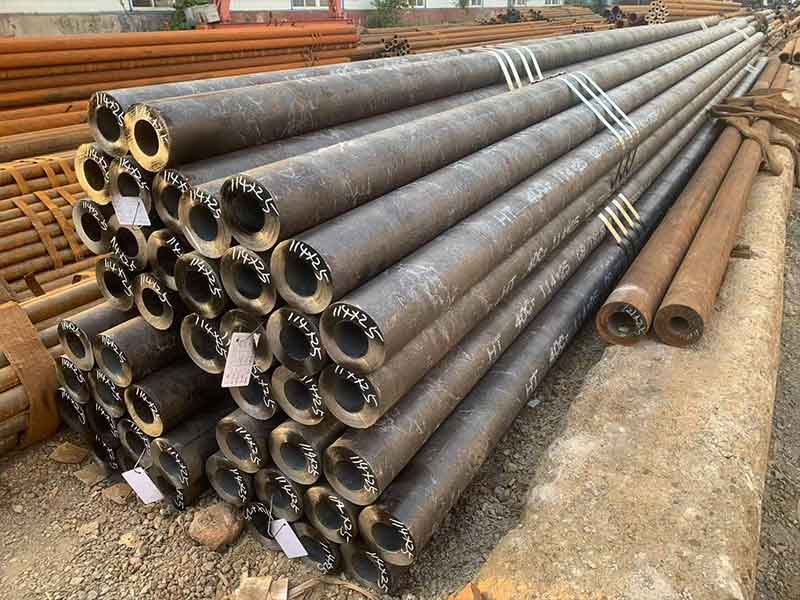
Seamless steel pipe sizes describe the physical dimensions used to identify and specify a pipe. The most important measurements are generally:
- Outside diameter (OD)
- سمك الجدار
- Inside diameter (ID)
- Pipe length
- Nominal pipe size (NPS), where applicable
Unlike welded pipe, seamless steel pipe is manufactured without a longitudinal weld seam. This makes dimensional consistency and wall thickness particularly important for applications involving pressure, temperature, or demanding mechanical conditions.
A pipe specification may therefore contain several dimensions rather than one simple “pipe size.”
For example, two pipes can have the same outside diameter but different wall thicknesses. Their internal diameters, weight, pressure capabilities, and applications can consequently be very different.
Understanding Outside Diameter
Outside diameter is one of the most important dimensions when selecting seamless steel pipe sizes.
The outside diameter is measured across the pipe from one outer edge to the opposite outer edge through the center. It is particularly important when a pipe must fit into an existing system, connect with fittings, or pass through a defined installation space.
Outside diameter can also influence:
- Internal flow area
- Pipe weight
- Connection dimensions
- Support requirements
- Installation clearance
- Overall system design
When ordering seamless steel pipe, buyers should avoid relying only on a nominal size. The actual outside diameter should be confirmed against the applicable standard and project specification.
How Wall Thickness Affects Pipe Selection
Wall thickness is another critical part of seamless steel pipe sizes.
A thicker pipe wall generally provides greater resistance to internal pressure, external loads, mechanical impact, and certain operating conditions. However, increasing wall thickness also increases material weight and can reduce the internal flow area.
The appropriate wall thickness depends on factors such as:
- Working pressure
- Operating temperature
- Pipe diameter
- درجة المادة
- Corrosion allowance
- Mechanical loading
- Applicable design code
For this reason, a thicker pipe is not automatically a better pipe. The correct thickness is the one that satisfies the engineering requirements without creating unnecessary material and installation costs.
For projects where dimensional accuracy is particularly important, buyers should also consider the specified dimensional tolerance rather than looking only at nominal wall thickness.
Inside Diameter and Flow Area
Inside diameter is determined by the outside diameter and wall thickness.
A simplified relationship is:
Inside Diameter = Outside Diameter − 2 × Wall Thickness
This dimension is especially important for fluid and gas transportation because it directly affects the available flow area.
A smaller inside diameter can increase flow resistance and influence pressure loss, while a larger inside diameter can provide greater flow capacity when other design conditions remain the same.
This is why pipe selection should consider both the external dimensions required for installation and the internal dimensions required for system performance.
For fluid-handling applications, engineers should evaluate the actual internal diameter rather than selecting a pipe based solely on nominal size.
Seamless Steel Pipe Sizes and Nominal Pipe Size
In many international markets, pipe dimensions are described using Nominal Pipe Size (NPS). NPS is a standardized designation that does not always equal the actual outside diameter.
For example, a pipe identified by a particular nominal size may have an outside diameter established by the applicable dimensional standard, while different wall thicknesses can be specified through schedule or other thickness designations.
This distinction is important when comparing seamless steel pipe sizes.
Buyers should therefore provide the supplier with the complete specification, including:
- Nominal size or required outside diameter
- Wall thickness or schedule
- طول
- درجة المادة
- المعيار المطبق
- كمية
Providing only “seamless steel pipe” and a nominal size may not provide enough information for accurate quotation and production.
Standard Seamless Steel Pipe Size Considerations
Different industries and regions may use different dimensional standards for seamless steel pipes. Depending on the project, specifications may reference ASTM, ASME, API, EN, DIN, JIS, or other standards.
These standards can define requirements related to:
- Outside diameter
- سمك الجدار
- التسامح الأبعاد
- طول
- درجة المادة
- الخواص الميكانيكية
- Testing requirements
For international procurement, it is especially important to confirm that the requested dimensions and material specifications belong to the same applicable standard.
A dimensional requirement from one standard should not automatically be substituted with an apparently similar size from another standard without technical verification.
How Pipe Length Affects Seamless Steel Pipe Selection
Length is often overlooked when discussing seamless steel pipe sizes, but it can significantly affect transportation, fabrication, and installation.
Common purchasing requirements may include fixed lengths, random lengths, or project-specific cut lengths.
The appropriate option depends on the application.
Longer pipes can reduce the number of joints required in some systems, potentially simplifying installation. However, transportation, handling, storage, and site access must also be considered.
Cut-to-length pipe can reduce fabrication work at the project site but may increase processing requirements before shipment.
When requesting a quotation, buyers should clearly specify whether the required length is:
- Fixed length
- Random length
- Cut length
- Maximum length
- Minimum length
This helps avoid misunderstandings during production and delivery.
Why Seamless Steel Pipe Dimensions Matter in High-Pressure Applications
Dimensional selection becomes particularly important when seamless steel pipes are used for high-pressure service.
Wall thickness, material grade, outside diameter, temperature, and design pressure work together to determine whether a pipe is suitable for a specific application.
Industrial systems may use seamless steel pipes for:
- Oil and gas transportation
- Power generation
- Petrochemical processing
- Hydraulic systems
- Boiler systems
- المبادلات الحرارية
- الآلات الصناعية
- التطبيقات الهيكلية
The required dimensions should always be determined according to the relevant engineering calculations and applicable standards.
For demanding applications, simply selecting a pipe based on a commonly used size can result in an unsuitable specification.
How to Choose the Right Seamless Steel Pipe Size
Selecting the correct seamless steel pipe sizes starts with the operating requirements rather than the available stock.
First, determine the required flow capacity or structural requirement. This establishes the general diameter range.
Next, determine the operating pressure and temperature. These factors help establish the required wall thickness.
The material grade should then be selected according to corrosion conditions, mechanical requirements, temperature, and applicable standards.
Finally, confirm the dimensional requirements, including outside diameter, wall thickness, length, and tolerance.
A practical selection process should therefore consider:
Application → Flow or Load → Pressure → Temperature → Material → Dimensions → Standard → Inspection Requirements
This approach reduces the risk of ordering a pipe that meets one dimensional requirement but fails another project requirement.
Seamless Steel Pipe Sizes for Different Applications
Different applications place different demands on pipe dimensions.
النفط والغاز
Oil and gas systems may require seamless pipes capable of handling pressure, mechanical stress, and demanding environmental conditions. Dimensional specifications should be selected according to the pipeline or equipment design requirements.
توليد الطاقة
Boiler and power-generation systems can involve elevated temperatures and pressures. Pipe wall thickness and material selection therefore require careful engineering evaluation.
Petrochemical Systems
Petrochemical applications may require specific combinations of dimensional accuracy, corrosion resistance, pressure performance, and material compatibility.
Hydraulic Equipment
Hydraulic systems often require tight dimensional control because pipe dimensions influence connections, fittings, and fluid performance.
التطبيقات الهيكلية
When seamless pipe is used structurally, outside dimensions, wall thickness, weight, mechanical properties, and load-bearing requirements become key considerations.
The same nominal pipe size can therefore serve very different applications depending on its wall thickness, grade, and manufacturing specification.
Seamless Steel Pipe Size Tolerances
Nominal dimensions are not necessarily the exact physical dimensions of every finished pipe.
Manufacturing standards normally define allowable dimensional tolerances for parameters such as:
- Outside diameter
- سمك الجدار
- طول
- Straightness
- Other relevant dimensions
Tolerance requirements can be particularly important when seamless steel pipes are used for precision equipment, automated fabrication, or components that must connect with other manufactured parts.
Buyers should therefore specify the required standard and tolerance rather than assuming that every supplier uses the same dimensional limits.
What Information Should Buyers Provide?
When requesting seamless steel pipe sizes and pricing from a supplier, providing complete technical information can significantly improve quotation accuracy.
A typical inquiry should include:
Product: Seamless steel pipe
Outside diameter: Required OD or nominal pipe size
Wall thickness: Required thickness or schedule
Length: Fixed, random, or cut length
Material: Required steel grade
Standard: Applicable ASTM, ASME, API, EN, DIN, JIS, or project standard
Quantity: Required weight, length, or number of pieces
Application: Intended service or project
Additional requirements: Testing, inspection, certification, coating, marking, packaging, or other requirements
The more complete the specification, the easier it is for a supplier to provide a technically appropriate quotation.
Seamless Steel Pipe Sizes vs. Pipe Weight
Pipe dimensions also directly affect weight.
For a given material density, increasing outside diameter or wall thickness increases the amount of steel used per unit length.
This affects:
- Transportation cost
- Handling requirements
- Structural support
- Installation equipment
- Project material cost
For large-volume industrial projects, even small differences in wall thickness can have a significant effect on total material weight.
Therefore, buyers should consider both dimensional requirements and weight when comparing different seamless steel pipe specifications.
How to Avoid Common Pipe Size Selection Mistakes
Several mistakes can occur when ordering seamless steel pipes.
One common problem is specifying only nominal diameter without stating wall thickness.
Another is mixing dimensional standards without confirming compatibility.
Buyers may also overlook length requirements or assume that the supplier’s standard stock length will match the project requirements.
Other common issues include:
- Using the wrong material grade
- Ignoring dimensional tolerances
- Failing to specify the applicable standard
- Comparing prices for technically different specifications
- Selecting wall thickness without considering operating conditions
A complete technical specification can prevent many of these problems before production begins.
Why Work With an Experienced Seamless Steel Pipe Supplier?
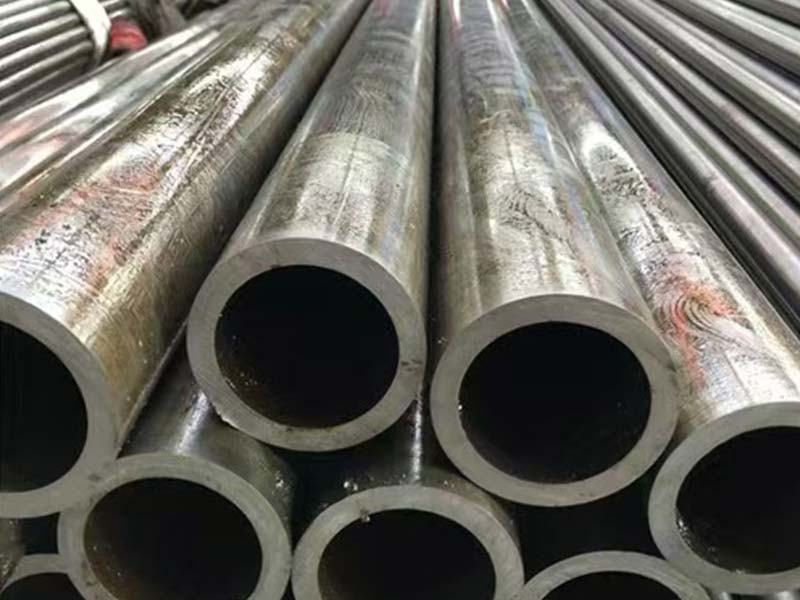
Seamless steel pipe selection often involves more than matching a diameter to a catalog.
An experienced supplier should be able to help buyers confirm dimensions, material grades, applicable standards, inspection requirements, and production specifications before an order is finalized.
For international buyers, this is particularly important because differences in standards, measurement systems, documentation, and project requirements can create specification misunderstandings.
هوانهاي تشونغكي provides seamless steel pipe and other metal products for industrial customers, supporting different material and dimensional requirements according to project needs.
For buyers comparing different pipe specifications, discussing the application and complete technical requirements with the supplier can help identify a more suitable seamless steel pipe solution.
الأسئلة الشائعة
What dimensions are used to specify seamless steel pipe?
The main dimensions include outside diameter, wall thickness, inside diameter, and length. Depending on the applicable standard, nominal pipe size and schedule may also be used.
Does nominal pipe size equal the actual pipe diameter?
Not necessarily. Nominal pipe size is a standardized designation, while the actual outside diameter is determined by the relevant dimensional standard.
Does thicker pipe always mean better performance?
No. Wall thickness should be selected according to pressure, temperature, material, corrosion allowance, mechanical loads, and applicable design requirements.
How should I specify seamless steel pipe when requesting a quotation?
Provide the required pipe type, outside diameter or nominal size, wall thickness, length, material grade, standard, quantity, application, and any testing or certification requirements.
Can seamless steel pipes be supplied in custom lengths?
Many suppliers can provide specified or cut lengths depending on production capabilities and order requirements. Buyers should confirm the available length range before ordering.
خاتمة
Understanding seamless steel pipe sizes is essential for making the right purchasing decision. Outside diameter, wall thickness, inside diameter, length, tolerance, material grade, and applicable standards all contribute to the suitability of a pipe for a specific project.
Instead of choosing a pipe based on nominal diameter alone, industrial buyers should evaluate the complete dimensional and operating requirements.
A clearly defined specification helps suppliers provide accurate quotations, reduces ordering errors, and ensures that the selected seamless steel pipe is appropriate for its intended application.
 Arabic
  English
  Korean
  Vietnamese