

Table of Contents
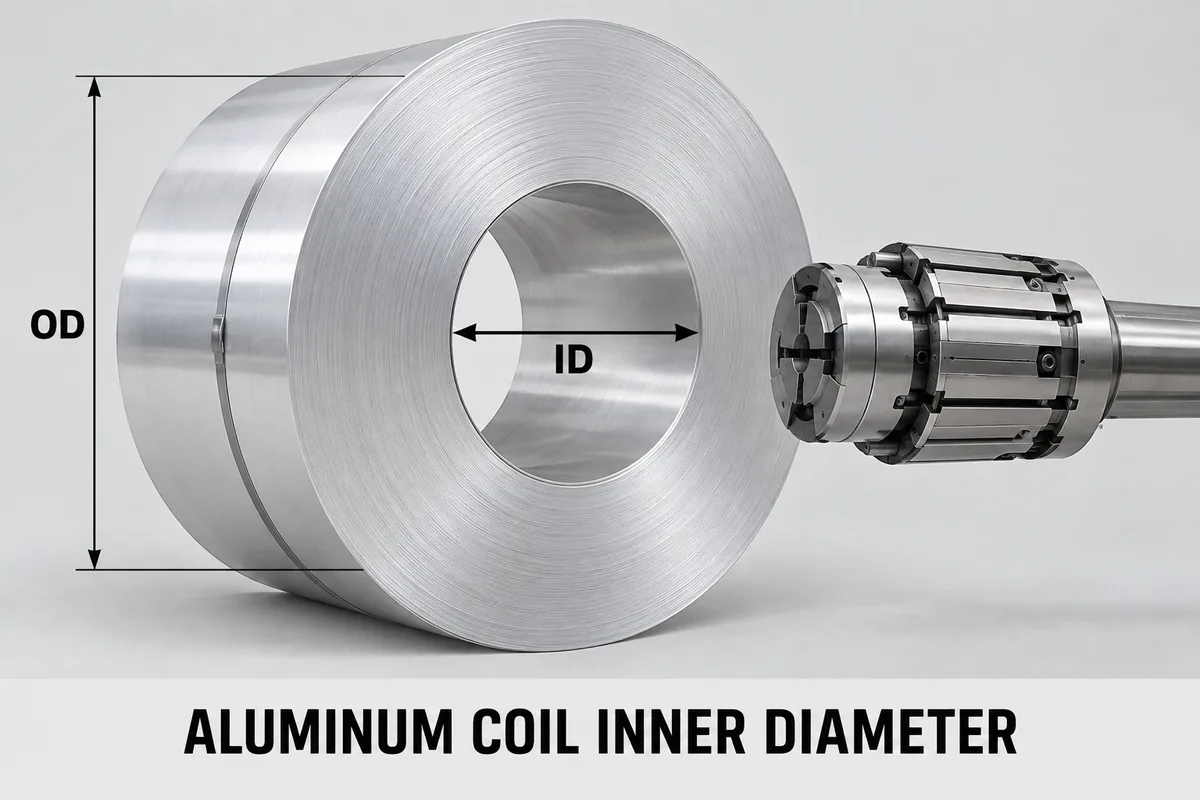
Aluminum coil inner diameter is the diameter of the central opening, often called the coil eye. It determines whether the coil can be loaded onto an expanding mandrel, shaft, decoiler, or processing line without an adapter or repackaging. A mismatch can delay production, reduce gripping stability, damage the inner wraps, or create an unsafe handling condition.
A purchase order should never treat aluminum coil inner diameter as an isolated number. Buyers must coordinate it with core construction, inside-wrap condition, outside diameter, width, mass, winding tension, eye orientation, handling method, and equipment capacity. The correct value is the one approved for the receiving line and the ordered coil build, not a dimension copied from another project.
Define Coil Inner Diameter
Measure aluminum coil inner diameter across the circular opening, not along the circumference and not from the outer edge of the coil. The order should state the nominal value, permitted tolerance, measurement condition, and whether the material is wound on a core. If the coil eye is not round, one reading cannot fully describe the condition.
The inside opening must also be distinguished from outside diameter. Aluminum coil inner diameter describes the bore that interfaces with a mandrel or shaft; outside diameter describes the completed coil envelope. Record units clearly and avoid abbreviations unless both buyer and supplier use the same definitions. A controlled drawing or purchase specification removes ambiguity from labels and inspection reports.
Understand Why ID Matters
Why does aluminum coil inner diameter matter? It is an equipment-interface dimension. If the opening is too small, the coil may not load onto the mandrel. If it is too large for the available expansion range, the mandrel may not grip or center it correctly. Adapters can be appropriate only when the equipment manufacturer and site engineering approve their design and use.
Aluminum coil inner diameter also affects how much strip can be wound before the specified outside diameter or coil mass is reached. It influences the length calculation, packaging geometry, cradle selection, lifting access, and usable clearance on the line. These relationships explain why purchasing, production, maintenance, logistics, and safety personnel should approve the same coil specification.
Match the Mandrel
Begin with the uncoiler or recoiler documentation. Confirm the mandrel expansion range, face length, load rating, permitted coil width, permitted outside diameter, braking or drive arrangement, centering method, and required clearance. The approved aluminum coil inner diameter must provide stable contact without exceeding equipment limits or concentrating force on a weak core.
Check whether the line loads coils eye-horizontal or eye-vertical and how the coil transfers from truck, cradle, upender, C-hook, or lifting device to the mandrel. The Aluminum Association in-plant handling guideline provides broader handling considerations. Site-specific risk assessment and equipment instructions still govern the actual loading method.
Select the Core and Build
A coil may be supplied coreless or wound on a fiber, metal, or other approved core, depending on the product and processing route. Specify core material, wall strength, width, condition, permitted protrusion, moisture protection, and whether the core must remain with the coil. The core must support the intended handling and winding forces without collapsing, shifting, or contaminating the product.
Aluminum coil inner diameter should remain sufficiently round and stable for loading. Loose inner wraps, a crushed core, telescoping, offset winding, dents, or edge damage can interfere even when a nominal measurement appears correct. Define winding direction, tightness, edge alignment, and inner-wrap protection when downstream feeding, surface quality, or automated loading is sensitive.
Connect ID, OD, and Weight
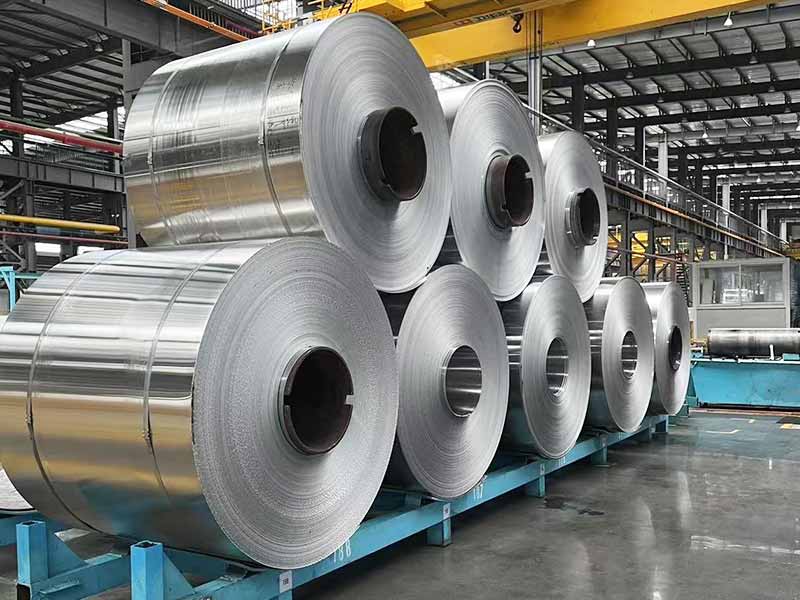
Aluminum coil inner diameter, outside diameter, strip thickness, width, density, and wound length are connected geometrically. A larger bore leaves less radial build at the same outside diameter, while a smaller bore permits more build if line capacity and handling limits allow it. Actual coil mass also depends on alloy density, dimensional tolerances, and packaging components.
Do not accept a weight calculation as proof that the receiving equipment can handle the coil. Verify rated mass, center of gravity, width, outside diameter, aluminum coil inner diameter, overhang, and dynamic effects separately. Use the aluminum coil weight calculation guide to prepare an estimate, then require the supplier to state actual shipment data where the purchase specification calls for it.
Plan Handling and Storage
Handling plans should identify coil eye orientation, rated lifting device, contact protection, cradle geometry, restraint, aisle clearance, floor capacity, and storage position. Do not lift through the eye with an improvised device or assume one attachment suits every aluminum coil inner diameter. Only trained personnel should use inspected equipment within its marked capacity and approved procedure.
Packaging must preserve the aluminum coil inner diameter and inner wraps during transport. Specify moisture barrier, edge protectors, bore protection, bands, skid or cradle, restraint, labels, and unloading access appropriate to the route. Review the aluminum coil product range when aligning alloy, temper, finish, dimensions, and packaging with the destination line.
| Order parameter | Why it matters | Verification |
|---|---|---|
| Inner diameter and tolerance | Controls mandrel or shaft fit | Measure the bore in agreed directions |
| Core type and strength | Supports inner wraps and handling forces | Inspect material, condition, and dimensions |
| Maximum outside diameter | Controls line and storage clearance | Measure completed coil envelope |
| Maximum coil mass | Controls equipment and lifting capacity | Check shipment record and rated equipment |
| Width and eye orientation | Controls support, centering, and loading method | Confirm label, package, and receiving setup |
Inspect the Delivered Coil
At receipt, match the coil label, packing list, purchase order, and certificate before removing protective materials. Confirm alloy, temper, thickness, width, aluminum coil inner diameter, outside diameter, mass, core type, lot identity, and winding direction. Record transport damage, wet packaging, shifted bands, telescoping, edge impacts, and visible inner-wrap defects before moving the load.
Measure aluminum coil inner diameter using an appropriate calibrated method at agreed positions. Where roundness matters, take readings in more than one direction and record the orientation. Inspect core integrity and the bore surface, not only the numerical diameter. Place nonconforming material on hold and obtain a documented disposition instead of forcing it onto the line.
- Confirm the equipment-approved aluminum coil inner diameter and tolerance.
- Verify mandrel expansion range, face length, and rated load.
- State core material, strength, width, and permitted condition.
- Set maximum outside diameter, width, and coil mass.
- Define winding direction, eye orientation, edge, and surface protection.
- Require traceable inspection and shipment records.
- Approve any dimensional or packaging change before dispatch.
Write a Complete RFQ
What should you specify when ordering aluminum coil? Include the material standard and edition, alloy, temper, thickness and tolerance, width and tolerance, aluminum coil inner diameter and tolerance, maximum outside diameter, maximum mass, core construction, winding direction, eye orientation, edge condition, surface finish, protective film, certificate, traceability, packaging, and destination.
ASTM B209/B209M is a recognized material specification for covered aluminum sheet and plate products, but it does not replace the buyer’s equipment-interface requirements. Attach the current line specification, define inspection and reporting, and require written approval for any proposed change to aluminum coil inner diameter, core, mass, or packaging.
Frequently Asked Questions
Why does aluminum coil inner diameter matter?
Aluminum coil inner diameter controls whether the coil fits, centers, and grips correctly on the receiving mandrel or shaft. It also affects radial build, wound length, packaging, lifting access, and compatibility with line limits.
What should I specify when ordering aluminum coil?
State alloy, temper, thickness, width, aluminum coil inner diameter, maximum outside diameter, maximum mass, core, winding direction, eye orientation, finish, tolerance, certificate, traceability, packaging, and inspection requirements.
How do I inspect aluminum coil thickness tolerance?
Use a calibrated method, an approved sampling plan, and the locations defined by the applicable standard and order. Keep thickness inspection separate from aluminum coil inner diameter inspection, then record both against the same coil identity.
How is aluminum coil inner diameter measured?
Measure across the central opening with suitable calibrated equipment. If roundness is controlled, take aluminum coil inner diameter readings in multiple directions and document the measurement condition, core condition, positions, and tolerance.
Can a coil adapter correct the wrong inner diameter?
Only when the adapter, coil, mandrel, load, speed, and operating procedure have been approved by the equipment manufacturer or responsible site engineering. Do not use an improvised adapter to compensate for an incorrect aluminum coil inner diameter.
Request a Coil Review
Send Huanhai Zhongke the alloy, temper, thickness, width, aluminum coil inner diameter, maximum outside diameter, maximum mass, core, winding direction, line limits, finish, inspection, certification, and packaging requirements for a coil specification review.
 English
  Korean
  Arabic
  Vietnamese